Don't replace a broken chain—restore it. A laser fuses the parent metal at the break instead of bridging it with a lower-melting solder, so the repair is the same alloy as the rest of the chain rather than a different one sitting in it.
Standard soldering methods often ruin delicate chains. Here's what typically goes wrong—and how laser welding solves it.
Traditional soldering torches spread heat across the entire chain, discoloring metal and melting adjacent links.
Solder joints often leave visible blobs or discolored patches that never quite match the original metal.
Soldered links are structurally weaker than the original—leading to repeated breakage at the same spot.
Open flame near set stones can crack, cloud, or discolor delicate gems and enamel work permanently.
Laser beam width is under 0.5mm—fusing only the exact broken point without affecting surrounding links.
The weld is made from the chain's own metal, so colour and texture follow the piece rather than a filler alloy chosen to melt lower.
The joint is a fusion of the parent metal rather than a bridge of lower-melting solder, so there is no second alloy sitting in the chain at the repair.
Energy stays at the joint rather than travelling down the chain, so gemstones, enamel and neighbouring links are far less exposed than under a torch. Pieces with stones or enamel are still assessed individually.
What a chain repair actually looks like at the bench, from assessing the break to checking the finished joint under magnification.
We examine the break point under 10x magnification and ultrasonically clean the chain to remove debris and oils.
Broken ends are precisely realigned using micro-clamps to ensure the link sits exactly as it did originally.
A calibrated laser pulse fuses the metal at the molecular level, adding matching filler metal only where needed.
The weld is polished to a seamless finish and stress-tested before a final quality inspection.
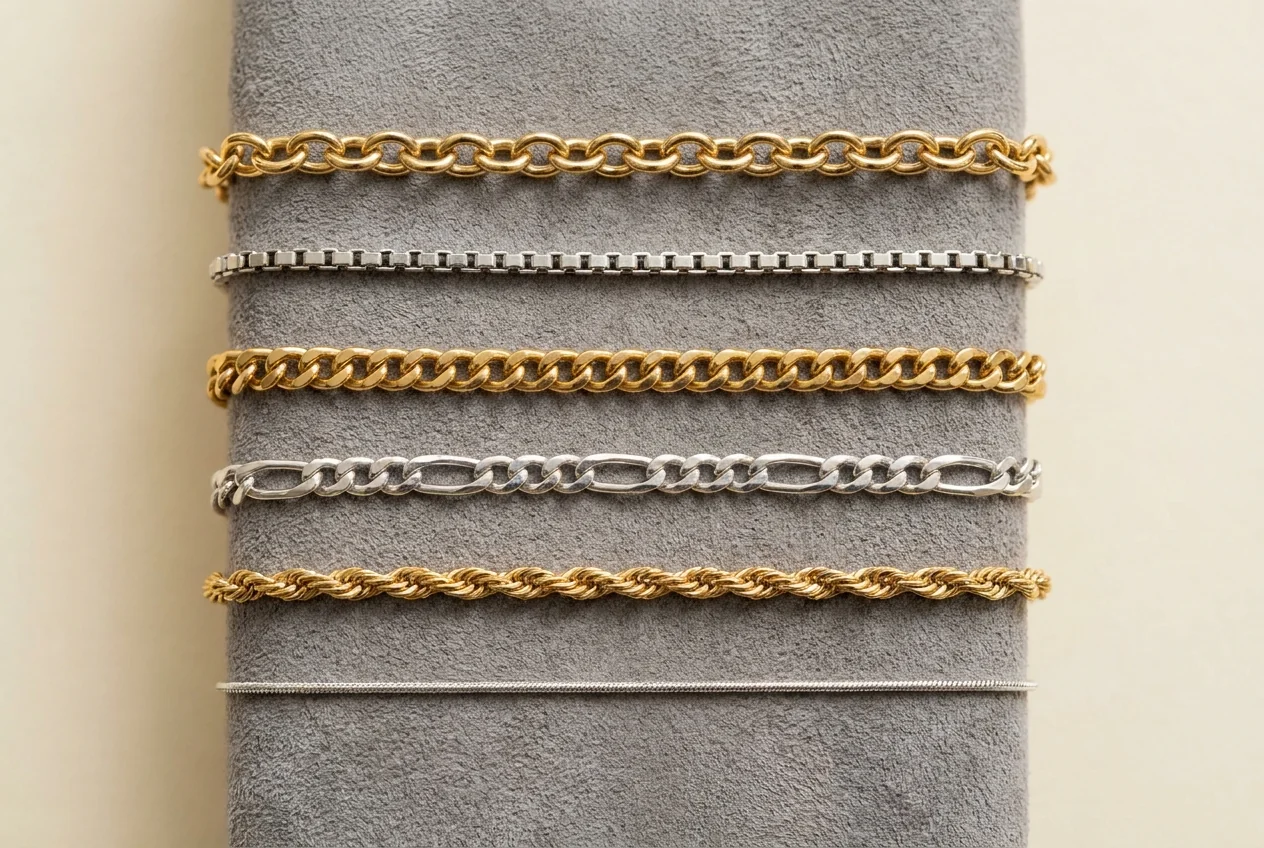
From delicate box chains to heavy Cuban links, our laser welders are calibrated for every metal and style.
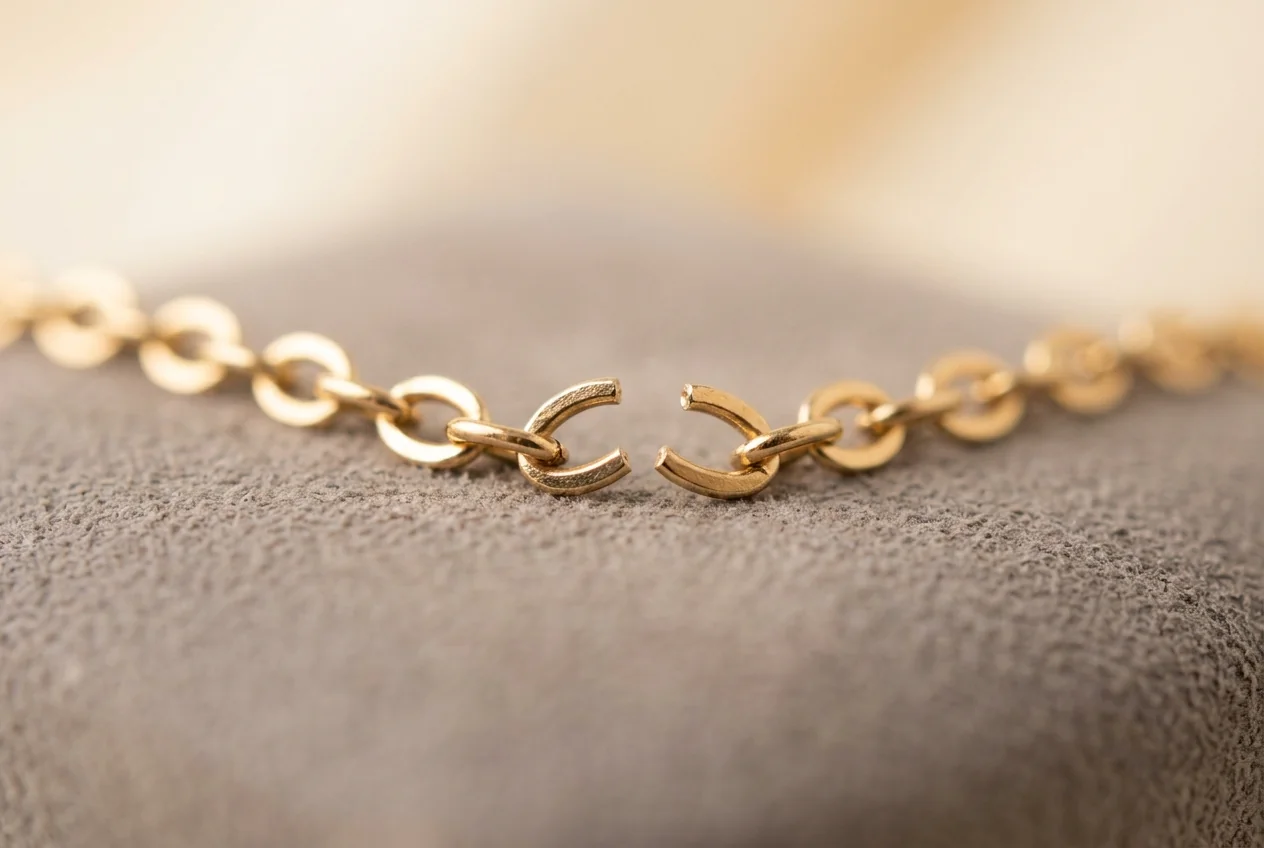
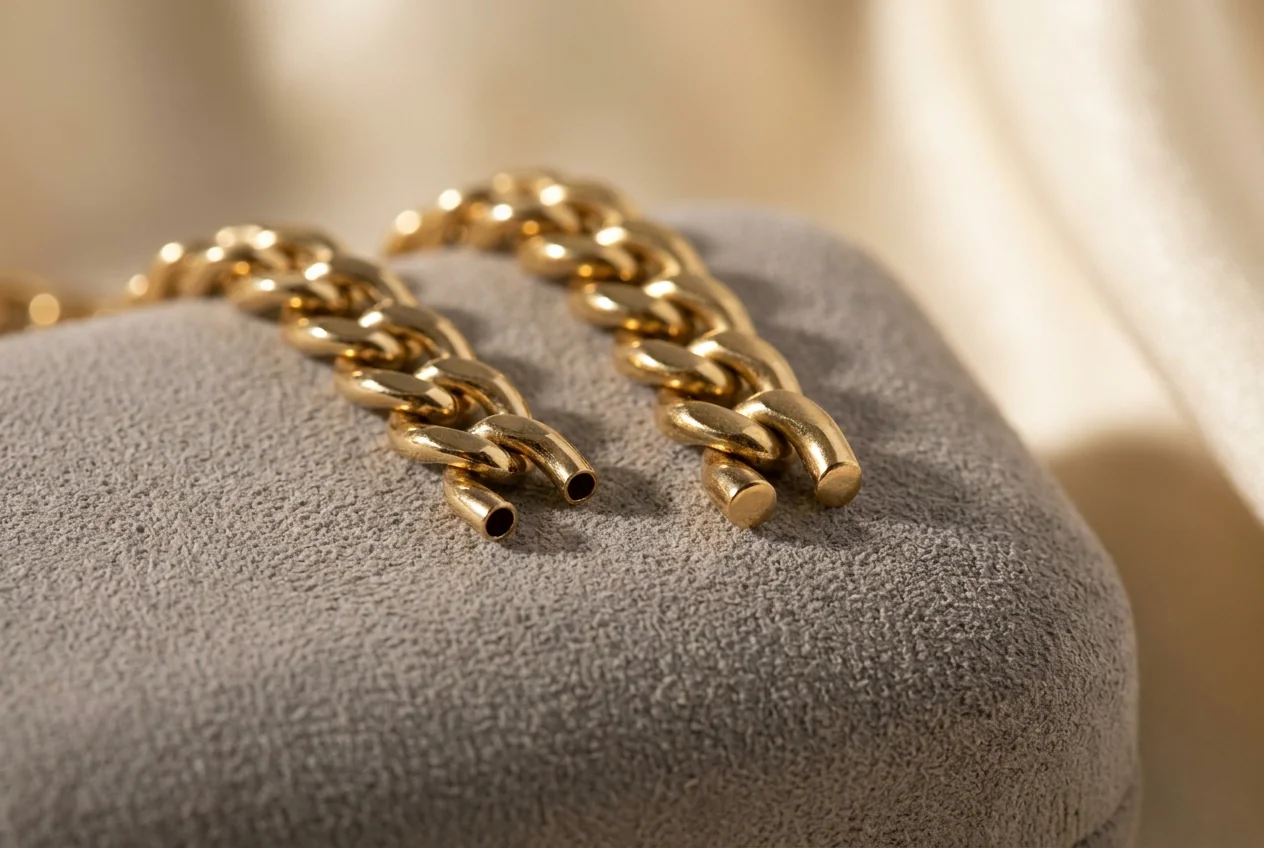
A break and the same link after welding, photographed under magnification so the joint area is visible.

The most common job over a counter. One link has sprung or worn through, and the fix is closing and fusing it without the neighbouring links losing shape.
The join is at a fitting rather than in the chain itself, often with two different gauges of metal meeting at the same point.
Repeat failures at the same spot usually mean the link is worn thin rather than simply open. Rebuilding metal there is a different job from closing a gap.
Long chains that have been stored badly can come in with three or four failures at once — the same operation repeated, where a stored setting earns its keep.

These are the pieces that get refused or sent away, and they are the reason the specification matters more here than on almost any other repair.
There is very little metal to absorb energy, so the wall collapses before the joint forms if the pulse is wrong. Low, controlled energy is the whole job.
On a chain under a millimetre thick, the difference between a joint and a hole is a fraction of a setting. Spot size and pulse width decide whether the work is possible at all.
Magnification is not a comfort feature on this work. What you cannot resolve, you cannot place a weld on.
Chain is where the two methods diverge most, because there is so little metal and so little room.
The failures that send chain work out of a shop, and what sits behind each one.
Energy spreading down the chain distorts links either side of the joint — the repair holds but the piece no longer hangs right.
Too much energy into too little metal, and the link opens up instead of closing. Usually terminal for that section.
Solder is a different alloy by design. Under a shop light it reads as a mark on an otherwise uniform chain.
Closing a worn link without adding metal leaves it thinner than the rest. It comes back, and the customer remembers where they had it done.
A white gold clasp on a yellow chain means two behaviours at the same weld point, and one setting will not serve both.
Any heat at the joint disturbs plating around it. This is worth telling the customer before the work, not after.
Chain is a narrower brief than jewellery welding in general — small, thin, and often hollow. These are the specifications that decide whether the work is possible, described by what each one changes at the bench.
Read the full buying guideWhich welder fits depends on the link gauge, the metals and how much of the work is one-off restoration. Match the job to the machine before you compare models.
Send a chain you would normally send out — fine, hollow or a repeat breaker — and see the joint before you decide anything.