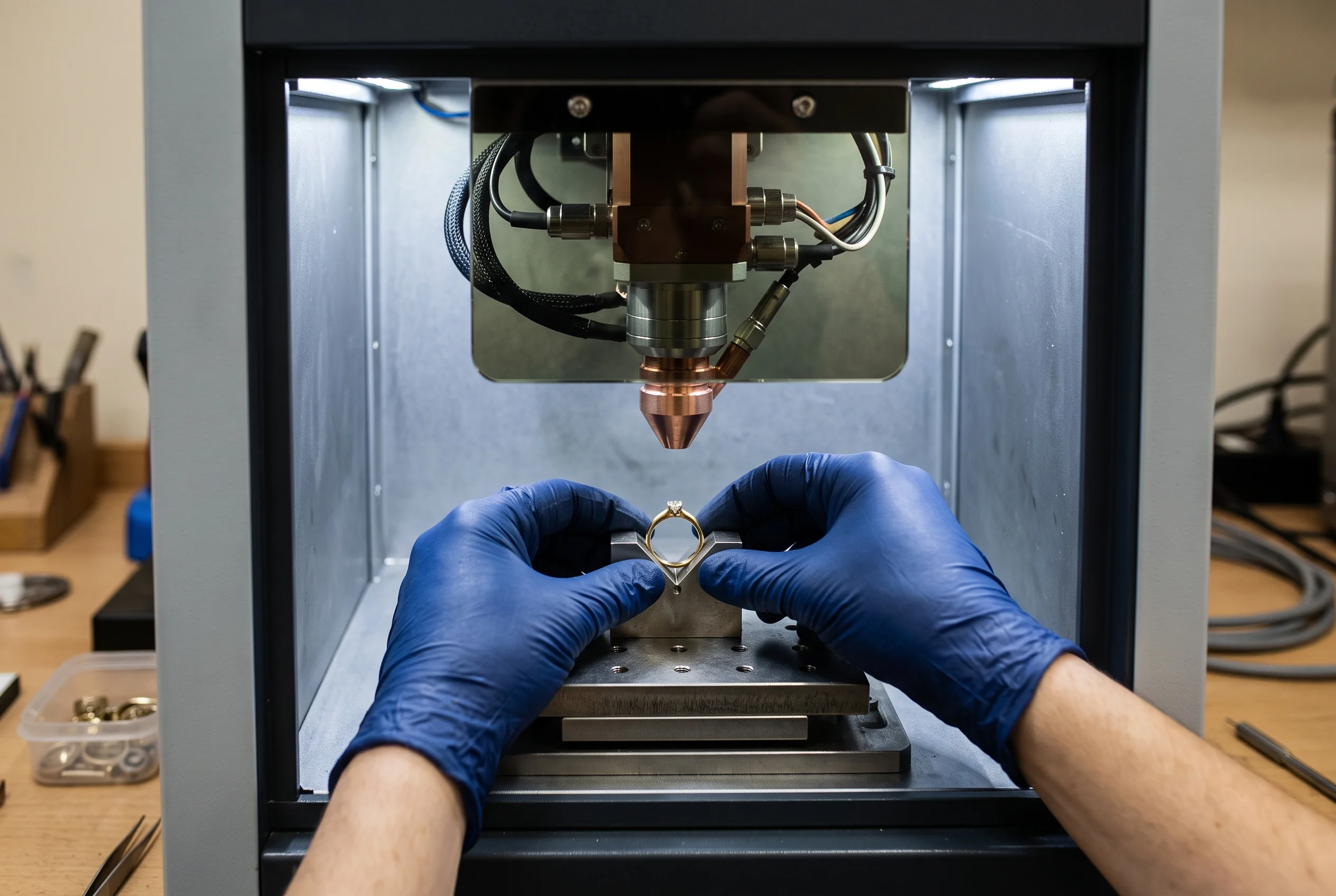
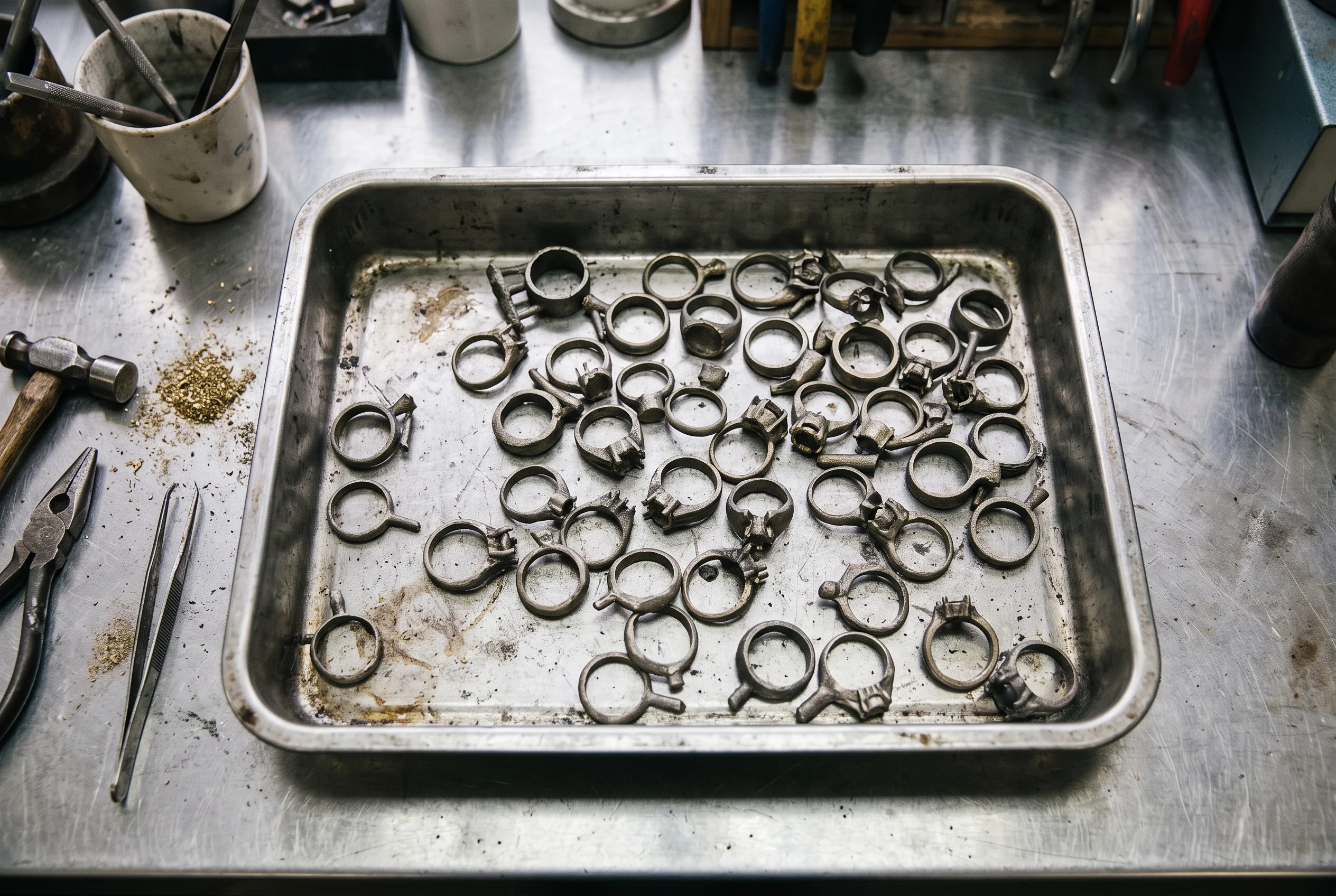
Pits, voids and hairline cracks are the defects that decide whether a piece is saved or sent back to the melt. This page is about reading the defect first, then choosing the machine that can rebuild it — not about sending the work out.
Porosity and cracks are repaired differently, and within each there are kinds that behave differently again. Naming the defect is the first decision, because it changes everything that follows.
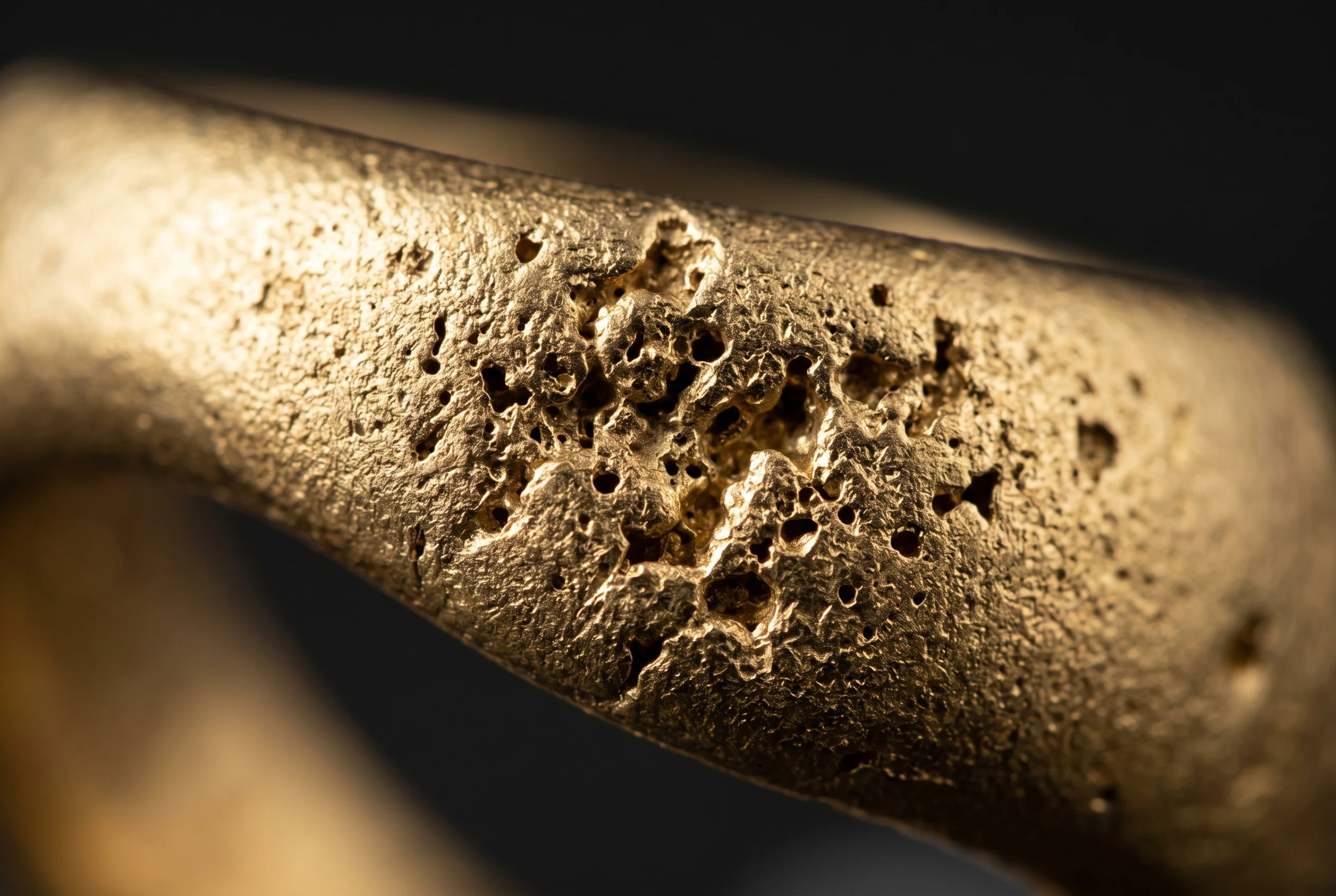
Porosity: voids left in the metal, opening up as you cut and polish.
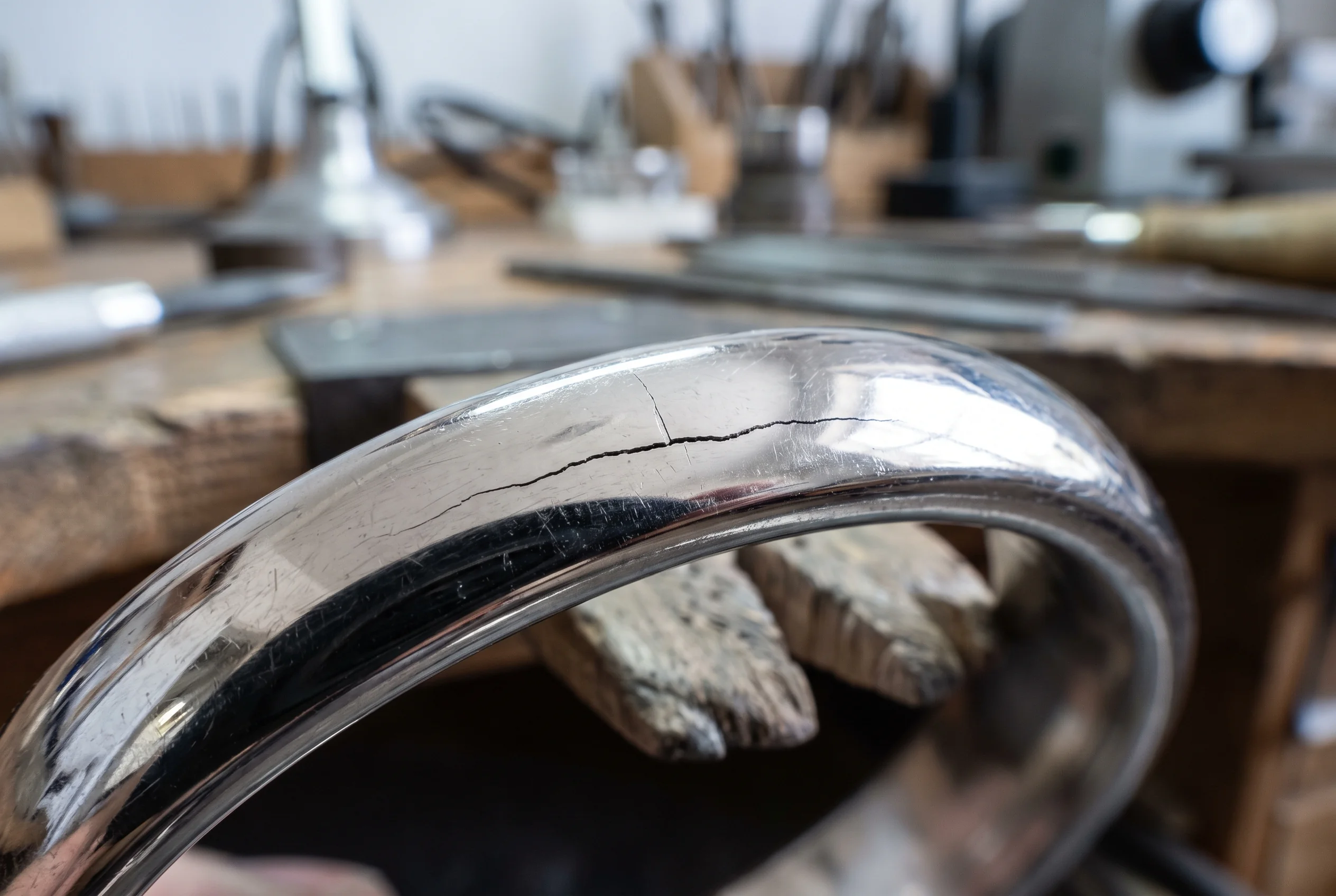
Cracks: a separation that runs, and that will keep running if only filled at the surface.
Small pits that appear as the skin is cut back. Often shallow, and usually the most straightforward of the group — but only once you have established that it stops where you can see it.
Larger cavities from incomplete fill or shrinkage as the metal solidified. These can run deeper than the opening suggests, which is why depth is checked before any metal is added.
Fine, often rounded pockets from gas trapped during casting. They tend to be distributed rather than isolated, so opening one frequently reveals more alongside it.
A thin separation with very little to weld into. The visible line is usually shorter than the actual crack, so the extent is established before it is closed.
Cracks in the band, often from sizing, stress or thin sections. The shank carries load in wear, so a repair that only closes the surface tends not to hold.
Cracks in or beside a setting, where a stone limits how the repair can be approached. Both the defect and the stone have to be assessed before work starts.
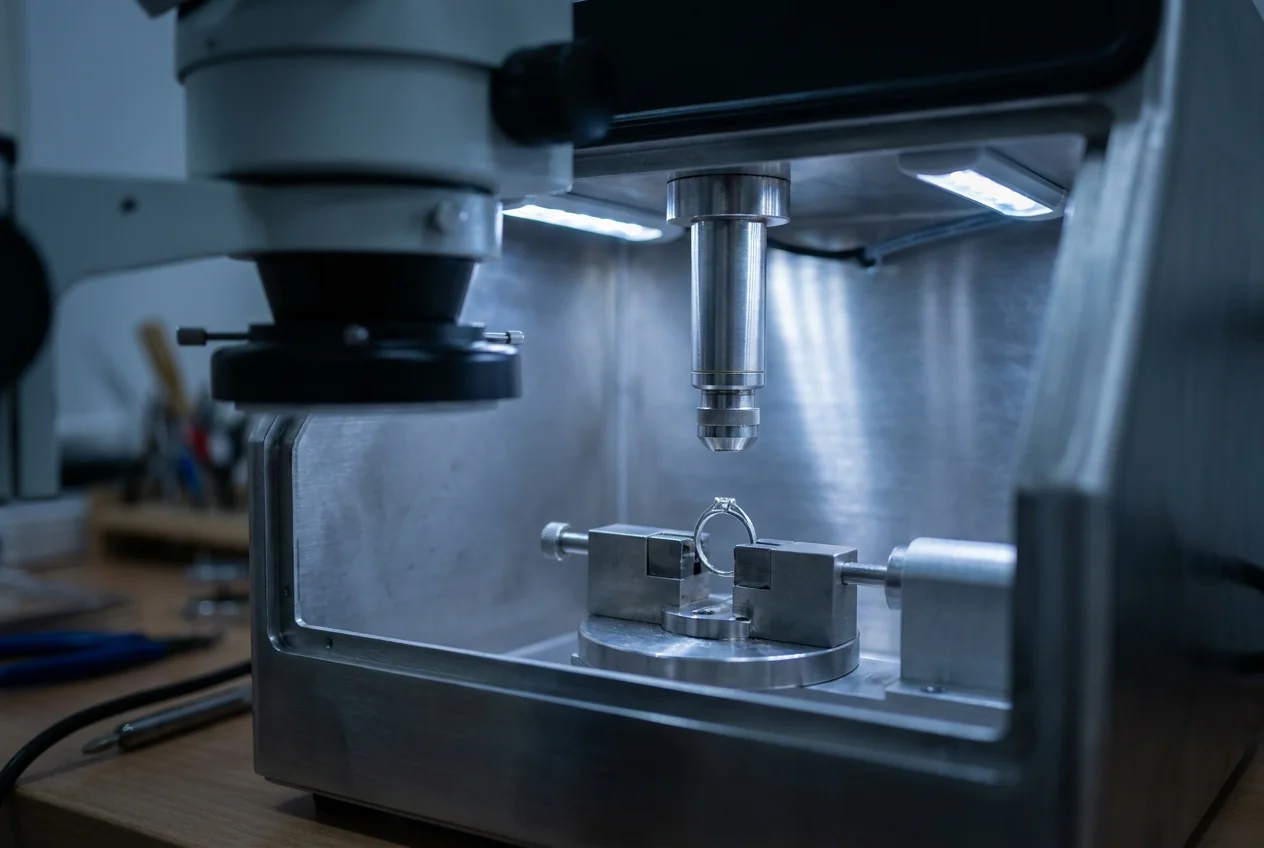
Not every defect should be welded. Getting this call right early is what keeps a bench from spending an hour on a piece that was always going back to the melt.
The defect is isolated rather than spread through the section. There is sound metal around it to weld into. Enough wall thickness remains once the defect is cut back. The area can be reached and finished after welding. A single piece, or a small number, where recasting costs more than the repair.
Porosity appears again each time you cut deeper — a sign it runs through the section rather than sitting in it. Cracks through a load-bearing area of a thin shank. So little wall left after cutting back that the piece would be weak anyway. A defect repeating across a whole batch, which points at the casting process rather than the piece.
Laser welding is for local defects. It does not replace proper casting quality control, and a machine bought to paper over a casting problem will simply be busy forever. Where a defect repeats batch to batch, the fix belongs upstream.

Six readings taken at the loupe, before the first pulse. Each one can change the answer to Repair or Recast.
How far it goes, not how big it looks. A pit that keeps opening as you cut back is telling you something the surface was hiding.
Isolated or distributed. One void is a repair; a scatter across the whole section is usually a casting question.
What wall is left once the defect is cut back to sound metal. This is what decides whether the finished piece can carry load in wear.
Karat, colour and whether it is a known mix. Unmarked or reclaimed metal behaves unpredictably and is worth testing on an offcut first.
Earlier repairs sit at a lower melting point than the parent metal and will move before it does. Finding them first is cheaper than finding them during.
Where the stones sit relative to the defect, and what they are. On set pieces this often decides the approach more than the defect does.
They are often spoken of together and handled as if they were one job. On the bench they are not.
| On the bench | Porosity repair | Crack repair |
|---|---|---|
| What the defect is | Missing metal — voids where the casting failed to fill or gas was trapped. | Separated metal — a fracture running through material that is otherwise present. |
| What the repair does | Rebuilds volume. Metal is added back layer by layer until the void is filled with sound material. | Rejoins the two faces along the length of the crack, then adds metal only where the prepared groove needs it. |
| Preparation | Cut the pit back until sound metal is reached on all sides. Welding over an unopened void traps it. | Establish where the crack actually ends, then open a groove along it. The visible line is usually shorter than the crack. |
| Where it goes wrong | Filling the mouth while the void continues underneath — it reopens at polish. | Closing the visible portion only, leaving the tip to run again under load. |
| What the machine needs | Repeatable low-energy pulses and clean filler feeding, for many small deposits in sequence. | Control along a line rather than at a point, with enough penetration to reach the root of the groove. |
| After welding | Cut back and re-inspect. A second pass is normal rather than a sign of failure. | Check that the repair reaches the full depth before finishing, not just that the surface looks closed. |
Porosity repair is about controlled metal rebuilding, not simply higher laser power. Turning the energy up fills faster and traps more; it is the wrong lever on this job.
The failures benches report most, and the cause behind each — including the question of why porosity reappears after it was supposedly repaired.
The mouth of the void was filled while the cavity continued below it. Polishing cuts back into the trapped space and opens it again. The cure is preparation, not more power.
Only the visible length was closed. A crack tip left unwelded is a stress concentration, and load finds it. Establishing the true extent first is the whole job.
Too much energy, a contaminated surface or gas drawn into the pool can leave voids in the weld itself. Clean preparation and lower, repeated pulses give a sounder deposit.
An earlier repair melts below the parent alloy and shifts before the surrounding metal responds, pulling the area out of shape.
Filler from a different alloy family reads differently once polished. Matching karat and colour to the parent metal avoids a repair that is sound but visible.
When every piece from a pour shows it, the problem is the casting, not the piece. Repairing the batch treats the symptom and hides the cause.
Both are used for defect work, and many benches use both. The difference is what happens to the metal around the repair.


| On the bench | Torch repair | Pulsed laser welding |
|---|---|---|
| Heat into the piece | The section is brought up to temperature, so the whole area is affected. | Energy is deposited at the aimed spot, with much less carried into the surrounding metal. |
| Filler | Solder, at a lower melting point than the parent metal. | Wire of the same alloy family, so the rebuilt area matches what is around it. |
| Building volume | Awkward for filling voids — solder flows where it is drawn rather than where it is placed. | Suited to it: metal is placed pulse by pulse, which is what void filling actually needs. |
| Set pieces | Stones commonly removed first, then reset afterwards. | Often welded with stones in place, subject to assessment of stone and distance. |
| Working near old joints | Earlier solder in the area is likely to move. | Heat can be kept off an old joint alongside the repair. |
| Where torch still wins | Large joins, bulk work and pieces with no stones and no nearby joints — quicker to set up and cheaper to run. | Slower per repair on large work; the advantage is control, not speed. |
This compares methods, not products. Most benches doing mixed work keep a torch as well.
Defect repair asks for different things than joining does. Each item below is described by what it changes when you are rebuilding metal rather than closing a seam.
Read the full buying guide
In a production setting the question is not one ring, it is what share of each pour gets rejected and where that metal and labour goes.
A rejected casting has already taken wax, investment, a pour and finishing time. Refining recovers the metal; it does not recover any of the rest.
Local, bounded defects are candidates for recovery. Pieces where the defect runs through the section are not. Applying the same triage the bench uses — depth, extent, remaining wall — turns a reject bin into two piles.
Batch recovery only works if the hundredth repair matches the first. Stored parameters, stable cooling and repeatable low-energy output are the specifications that decide this, which is why they sit above peak power for production buyers.
Recovery buys back pieces already cast. When the same defect appears pour after pour, the answer is upstream in the casting process — a welder used to hide that will just run continuously.
Our range is separated by workload and precision demand rather than by wattage. For porosity and crack work, these are the models that come up first.
Active repair shops and goldsmiths
Modern jewelry stores and high-end custom studios
Busy repair centres and multi-operator benches
Smaller shop with occasional defect work? The MW-DW200 — Affordable Jewelry Laser Welder is the affordable entry point — worth checking against the deepest void you actually get.
Compare all four models side by sideSend a piece you would otherwise scrap — a porous casting, a cracked shank — and we will attempt the repair and return it with the parameters we used, so you can judge the result on your own metal rather than on ours.
Arrange a Free Sample TestTell us the defect work you take on — the alloys, the kinds of porosity or cracking you see, and whether this is bench repair or batch casting recovery — and we will come back with a shortlist of models and a configured quote.