For Repair Shops, Goldsmiths & Jewelry Studios

Precision Platinum Jewelry Laser Welding

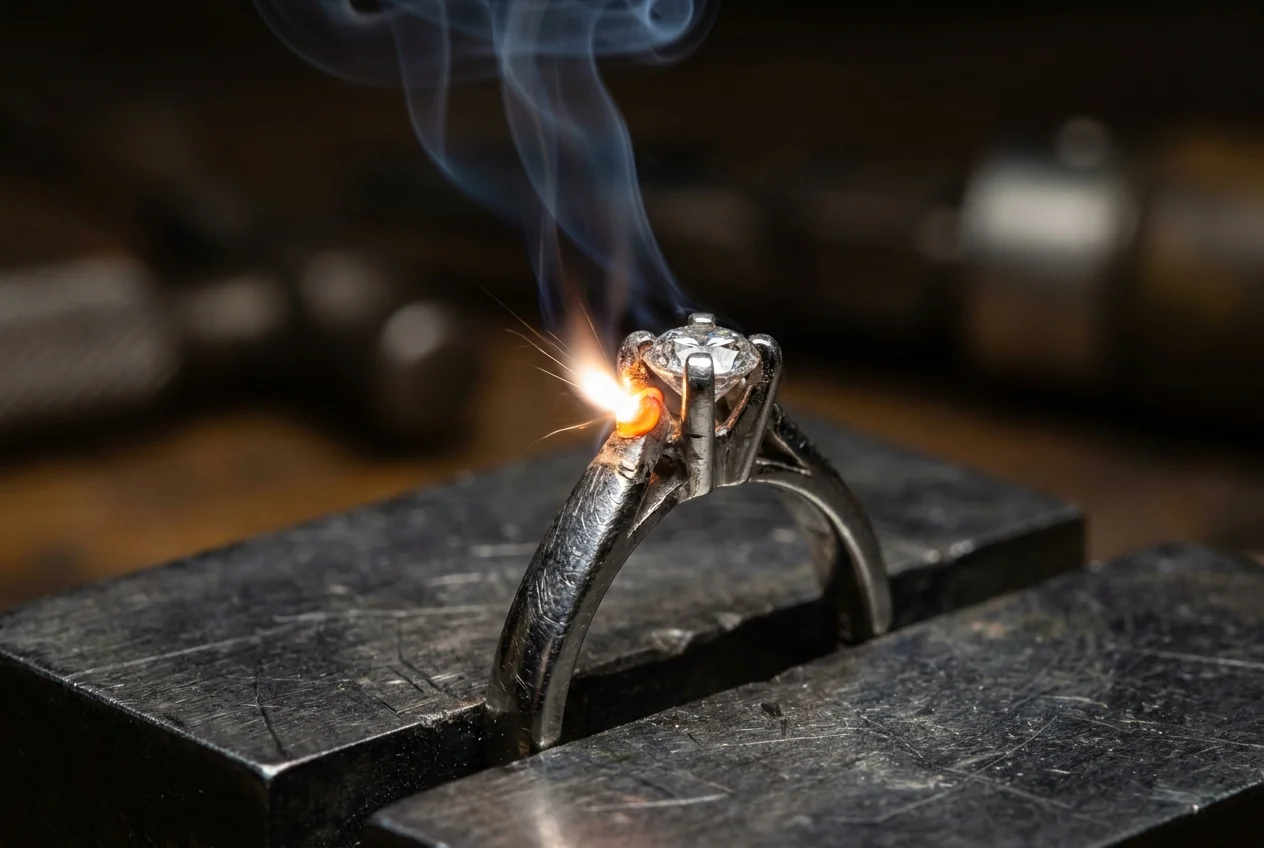
Platinum melts around 700 °C above gold and holds heat where you put it instead of spreading it. That combination is why a machine set up for gold struggles on a worn platinum claw — and it is what should decide which jewelry laser welder you buy.

See Recommended Welders Start With Your Alloy
1,768°C
Platinum melting point
0.1–2.0mm
Controllable spot range
Pt950 · Pt900
Ru · Co · Ir alloys
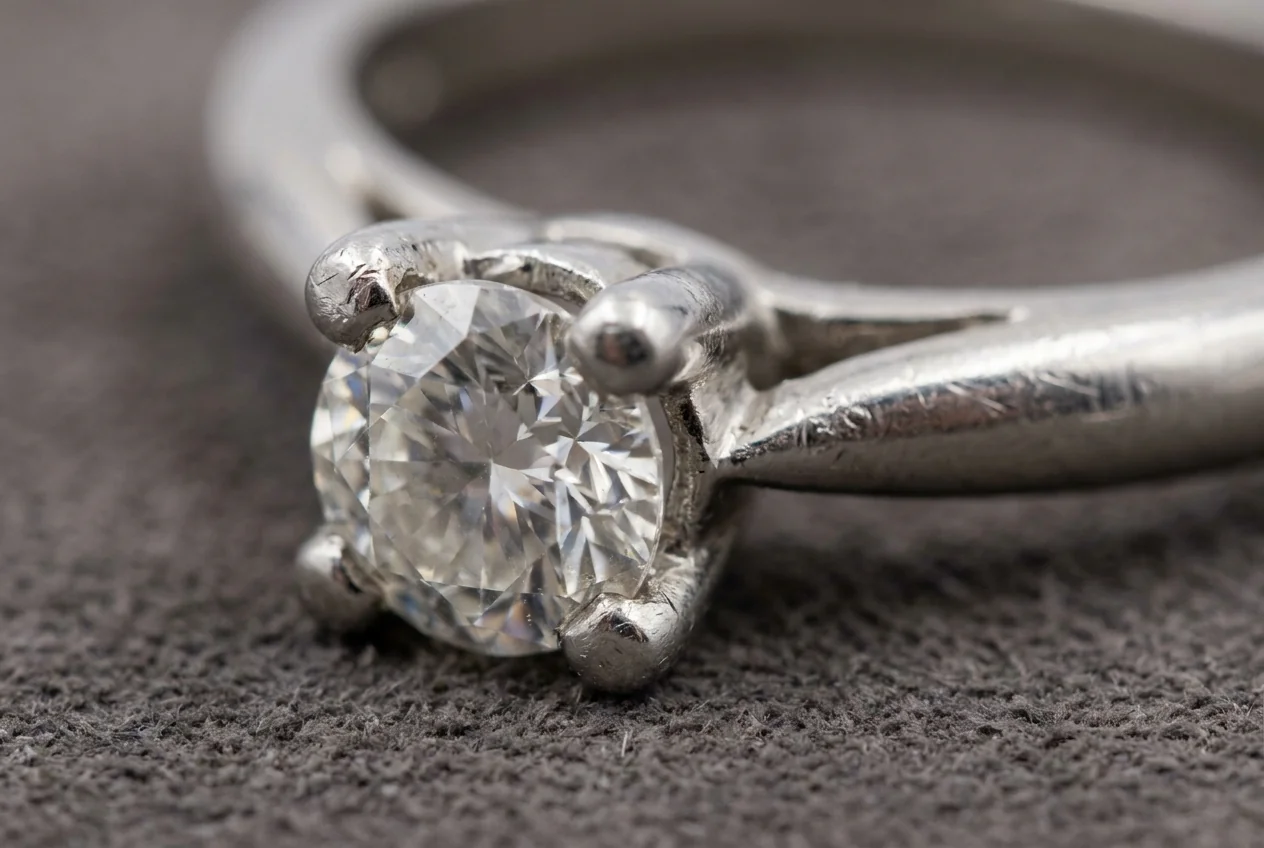
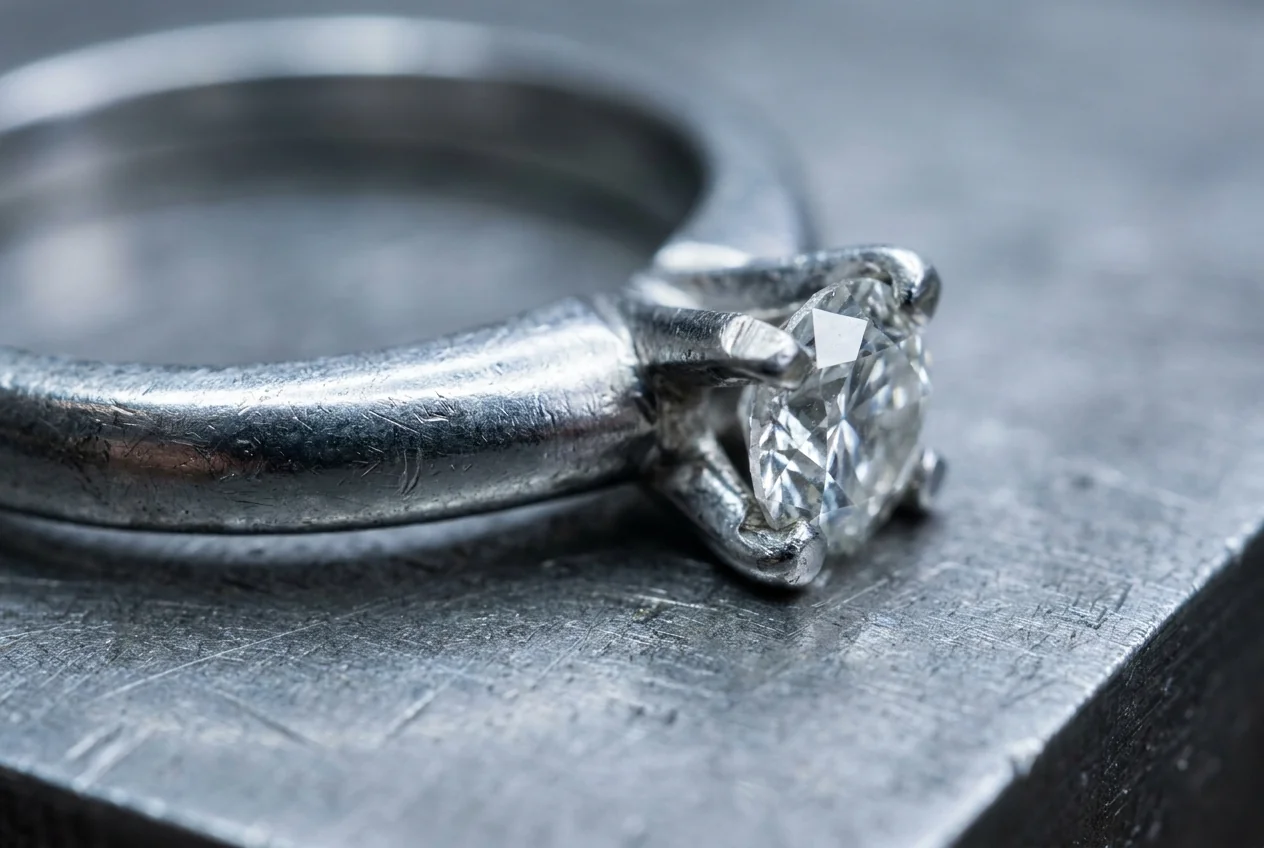
Macro of a platinum claw setting with two worn claw tips

Why Platinum Repairs Are Different

Four properties explain most platinum bench problems, and none of them are the ones that make gold or silver difficult.

It melts far higher

Around 1,768 °C, against roughly 1,064 °C for pure gold and 961 °C for silver. The same pulse that fuses a gold shank will only dent platinum.

Heat stays put

Platinum conducts heat far less readily than gold or silver. The energy stays at the spot, which helps near a stone and gives you no margin at a thin claw tip.

Colour is not the issue

Platinum is white the whole way through and welds to itself, so there is no plating to restore. What has to match is hardness and shape, not tone.

It moves rather than wears

Platinum displaces under wear instead of shedding metal, and it smears under a file. Finishing a platinum weld is a different sequence from finishing a gold one.

On platinum the difficulty is rarely colour. It is putting enough energy into a very small place without moving the metal around it.

What Platinum Alloy Are You Working With?

The 5% that is not platinum decides how the pool behaves. Three named alloys cover most work, and the fourth case is the one that actually walks in.

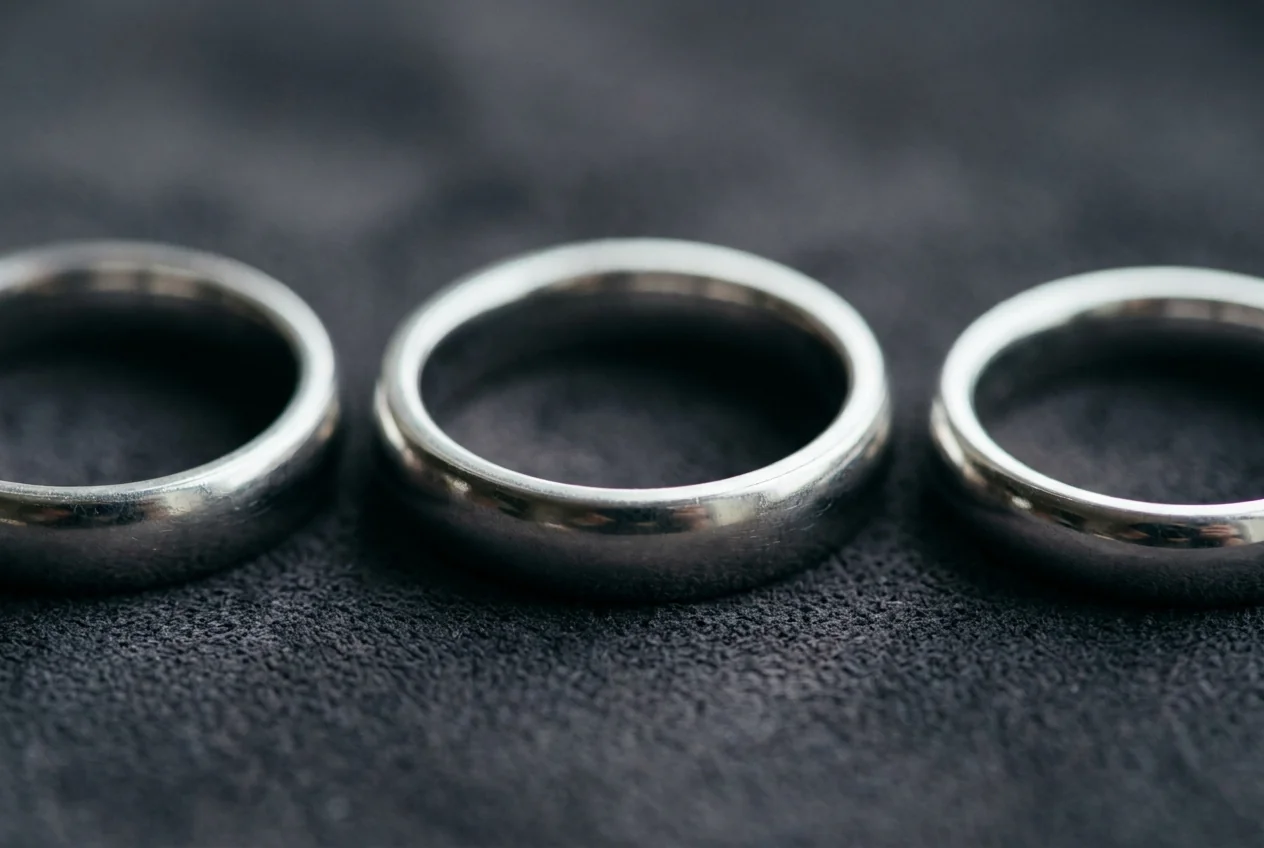
Three plain platinum bands in a row on dark grey suede
Modern default

Pt950 / Ru

5% ruthenium

Hard and springy, which is why it holds a claw well and why it resists the file. The pool is sluggish, so it wants energy rather than a longer dwell.

Ask of the machine: peak energy in a small spot

Cast work

Pt950 / Co

5% cobalt

Made to cast well: finer grain, flows more readily when molten, and slightly magnetic. Cobalt is the one element here that oxidises, so poor shielding shows as a grey film.

Ask of the machine: reliable argon coverage

Vintage & US work

Pt900 / Ir

10% iridium

The older alloy, common on pieces that have already been repaired once. Softer and easy to forge, but sluggish in the pool and slower to take filler cleanly.

Ask of the machine: steady repeatable pulses

Most repair work

Unknown alloy

No mark, or a mark that does not match

A magnet separates the cobalt alloy from the others in seconds. Beyond that, start below where you think and take a short test pass out of sight.

Ask of the machine: fine steps at the low end

Platinum Repair Applications

The six platinum jobs that most often decide whether a bench buys a welder. Each links to the page that covers it in full.

Platinum Repair Decision Matrix

Find the row you do most. The third column is what to compare first when you look at models.

Repair type What makes it hard on platinum Machine priority
Prong retipping A claw tip is a few tenths of a millimetre and platinum gives you no conduction to spread the pulse. Too little and it dents; too much and the tip balls up. Peak energy in the smallest spot
Ring sizing A heavy shank absorbs energy at the seam without carrying it away, so the joint needs building rather than flowing. Filler handling and pulse repeatability
Crack repair Welding over a crack traps the root underneath. It has to be opened out, then rebuilt in passes. Fine pulse shaping at low energy
Porosity fill Pits open as heat reaches them, so the area to fill grows while you work on it. Filler feed plus stable repeat rate
Setting & gallery work Thin rails close to a set stone, where heat has nowhere safe to go and the target is under a millimetre. Optical resolution and smallest spot
Casting salvage Rough surfaces, unknown gas content, and a piece that is worth saving only if the repair is quicker than a recast. Duty cycle and cooling
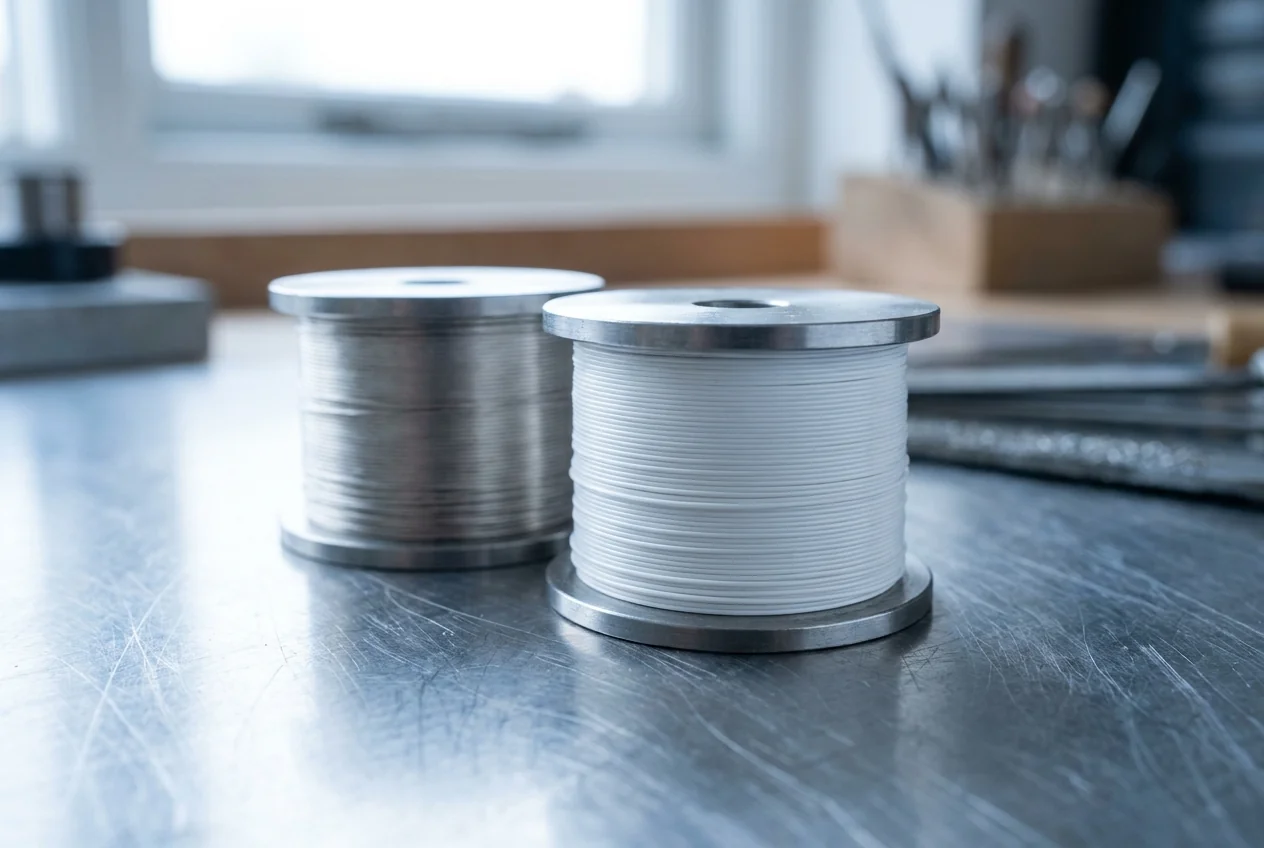
Two spools of fine platinum filler wire on a steel bench

Matching Platinum Filler Matters

On gold, filler decides colour. On platinum it decides hardness — everything in the group is already white, so a mismatch shows up months later as a claw that wears differently from the ones beside it.

Wire is sold by alloy family, not just by purity. Pairing it to the piece is a two-minute decision that the customer sees the result of for years.

Piece Filler to reach for What happens if you pair it wrong
Pt950 / Ru Pt/Ru wire A softer filler in a hard shank wears into a step at the joint, so the repair line appears again without cracking.
Pt950 / Co Pt/Co wire Non-cobalt filler in a cobalt casting behaves differently in the pool and can leave the joint visibly denser than its surroundings.
Pt900 / Ir Pt/Ir wire A harder modern filler in a soft vintage piece concentrates future wear either side of the repair.
Unknown Test first A magnet rules cobalt in or out. Past that, a short pass out of sight tells you more than the hallmark does.

Gold filler on platinum is a different question entirely — the melting points are hundreds of degrees apart, and the joint will not behave as platinum afterwards.

Why Did the Platinum Weld Go Wrong?

Six results that come back from a platinum bench, and the cause worth checking first.

Problem
The pulse left a dent, not a pool
Possible cause

Energy below what platinum's melting point needs. The metal deformed before it melted — the fix is more energy, not a longer dwell.

Problem
The claw tip balled up
Possible cause

Too much energy into too little metal. Surface tension pulled the molten tip into a bead, and there is no conduction to carry the excess away.

Problem
A grey film around the weld
Possible cause

A cobalt-bearing alloy oxidising, or argon coverage that did not reach the joint. Check the alloy with a magnet before blaming the gas.

Problem
The crack came back beside the repair
Possible cause

The crack was welded over rather than opened out first, so the root is still there under new metal and reopens under the same load.

Problem
Pits kept appearing as you filled
Possible cause

Gas porosity already in the casting, opening as the heat reaches it. Normal work on cast platinum, but it is filled in passes rather than in one.

Problem
The joint smears instead of cutting
Possible cause

Not a welding fault. Platinum galls under a file, so it wants a different finishing sequence from the one that works on gold.

Platinum vs. White Gold Repair

They arrive at the counter looking alike and behave nothing alike on the bench. This is the comparison a repair shop actually needs.

Platinum White gold
Energy at the joint Much higher — it melts around 700 °C above gold. Lower, and the metal helps by conducting heat away.
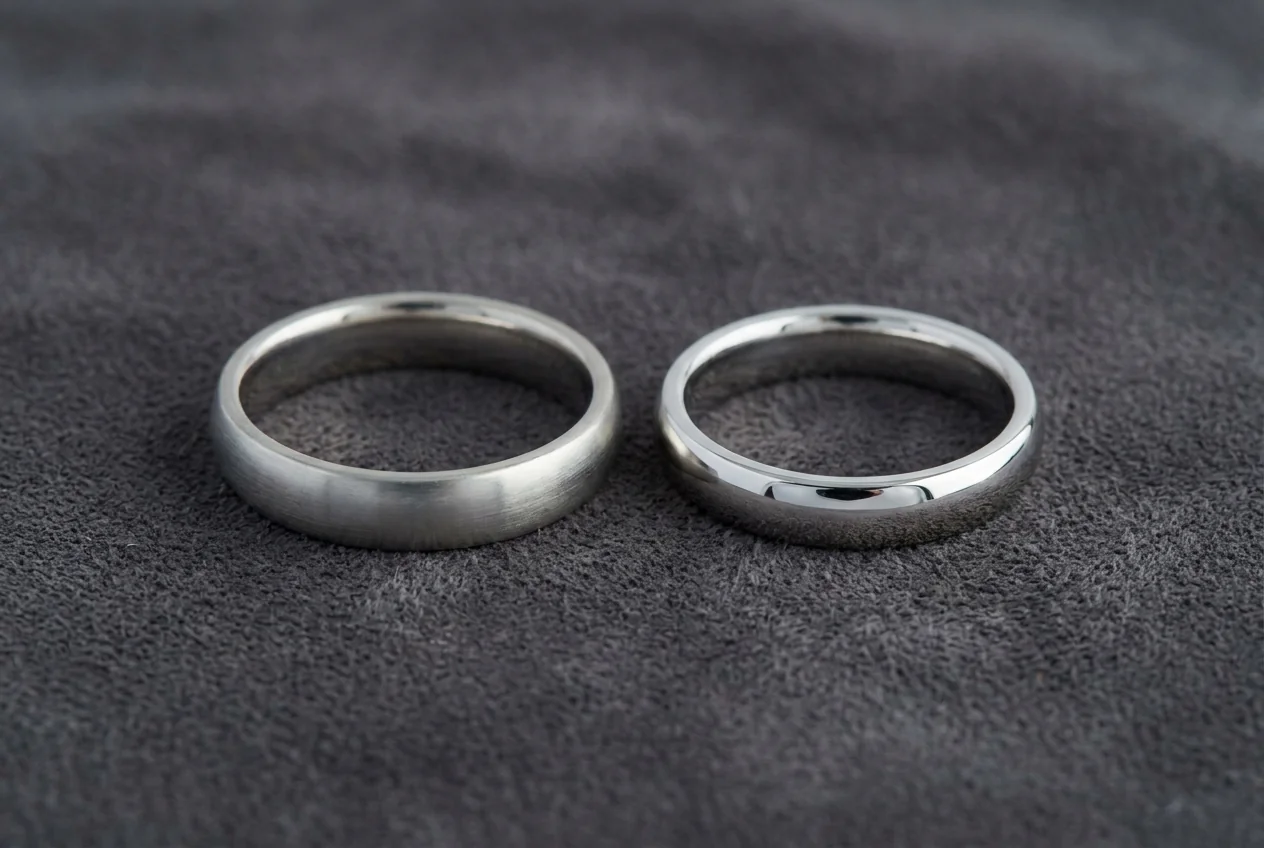
After the weld White through, so the joint is the same metal and there is nothing to re-plate. Rhodium plating burns off at the joint; the piece goes for re-plating.
Filler matched on Alloy family and hardness. Karat and colour.
How it wears Displaces — metal moves rather than leaves, so a claw thins slowly. Abrades — metal is lost, so a thin claw keeps getting thinner.
Finishing Galls and smears; different files and sequence. Files conventionally, then re-plate.
What decides the machine Peak energy delivered into a very small spot. Fine control at the bottom of the range.

What to Look for in a Platinum Jewelry Laser Welder

Work down the list against any model you are considering. Each line says what it changes on platinum specifically.

  • Enough peak energy to reach platinum's melting point in a small spot

    This is the one specification platinum adds over gold and silver. A machine that fuses gold comfortably can still only dent a platinum claw.

  • Adjustable spot down to 0.1 mm

    Claw tips and gallery rails are the work. Energy has to land on the tip and not on the shoulder beside it.

  • Pulse width adjustable across 0.1 – 5.0 ms

    Short and hard to reach depth in a sluggish Pt/Ru pool; longer and softer to build a tip without balling it.

  • Pulse-to-pulse repeatability, not just a high ceiling

    Rebuilding a claw is twenty near-identical pulses. Drift between them shows as an uneven tip that needs filing back.

  • Argon shielding that actually reaches the joint

    On cobalt-bearing platinum this is the difference between a clean weld and a grey film to polish out.

  • Optics that resolve a claw tip

    A microscope or HD CCD decides how small a feature the operator can aim at — and on platinum there is no conduction to forgive a near miss.

  • Cooling rated for sustained work

    Platinum jobs run at higher energy for longer. A machine that has to pause to cool turns a morning's work into a day's.

  • Parameter storage per alloy

    Pt950/Ru, Pt950/Co and Pt900/Ir each want their own settings. Recalling a proven one keeps two operators consistent.

From Alloy to Quote

Six steps, in the order a bench actually makes the decision.

Identify the alloy

Pt950/Ru, Pt950/Co, Pt900/Ir — or unknown.

Name the repair

Prong, sizing, crack, porosity, setting, casting.

Read the priority

The matrix gives you what to compare first.

Shortlist a model

Four tiers, matched to how much platinum you see.

Send a piece

We weld it on that model and send it back.

Ask for a quote

Decide on your own work, not on a datasheet.

Repair Cases — Before, Repair Area, After

The three views worth photographing on any platinum job, shown here on a worn claw. Send your own piece and we will weld it and send the same three views back.

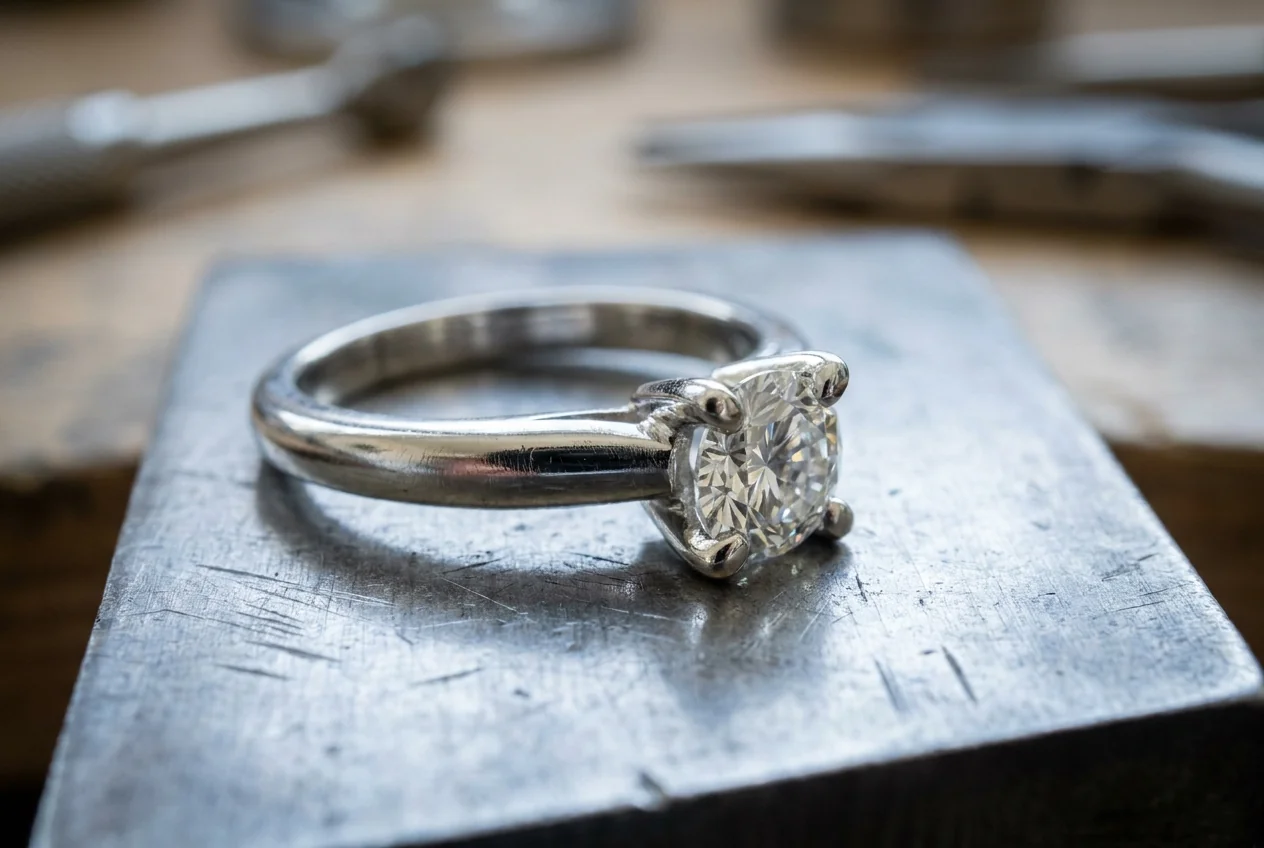
Before Platinum solitaire with one claw worn down to a stub, stone still set
The claw as it arrives

Worn to a stub while the others are still full. Worth noting the alloy and any earlier repair before anything is switched on.

Repair area Macro of a platinum claw being rebuilt under laser welding
Metal rebuilt, pulse by pulse

Matched filler laid in short repeated pulses. Platinum holds the heat at the tip, so the pass stops earlier than instinct says.

After The same platinum solitaire with all four claws full and polished
Shaped and polished back

Filed and finished with the sequence platinum wants. How well it finishes down depends on the alloy, the joint and the operator.

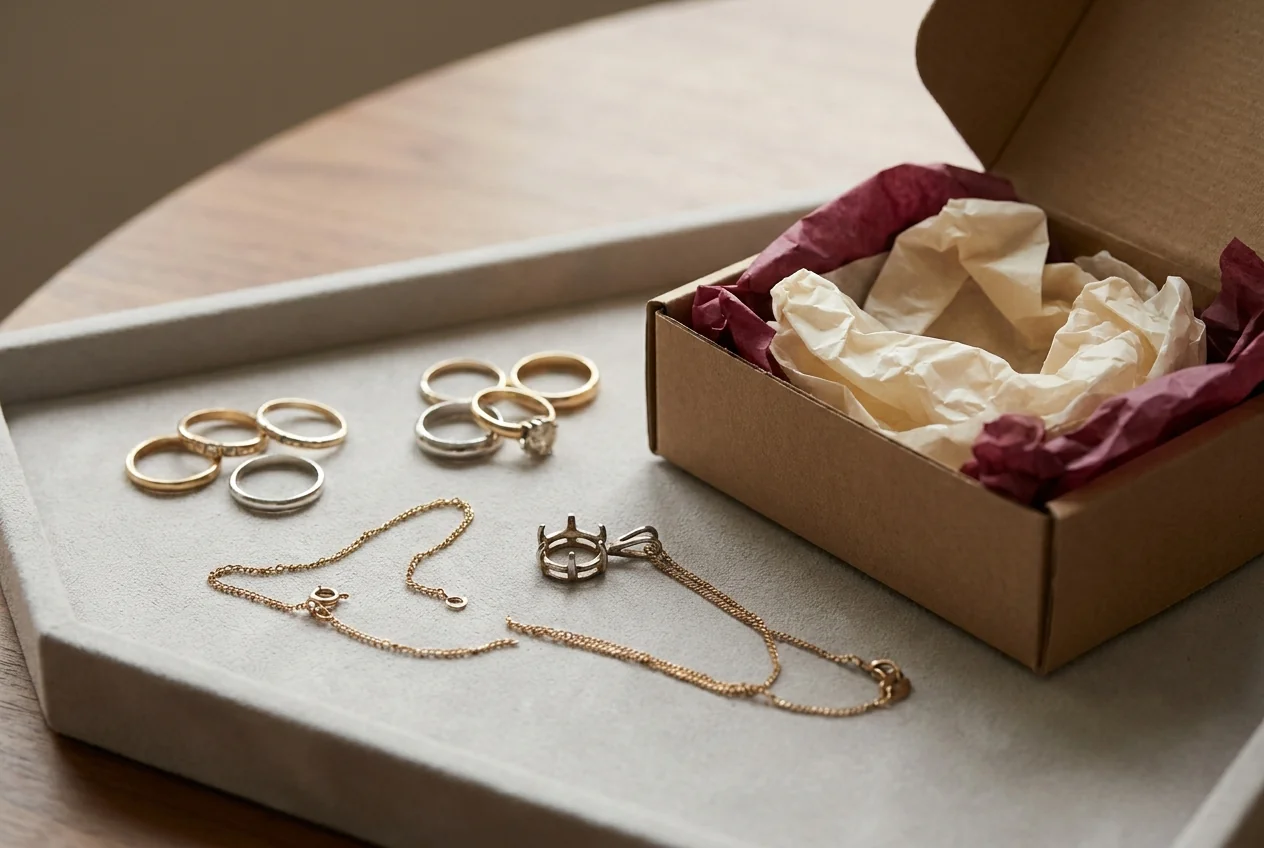
Jewellery packed in a small box ready to send for a test weld

Free Platinum Welding Test

Platinum is the metal where a datasheet tells you least. Send a piece in the alloy you repair most and we will weld it on the model we would recommend for your bench.

  • Tell us the alloy, the repair and how much of it you see in a month
  • We weld it on the model that fits, not the largest one
  • You get the before, repair area and after views back with the piece

Frequently Asked Questions

What platinum benches ask before putting a laser welder on the bench.

It needs more energy delivered into the same small spot. Platinum melts around 700 °C above gold and conducts heat far less readily, so nothing spreads the pulse for you. What matters is the energy available at the smallest spot setting, which is not the same thing as the machine's headline wattage.

A magnet is the quick one: the cobalt alloy responds, ruthenium and iridium alloys do not. Beyond that, a Pt900/Ir piece usually gives itself away by being softer to work, and an unmarked piece is best treated as unknown — start lower and take a short test pass out of sight.

Often, and it is judged piece by piece. Platinum's low conductivity works in your favour here — the heat stays near the tip rather than travelling down into the setting. The stone type, its treatment and how close the joint sits to the girdle still go into the assessment before any energy is used.

It is a different job from a platinum-to-platinum repair, because the two metals melt hundreds of degrees apart. Mixed-metal pieces come up often — a platinum head on a gold shank, for instance — and the right approach depends on which side of the joint the work is on. Send us the piece and we will tell you what we would do with it.

Platinum galls — it smears across the surface instead of cutting cleanly, which is a property of the metal rather than a sign of a poor weld. It wants its own files and its own finishing sequence, and a bench moving from gold to platinum usually notices this before it notices anything about the welder.

Operator training comes with the machine, and parameter storage means a proven platinum setting can be recalled rather than re-found each time. How quickly a bench gets productive depends on the operator and the work — sending a piece for a test weld first is the fastest way to find out.

Tell Us What Platinum Your Bench Repairs

Send the alloys and the repairs you see most, and we will point you at the model that fits — and weld a piece of yours first if you want to see it.