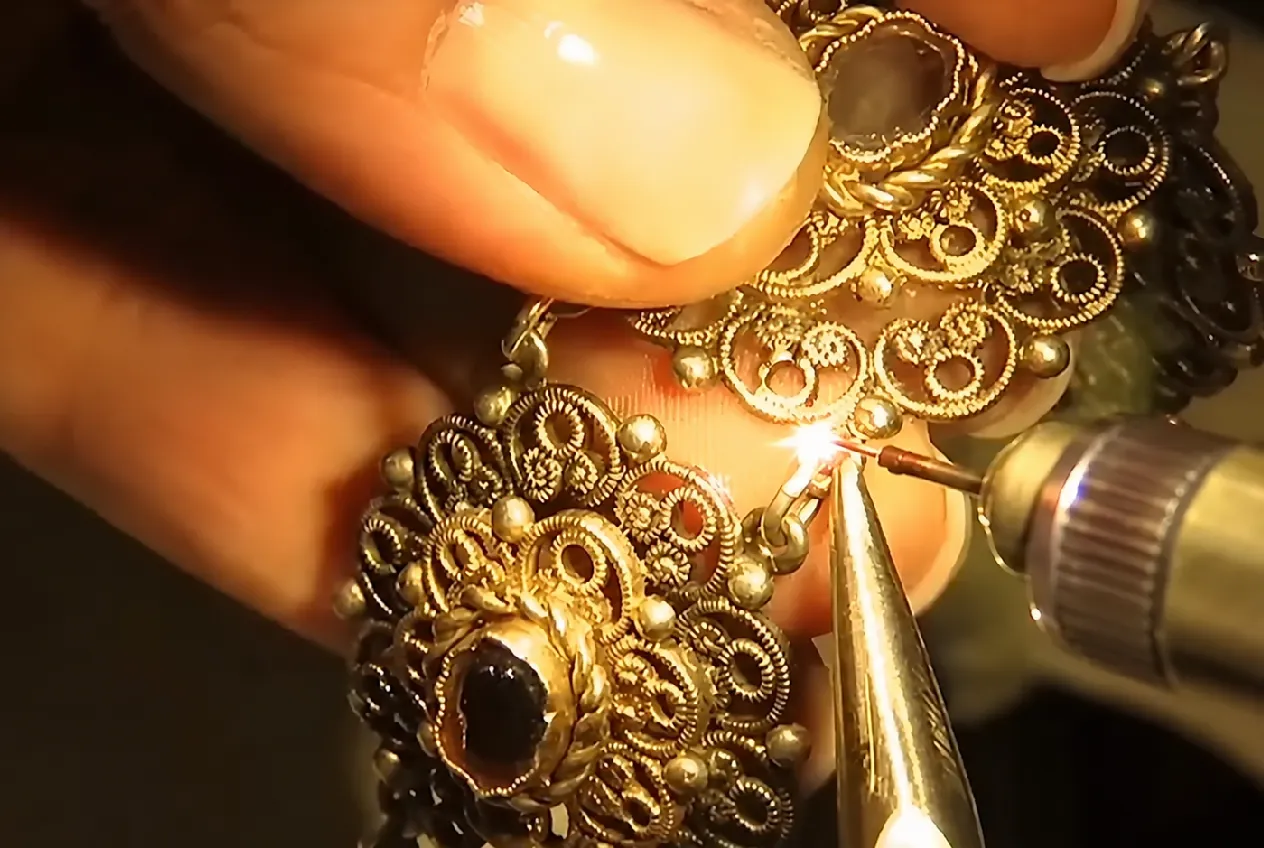
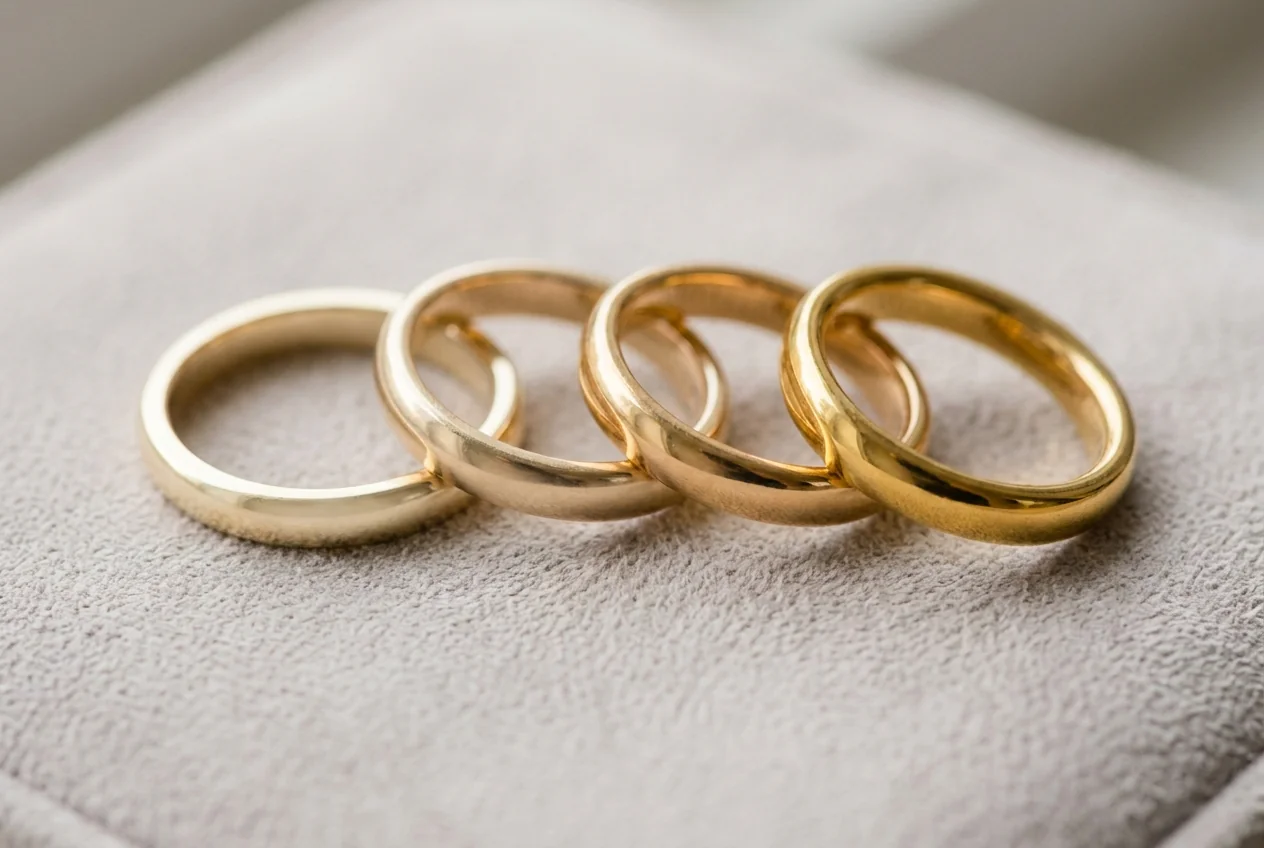
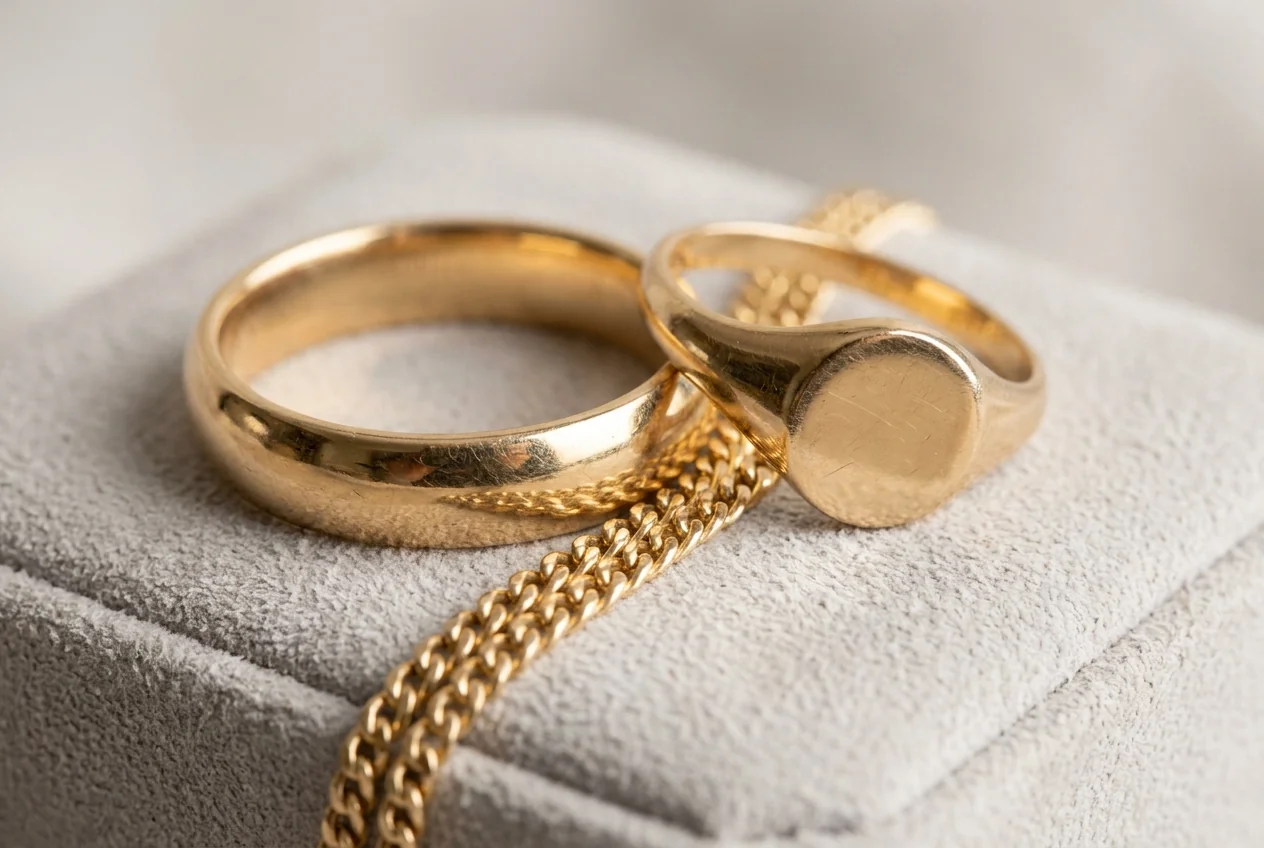
Different golds behave differently under the beam — 10K work-hardens, 22K melts away at the edge, rose gold cracks when it is hot and white gold loses its rhodium at the joint. This page walks through what each alloy asks of the machine, so you can pick a jewelry laser welder for the gold repairs your bench actually sees.
ISO 9001 · CE · RoHS Certified Equipment
Operator Training Included
Factory-Direct Supply
Free Test Weld First
Karat sets how the metal behaves under heat. Colour sets what has to happen after the weld. Most gold repair problems trace back to one of these two.
The hardest and least forgiving of the four. More copper and zinc means more oxide at the joint and a wider melting range, so the pulse has to be placed rather than poured.
The alloy most repair benches see most often, and the one most filler wire is stocked for. Comfortable to weld, but colour still varies between suppliers, so match the wire to the piece.
Flows more readily and shows colour mismatch more plainly, because there is less alloy to hide behind. Fine work here rewards a smaller spot over a stronger one.
Behaves closest to pure gold: very ductile, very conductive, and quick to slump at a thin edge. This is where energy that was fine on 14K will take the section away.
Gold with silver and copper. The most predictable of the three to colour-match, provided the filler karat matches the parent alloy rather than just looking close in the spool.
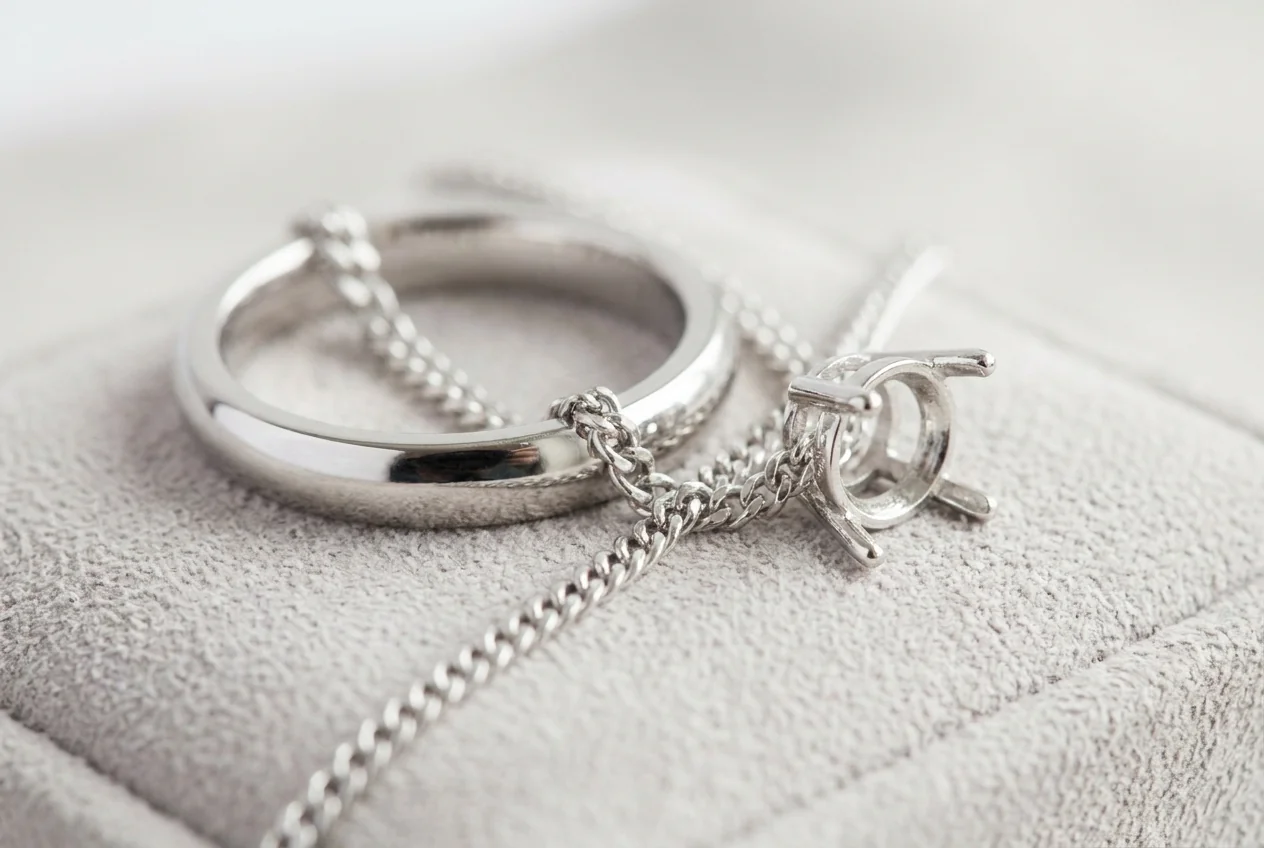
Usually rhodium-plated over a slightly warm alloy. The plating burns off around the weld, so a white gold repair is a welding job followed by a re-plating job — plan for both.
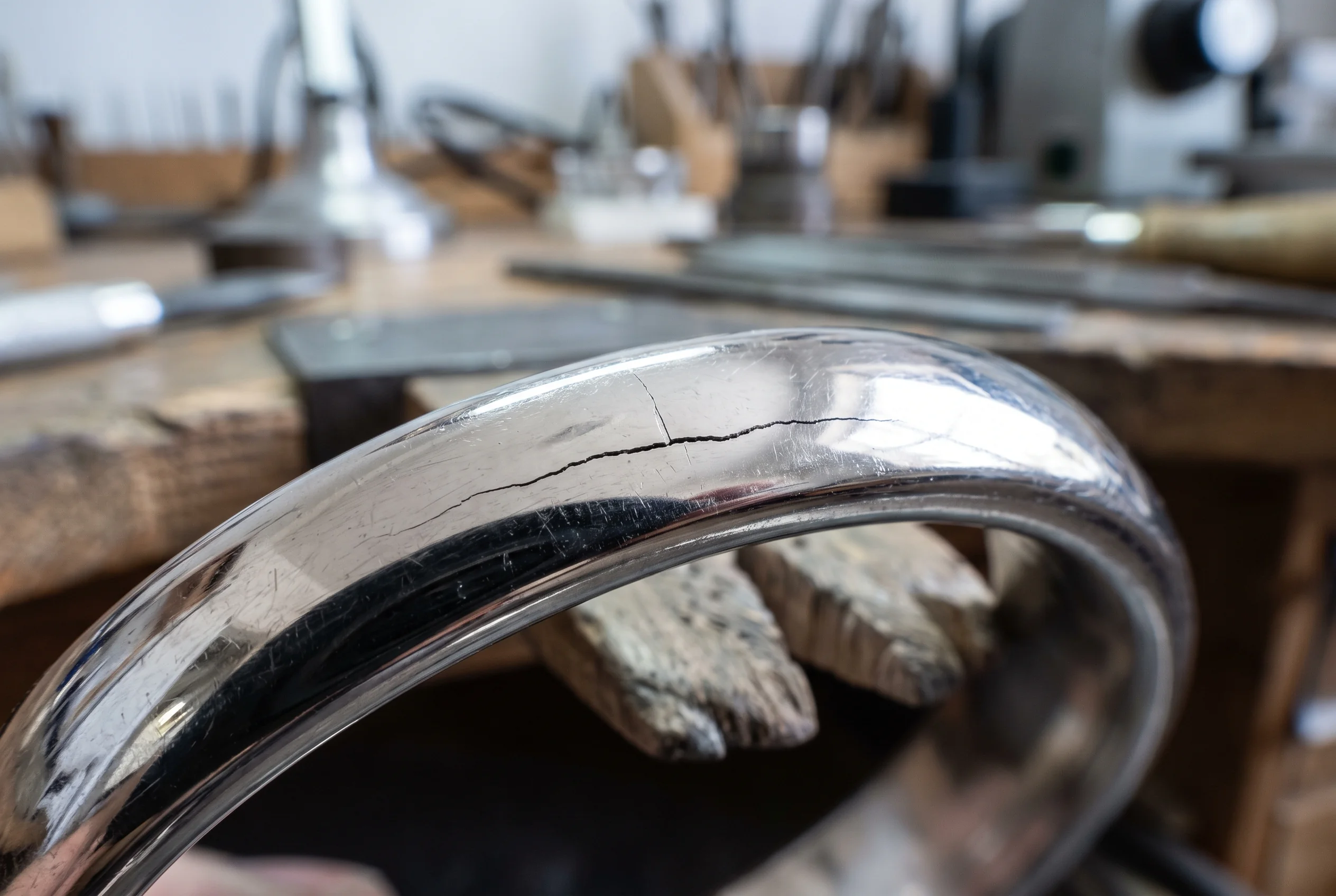
High copper content gives the colour and also the difficulty: copper-rich alloys are more prone to cracking while hot, so short, low pulses beat one long one.
Same beam, same operator, different result — because what is mixed with the gold decides how the joint takes heat.
| Alloy | What it does under the beam | What to change at the machine |
|---|---|---|
| 10K yellow | High base-metal content oxidises readily and the melting range is wide, so the pool is sluggish and dirty-looking if the shielding is poor. | Keep argon coverage tight and work in more, smaller pulses rather than one heavy one. |
| 14K yellow | Predictable pool, moderate conductivity. Colour differences between batches show up at the seam more than the weld itself does. | Match the filler to the piece, not to the label on the spool. Test on a hidden area first. |
| 18K yellow | Softer and more fluid, with less alloy to mask a colour difference. Thin sections move sooner than on 14K. | Drop the energy and tighten the spot before reaching for more power. |
| 22K yellow | Close to pure gold: very conductive, very ductile, and quick to slump at an edge or a fine wire. | Lowest usable energy, shortest pulse, and stop the pass earlier than instinct says. |
| White gold | The alloy underneath is not white — the rhodium plating is. Heat removes the plating around the joint and leaves a warmer halo. | Nothing at the machine fixes this. Weld it, finish it, then re-plate. |
| Rose gold | Copper-rich, so it is more prone to cracking while the metal is still hot, especially on a section that is being held under tension. | Short low pulses, let it cool between passes, and support the piece so the joint is not being pulled open. |
Not the joint — the metal around it. Five things that turn a five-minute weld into a remake.
Gold is one of the most conductive metals on the bench. Energy that stays put in steel spreads out in 22K, which is why the same setting behaves differently on two pieces.
A worn claw tip or a fine chain link can be a few tenths of a millimetre. The edge reaches melting before the joint does, so the limit is the section, not the machine.
A joint that is mechanically fine but a shade off reads as a repair under a shop light. On gold, colour matching is half the job and it happens when you choose the filler.
Most pieces coming in for repair have been repaired before. Lower-melting solder left in the joint behaves nothing like the parent alloy and will show as a different colour or a crack.
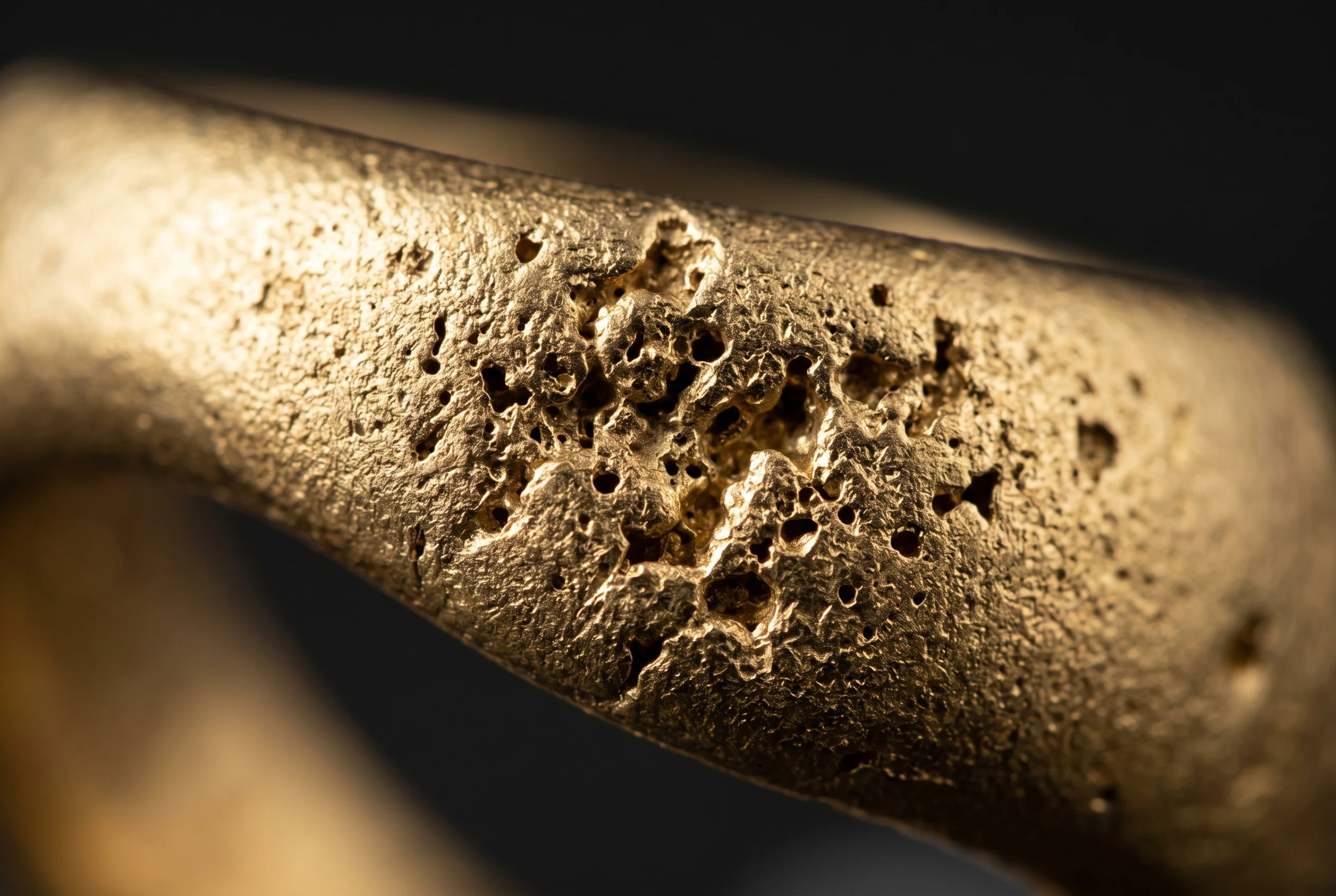
Gas pits trapped in the original casting do not show until heat brings them to the surface. Filling them is normal work, but it needs filler and patience, not more power.
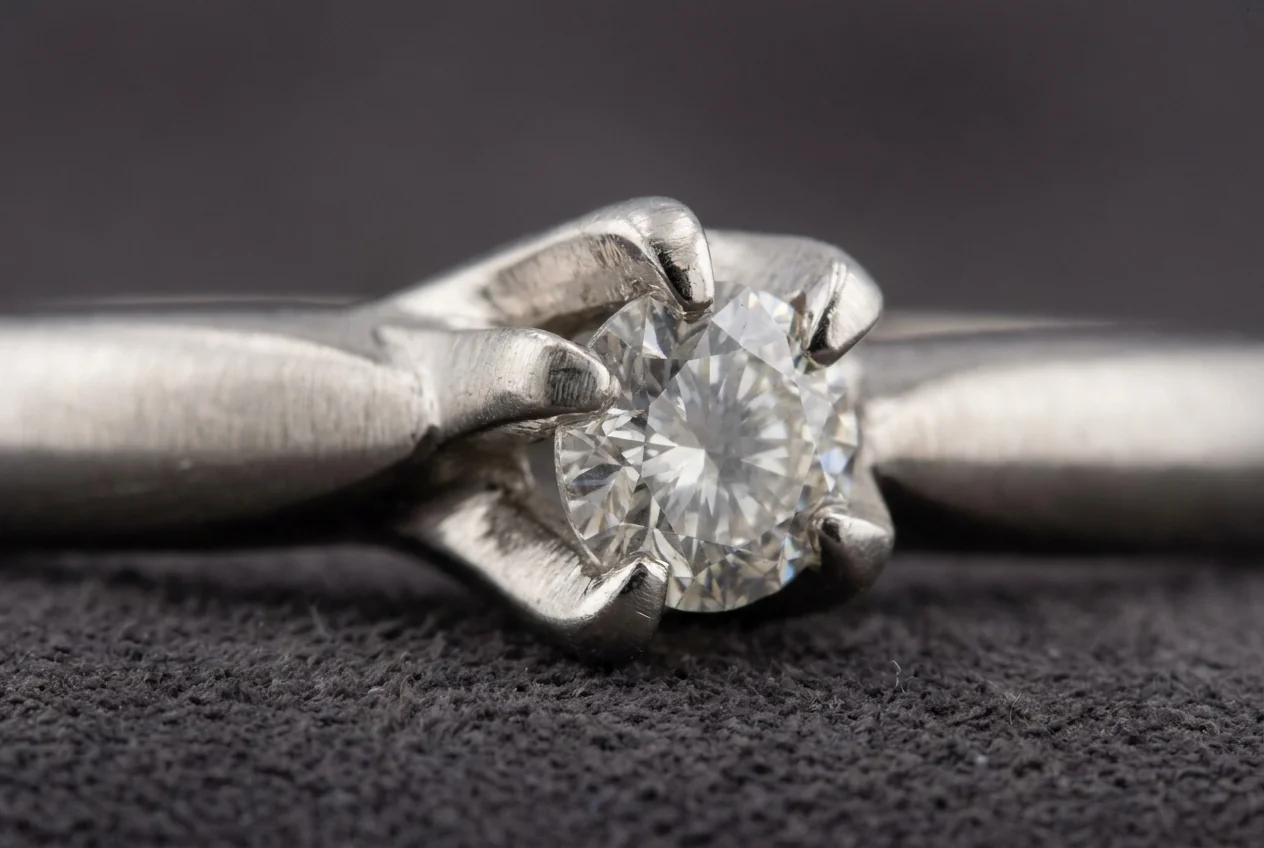
A prong tip is well under a millimetre across. What the viewing system cannot resolve, the operator cannot place energy on, whatever the laser is capable of.
For gold jewelry repair, precise control matters more than simply choosing the highest laser power.

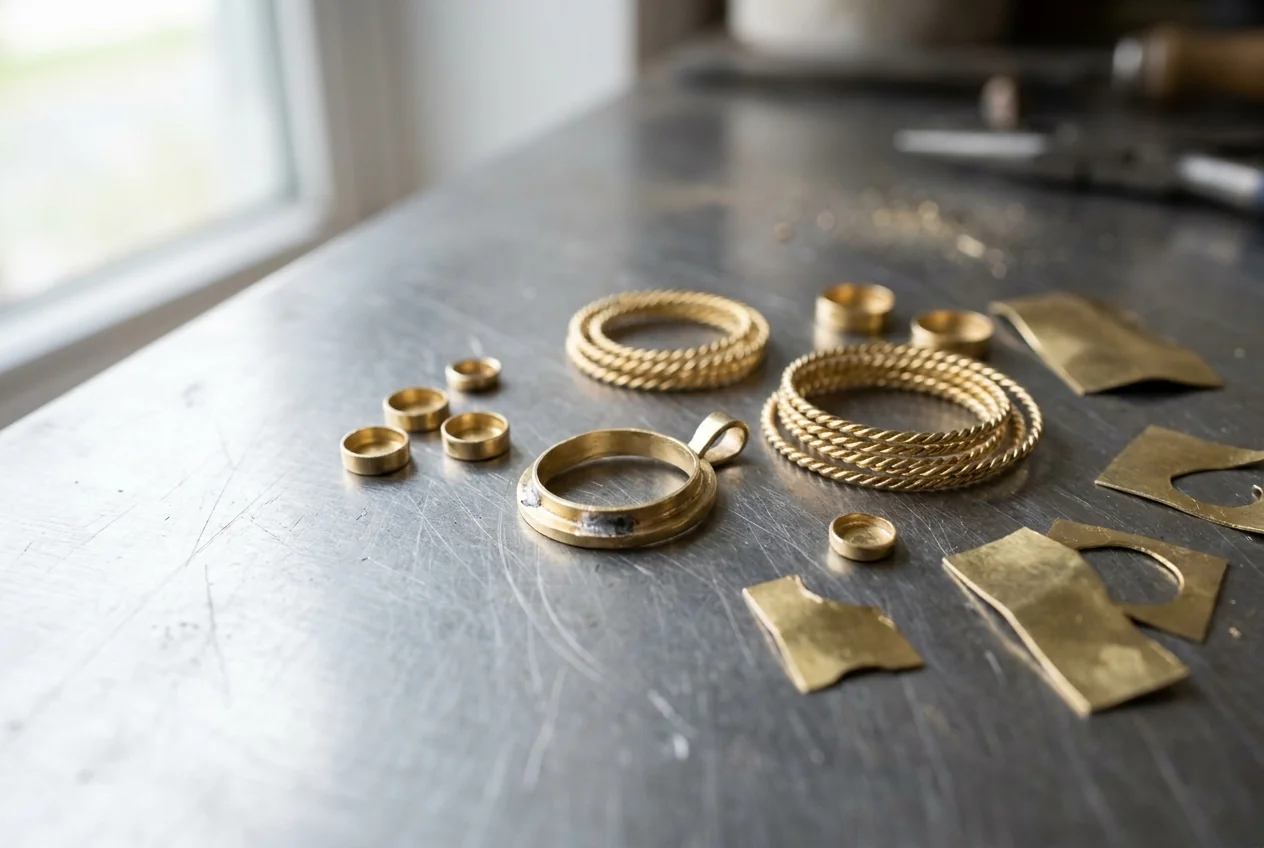
Laser welding lets you add metal of the same karat and colour as the piece, so the joint is the parent alloy rather than a lower-melting solder sitting in a gap. That is the whole reason a laser repair finishes differently from a soldered one — and it only holds if the wire on the bench actually matches the piece in the hand.
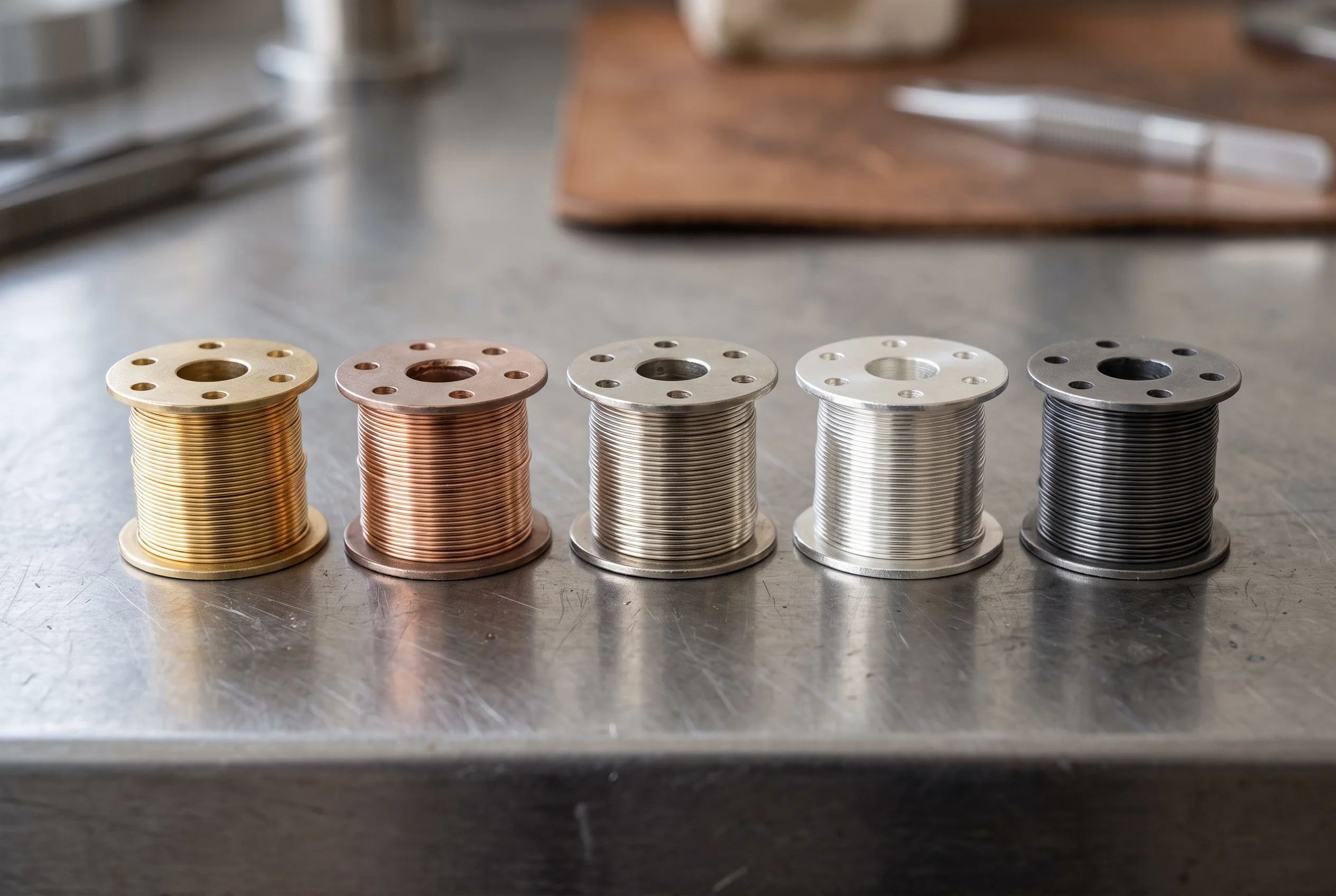
Wire is sold by karat and colour, but two 14K yellow spools from two suppliers can still read differently against a customer's ring. Test on an inconspicuous area before committing to the visible joint.
Karat, colour and whether the piece has been repaired before. A hallmark is a starting point, not an answer.
Same karat, same colour family. Where the piece sits between two spools, the warmer one usually blends better after polishing.
A short pass on the inside of a shank or under a gallery tells you the colour match before the visible joint does.
Build the joint in passes, then file and polish as you would any joint. White gold goes on for re-plating from here.
Both belong on a working bench. What changes is where the heat goes and what ends up sitting in the joint.
| Laser welding | Torch soldering | |
|---|---|---|
| Heat | Delivered in millisecond pulses to a spot you aim at under magnification. | Applied to the area, and the piece as a whole comes up with it. |
| Metal in the joint | Filler of the same karat and colour as the piece. | Solder, which melts lower than the parent alloy by design. |
| Set stones | Often workable in place, judged piece by piece before any energy goes near. | Usually means unsetting first, then setting again afterwards. |
| Finishing | File and polish the joint; no second alloy to blend out. | File and polish, plus disguising a solder line that reads a different colour. |
| Where it still wins | Fine, local, close-to-stone work and rebuilding worn metal. | Long seams, large joins and jobs where a flowing joint is what you want. |
| Learning curve | Days to be useful, and parameter storage carries the settings forward. | Years of bench time, already sitting in most goldsmiths' hands. |
Six results that come back from a gold bench, and the cause worth checking first.
Filler karat or colour family does not match the parent alloy, or the piece is 14K from a different supplier than the wire.
Gas porosity already in the casting has been opened by the heat. It needs filling in passes, not a heavier pulse.
Old solder left in the joint, a copper-rich rose alloy cracking while hot, or a piece held under tension while it cooled.
Spot too large or energy too high for the section thickness — most often on 18K and 22K, where the same setting was fine on 14K.
Too much filler laid down in too few passes. Building lower and finishing more usually costs less time than dressing a mound back.
The rhodium plating has burned off around the joint, showing the alloy underneath. Expected on white gold — the piece goes for re-plating.
Each specification below is written as what it changes on a gold bench, rather than what it says on a datasheet.
Which controls each gold job leans on. Read across your most common work, then take that row to the model comparison.
| Gold job | Spot size | Pulse width | Low-energy steadiness | Filler handling | Optics |
|---|---|---|---|---|---|
| Ring resizing | Medium | Medium | Lower | Critical | Medium |
| Chain & clasp | Critical | Critical | Critical | Lower | Critical |
| Prong retipping | Critical | Critical | Critical | Critical | Critical |
| Crack repair | Medium | Critical | Medium | Medium | Medium |
| Casting porosity | Medium | Medium | Medium | Critical | Medium |
| Custom fabrication | Medium | Medium | Medium | Medium | Medium |
| Batch production | Medium | Medium | Critical | Medium | Medium |
Critical means the job usually fails on this control before it fails on anything else. It is a way of ranking what to compare, not a specification.
Four benches, four different amounts of gold work. Every model in the range covers the 0.1 – 2.0 mm spot and 0.1 – 5.0 ms pulse width that gold repair needs — what changes above that is optics, cooling and how long it can run.
Small repair shops taking gold work back off a trade bench
Goldsmiths and full-service jewelers welding gold every day
Studios doing close-to-stone and filigree gold work
Manufacturers running gold batches across shifts
The three views worth photographing on any gold job, shown here on a sized shank. Send us your own piece and we will weld it and send the same three views back.
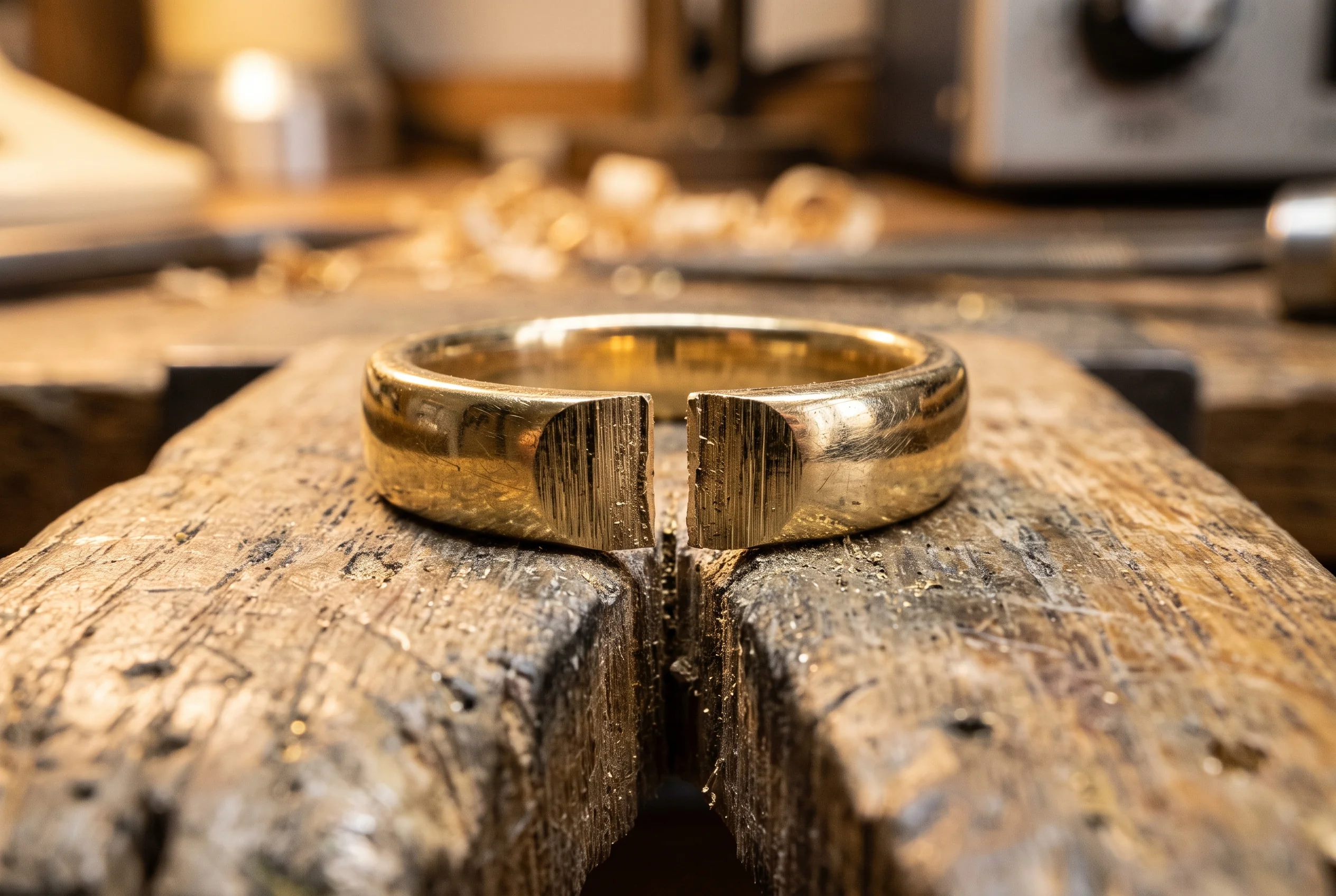
Shank cut and opened for sizing. Worth recording the karat, the colour and any earlier repair before anything is switched on.
Matched wire built up in passes rather than one heavy one. This is the view that tells you whether the colour is going to match.
The same filing and polishing any joint needs. How well it finishes down depends on the alloy, the joint and the operator.

Specifications only take the decision so far. Send a piece in the alloy you repair most — 10K, 14K, 18K, 22K, yellow, white or rose — and we will weld it on the model we would recommend for your bench and send it back with the before, weld area and after views.
What repair shops ask before they put a laser welder on a gold bench.
Send the alloys and the jobs you see most, and we will point you at the model that fits — and weld a piece of yours first if you want to see it.