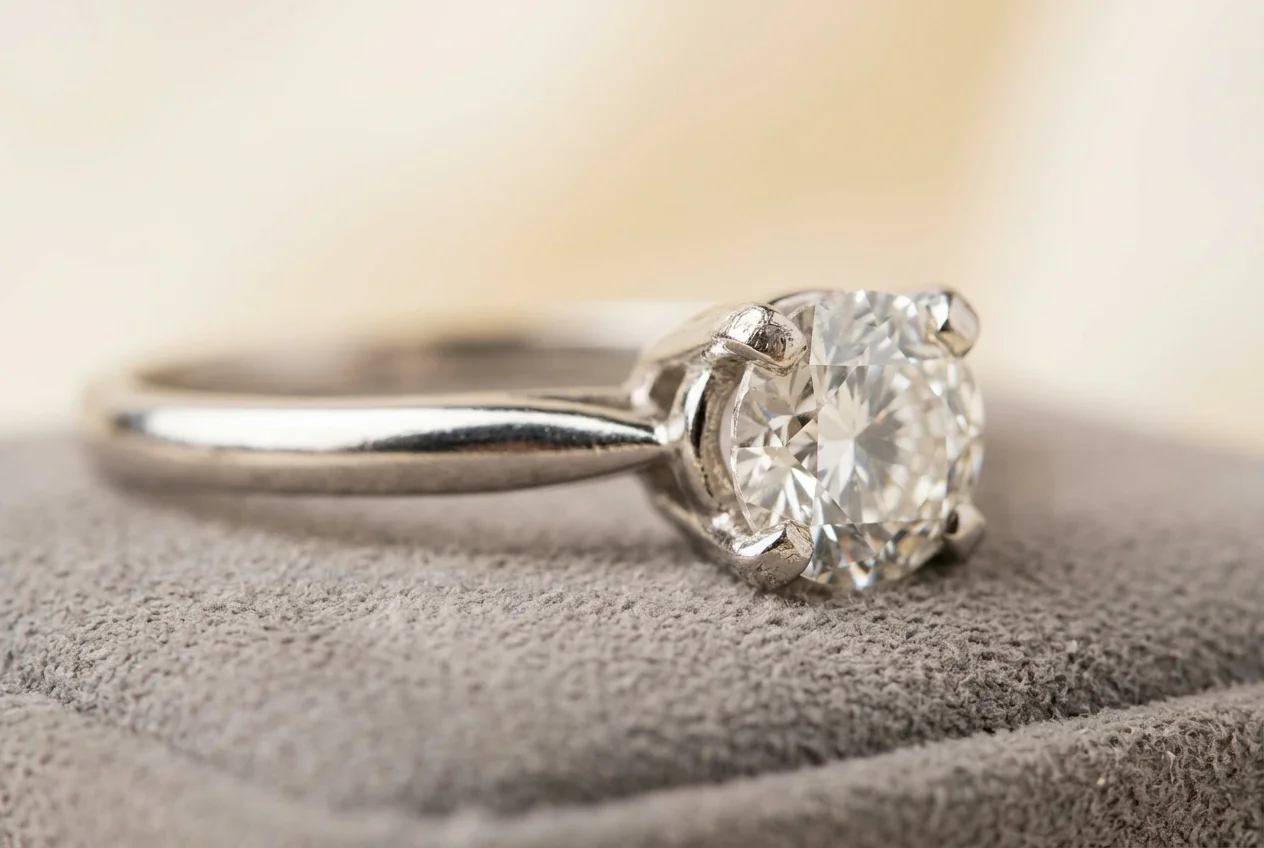
A laser welder lets your bench take resizing work in-house — plain bands, stone-set rings, platinum, titanium and mixed alloys. Heat stays confined to the joint, so there is far less to correct afterwards than a torch leaves behind. Whether a specific stone-set piece can be welded in place is judged piece by piece.
The metal decides how the joint behaves and what the machine has to hold steady. This is what each one actually asks of the bench — including the one that is usually a no.
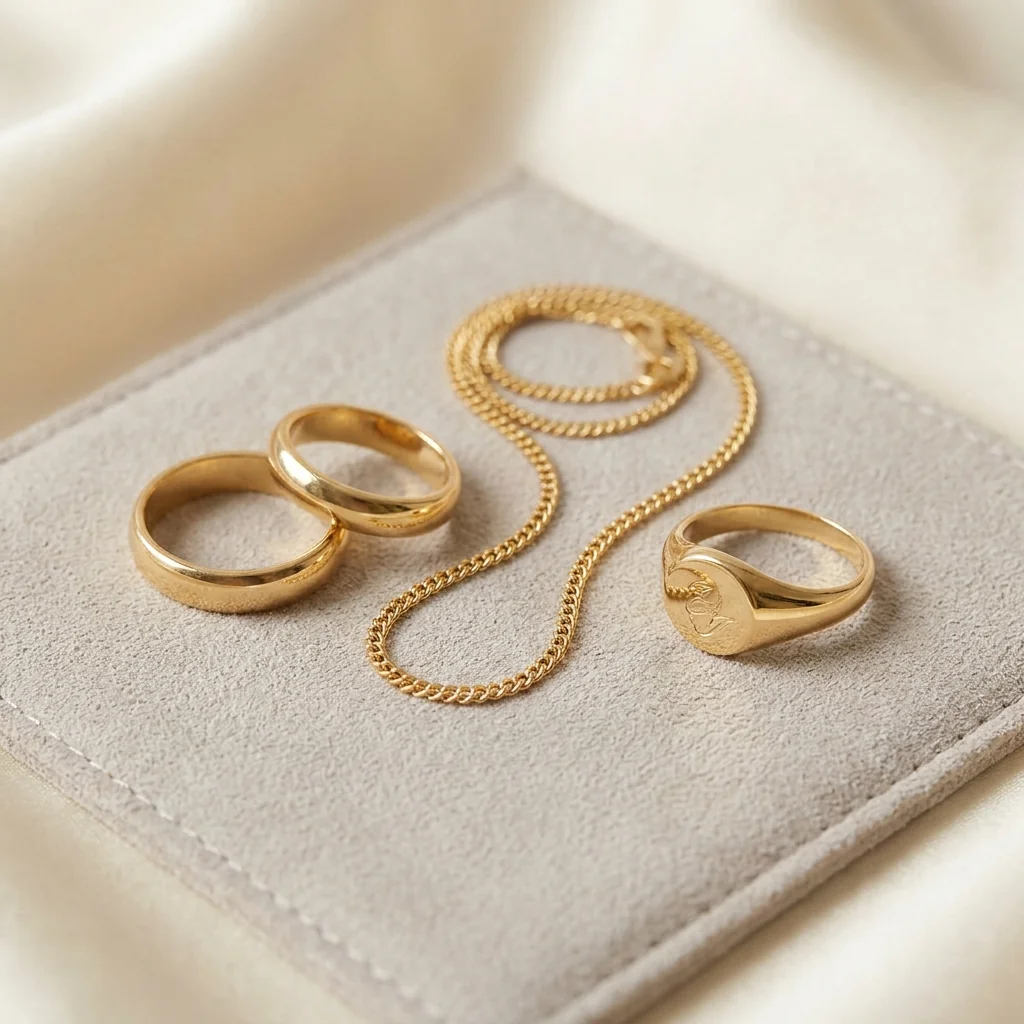
Gold — 14K / 18K, yellow, white and rose
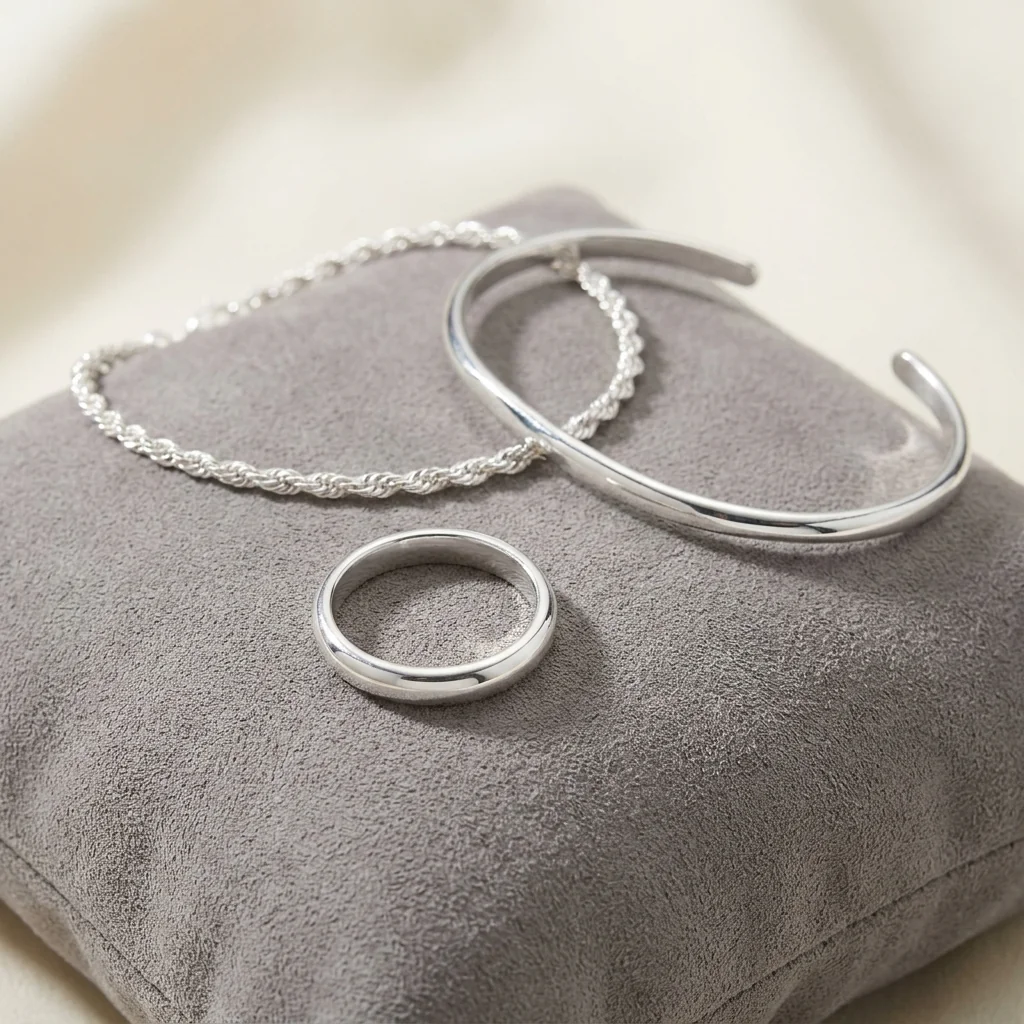
Sterling silver
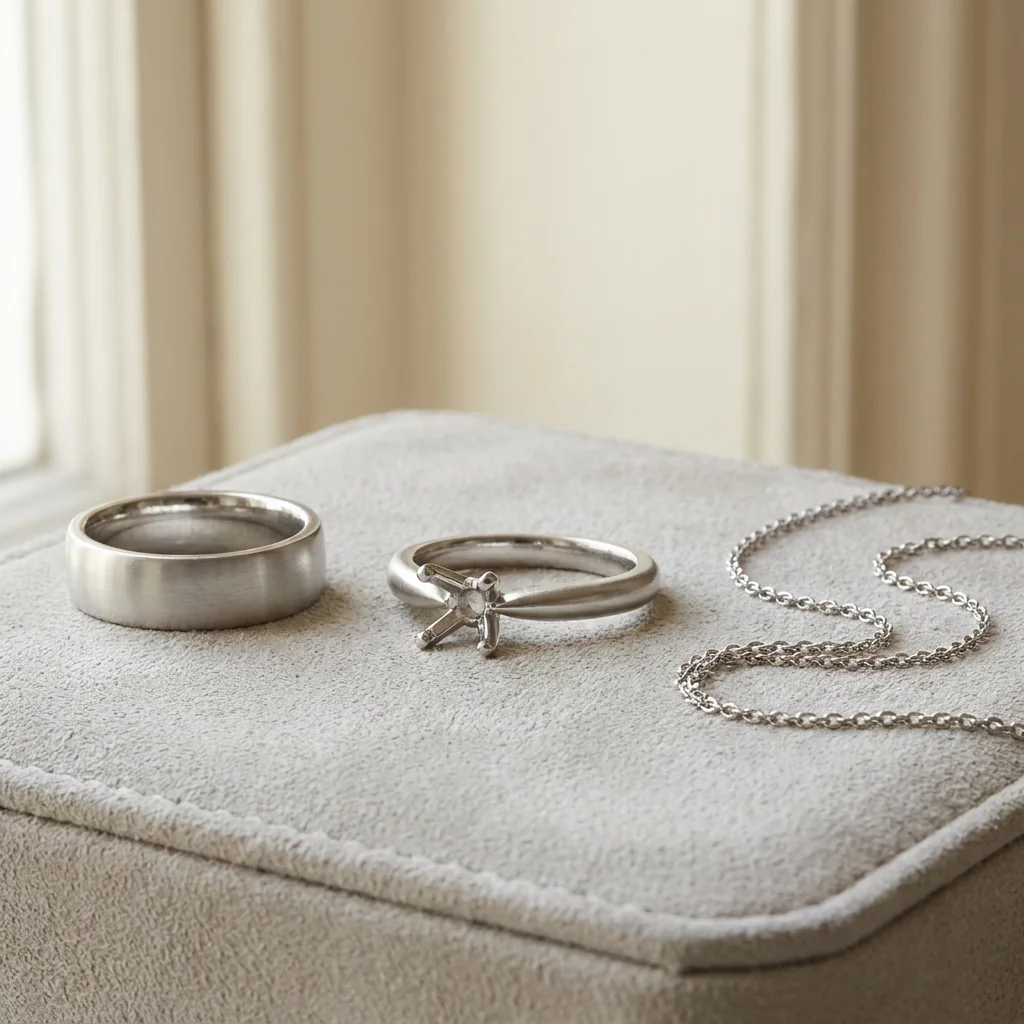
Platinum & palladium| Metal | What makes it awkward | What that asks of the machine |
|---|---|---|
| Gold 14K / 18K Routine |
The everyday case. The complication is colour rather than the weld — yellow, white and rose each want their own filler so the seam does not read as a different metal after polishing. | Matching filler wire per colour, and stored parameters so you are not re-dialling between a yellow band and a white one. |
| Sterling silver Needs care |
Silver carries heat away from the joint faster than gold does, so energy that would be right on a gold band can arrive at the seam already spent. | Enough energy in reserve at the working spot size, and the patience to test on an offcut before the customer's ring. |
| Platinum Routine |
Melts far hotter than gold and stays where it is put, which makes the joint clean but leaves no margin for an underpowered pulse. | A usable pulse energy range at the top end — this is the metal that exposes a machine bought purely on price. |
| Palladium Routine |
A white metal that behaves broadly like platinum on the bench, and welds to itself without the colour-matching problem white gold brings. | Much the same brief as platinum. Worth confirming the alloy, as palladium is sold in several. |
| Titanium Needs care |
Reactive while hot — it will pick up oxygen from the air at the weld and go brittle or discoloured if the pool is left exposed. | Shielding gas at the joint, and settings proven on scrap first. A torch gives no usable joint here at all, which is why these rings get refused elsewhere. |
| Tungsten carbide Not resized |
Not a weldable metal in the bench sense — it is a hard, brittle sintered material. It does not take a weld and it cracks rather than moves. | Nothing, and we would rather say so. These rings are exchanged or cut off in an emergency, not resized. Any supplier telling you otherwise is selling you a disappointment. |
| Two-tone & mixed Needs care |
Two alloys meet at one seam, and they do not respond to the same pulse. One setting will not serve both sides of the joint. | Fine parameter control and the ability to change settings mid-job — the reason two-tone work sits above plain bands when choosing a tier. |
Alloys sold under the same name vary between suppliers. Where a ring is unmarked or reclaimed, a test weld on an offcut settles it faster than a specification sheet does.
They look like one job on a worksheet and behave like two at the bench. What separates them is whether metal has to be added or taken away — and that is what decides which machine handles both comfortably.

The shank is opened and a piece of matching stock is fused in. The joint has to fill a gap rather than simply close one, so this is the direction that leans on pulse energy and on the operator's control of how much material melts at once. Beyond roughly two or three sizes, adding stock stops being an adjustment and becomes a rebuild worth quoting separately.
A section is removed and the two ends are brought together and fused. There is no gap to bridge and no filler introduced, so the seam is a fusion of the parent metal. The demand shifts from energy to precision: the ends have to meet cleanly before anything is welded.
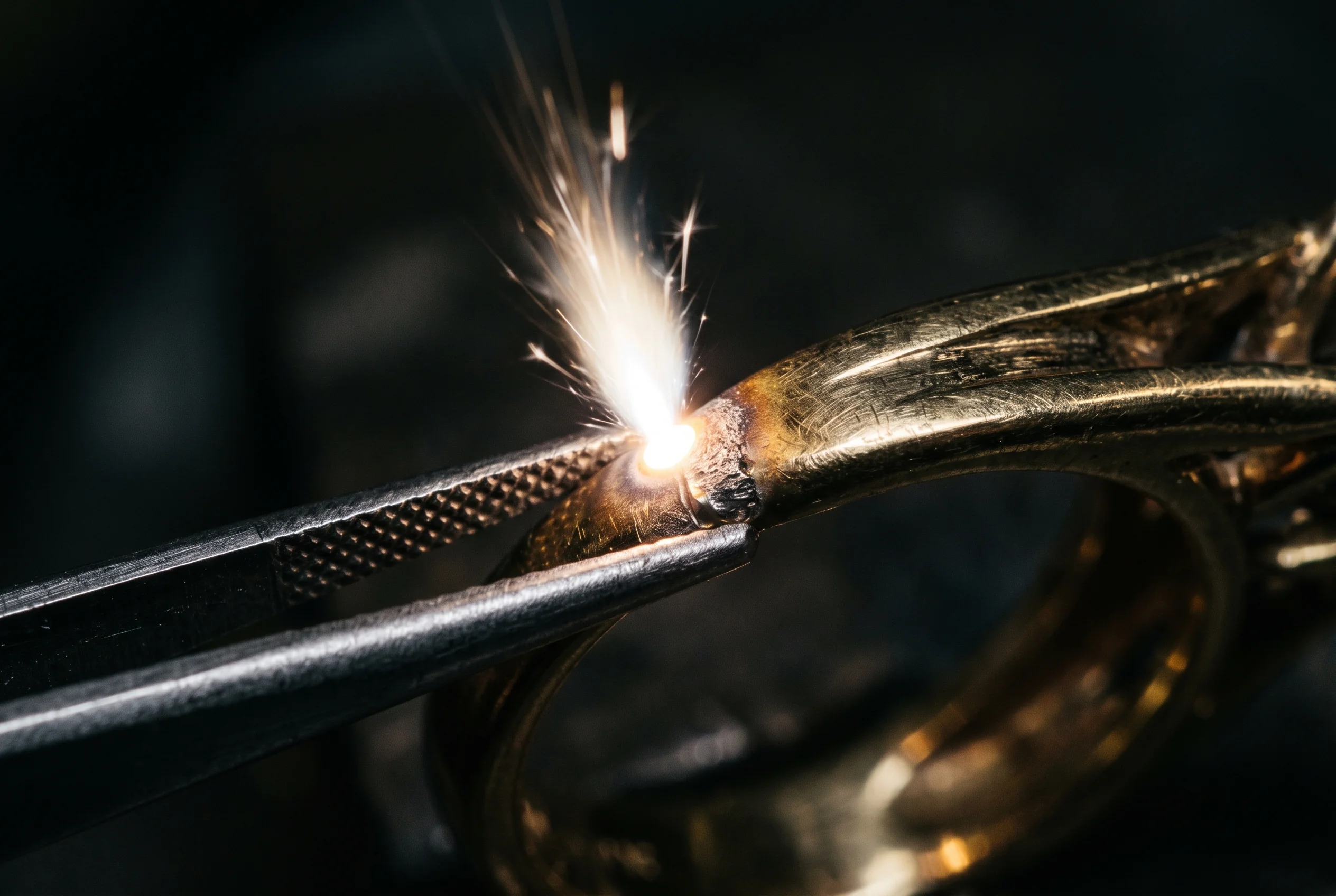
Heat stays local to the joint instead of travelling through the shank, which is what keeps the rest of the ring — and anything set into it — out of the process. That is the difference from a torch, and it is the reason this work can sit on a bench rather than go out.
The distance asked for changes what the job is — and at some point it stops being a resize. Read across before you price the work.
Either direction, on most plain and lightly set bands. One seam, minimal reshaping, and the proportions of the ring are unchanged. This is the bread-and-butter job a laser makes quick enough to keep in house.
Still one seam, but the shank thins noticeably going up and the pattern or engraving starts to distort going down. Stone-set pieces need the setting checked for distortion, not just the joint.
Adding this much stock is a shank rebuild, not an adjustment, and removing it can throw a patterned or channel-set band out of proportion. Worth pricing as its own job — and worth telling the customer why.

Not the welder. The limits are the wall thickness left in the shank, whether a pattern or channel runs round the band, and how much the setting can tolerate being moved. A machine that welds cleanly does not make a ring that has run out of metal safe to wear.
Owning the machine means this assessment happens with the customer in front of you, not after the piece has travelled to a trade bench and come back with a question attached.
Four stages, and the one that decides the result is not the welding.
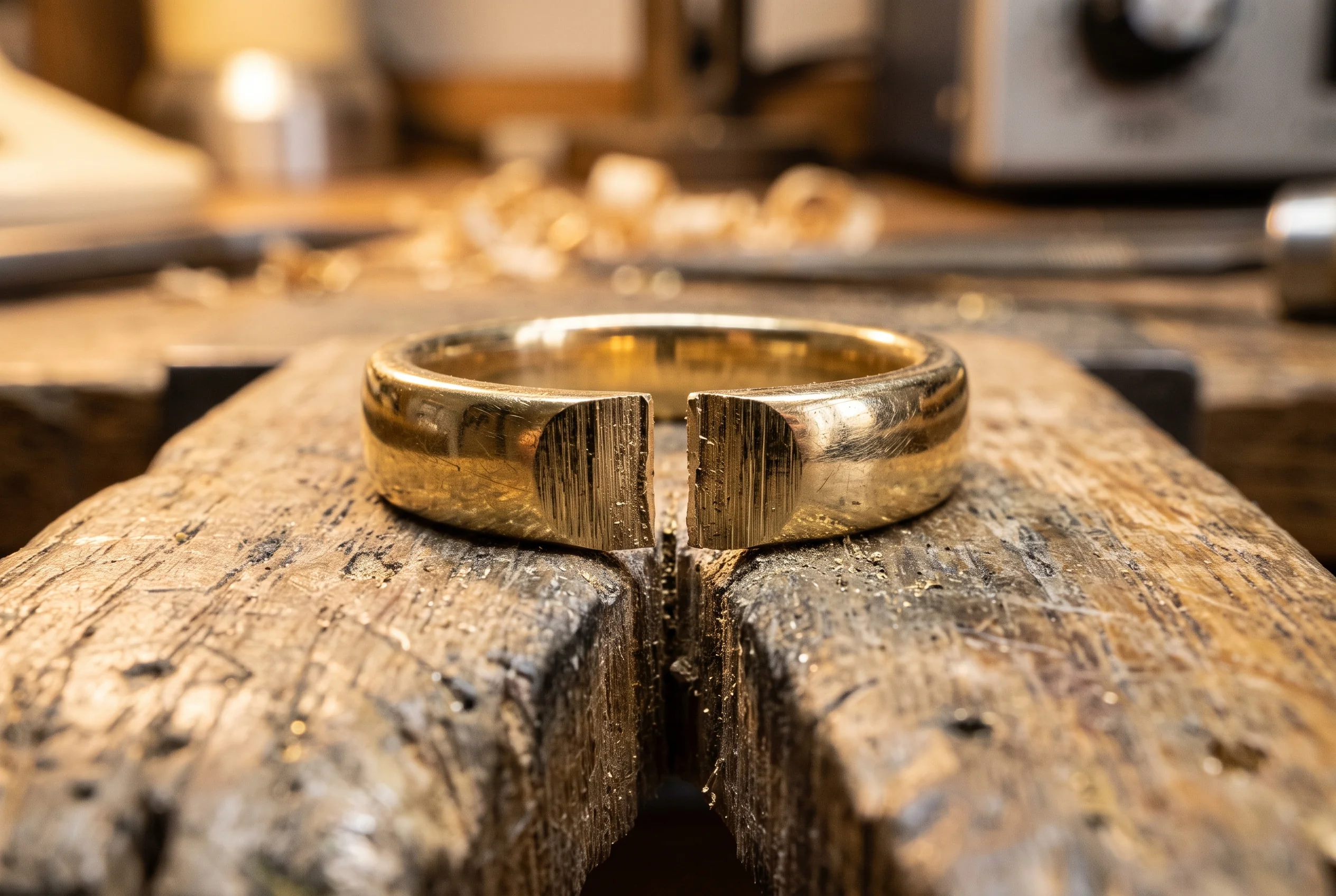
The shank is cut at the bottom. Going up, stock is prepared to fill the gap; going down, a measured section comes out.
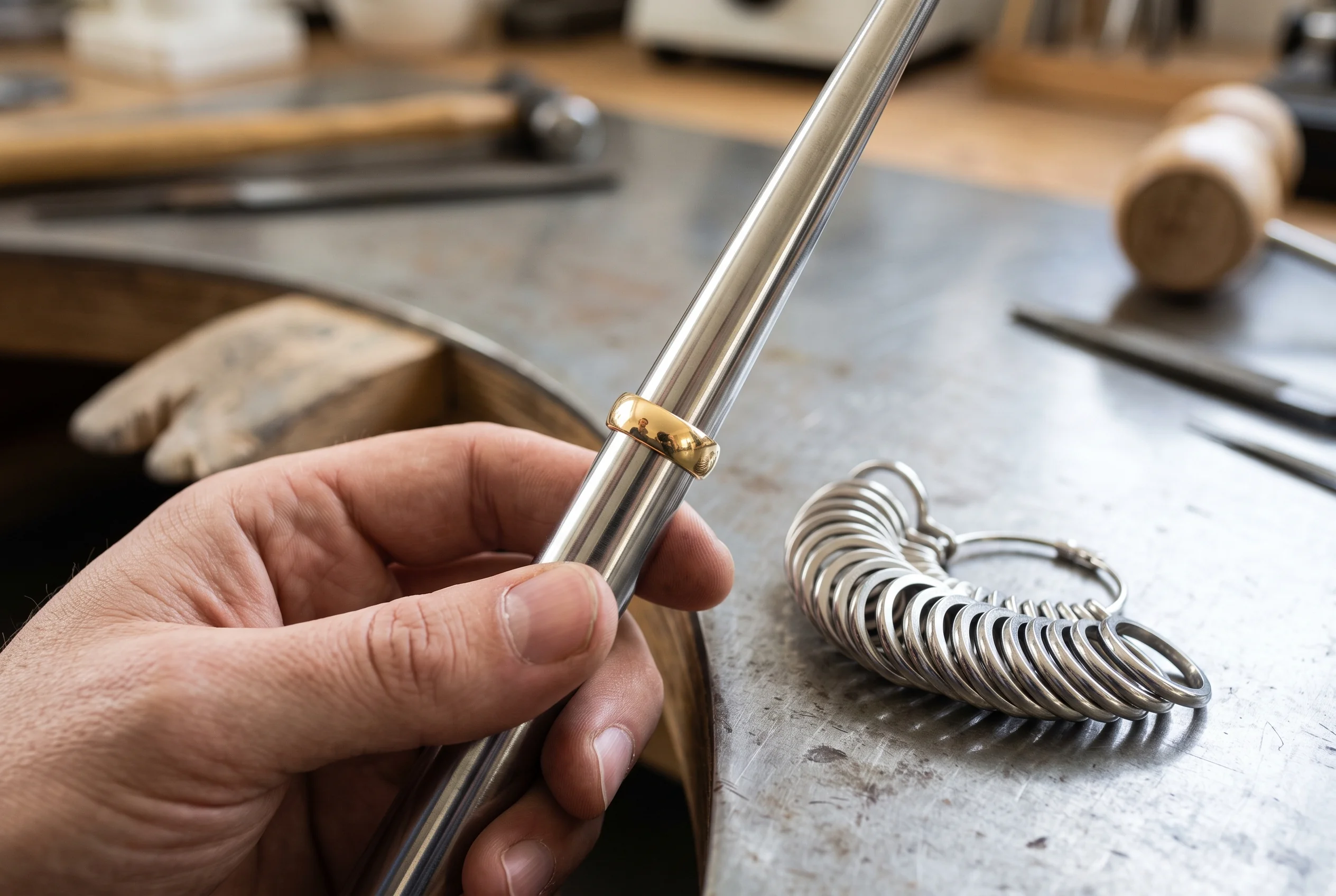
The band is worked back to round on a mandrel and the two faces brought to meet cleanly. This is the stage that decides the seam — a laser cannot close a gap that was never aligned.
Pulses are placed along the seam under magnification. Heat stays at the joint rather than travelling round the band, which is what keeps a set stone out of the process.
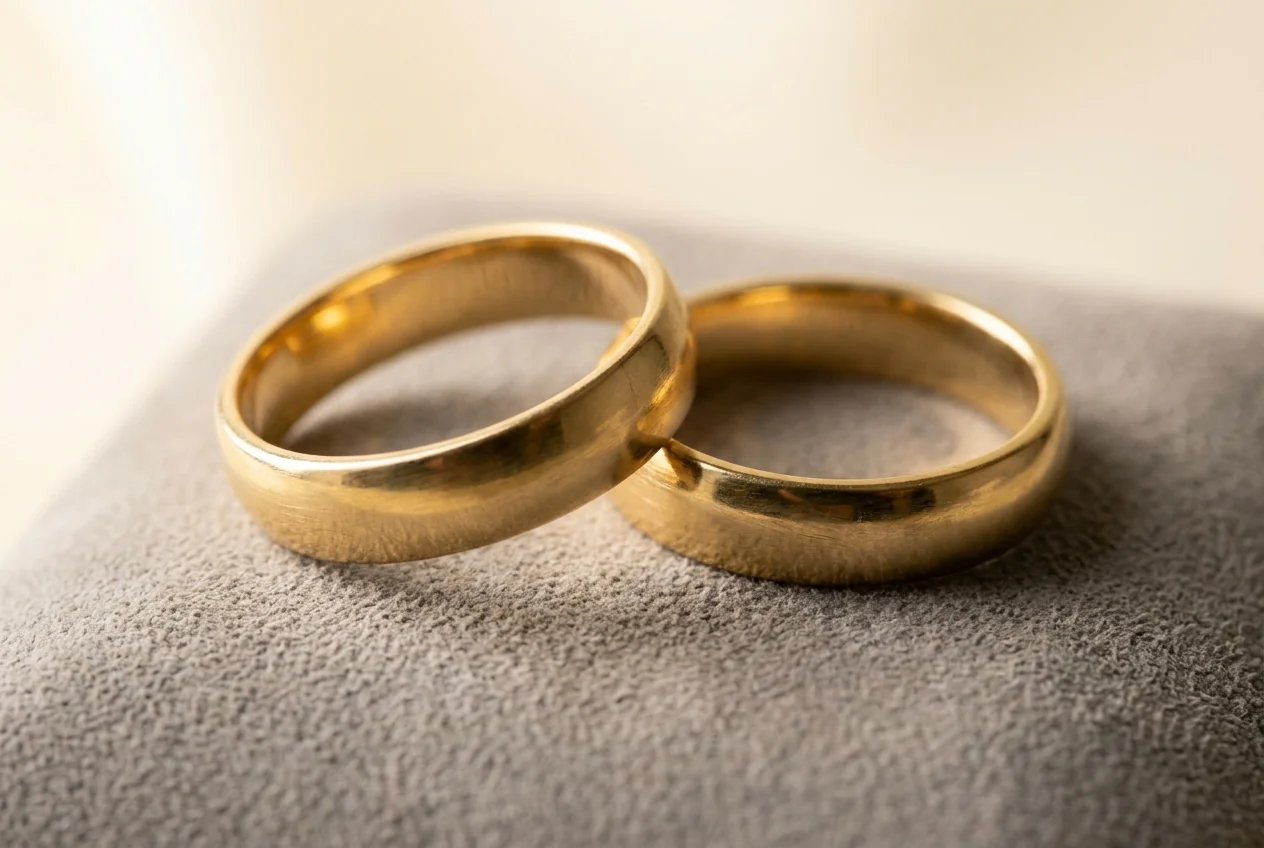
File, emery and polish the joint back into the band. With no lower-melting solder in the seam there is no second colour to blend out.
Same job, two different sets of constraints. Read the columns against each other rather than down.
Most benches keep both. A torch is still faster and cheaper on large joins with no stones and no setting nearby.

This is the work that usually leaves the building, and it is the work a laser changes most. Heat is confined to a microscopic weld point rather than travelling through the shank, so stones set away from the joint can often stay where they are.
Often — not always. Whether a specific piece can be welded with the stone in place depends on the stone type, any treatment it has had, the setting style, and how far it sits from the weld. That judgement is made piece by piece at the bench, which is exactly why owning the machine matters: you can assess it in front of the customer instead of quoting blind.
A small controllable spot, microscope-guided positioning, and heat that does not conduct along the band. Those three together are what separates a machine you can take stone-set work on from one you cannot.
See why more jewelers and customers are switching to laser welding for ring resizing.
| At the resizing bench | Laser welding | Torch soldering |
|---|---|---|
| Stones near the joint | Often stay set — judged per piece on stone, treatment and distance | Usually unset first and reset after |
| Where the heat goes | Stays at the weld point | Travels through the whole shank |
| What fills the seam | Parent metal fused to itself | Solder — a different alloy and colour |
| Finishing after the joint | No pickling; polish the seam back | Pickle, remove firescale, re-polish |
| Titanium | Workable with shielding gas | No usable joint |
| Tungsten carbide | Not resized either way | Not resized either way |
| Where the torch still wins | Slower to set up per joint on bulk work | Large joins with no stones and no setting nearby |
These are the reasons resizing gets sent out, and what changes when the joint is made with a laser instead of a torch.
Solder is a different alloy with a different colour and a lower melting point, so the join catches the light no matter how it is finished. A laser fuses the parent metal, so there is no second alloy to show.
A torch heats the whole shank to get one joint hot enough. That is why stones come out first — and why the job takes two extra stages before any welding happens.
Broad heating leaves oxidation across the piece, so pickling and re-polishing follow every joint. Localized energy leaves far less of the ring to put back together.
Torch soldering gives no usable joint on titanium, so those rings get refused or sent away; with shielding gas a laser makes them workable. Tungsten carbide is a different answer — it is not resized by either method, and saying so early saves a conversation later.
Two metals meeting at one joint need tighter parameter control than a single alloy does — one set of settings will not serve both sides of the seam.
Sizing sometimes exposes voids that were already in the casting. Filling them is its own job — and one the same machine handles.
Resizing is a narrower brief than "jewellery welding" in general. These are the specifications that decide whether the job is comfortable, listed as what each one changes at the bench rather than as a number to compare.
Read the full buying guideWhich machine suits you follows from the rings that actually cross your bench — plain bands, stone-set work, specialist alloys, or volume. Each model links to its full specification.
An affordable investment with practical performance — built for smaller shops and lower repair frequency, with ring resizing named as a core application. The right starting point if most of your work is gold and silver bands.
MW-DW200 specificationBuilt around a small spot and fine thermal control for detailed goldsmithing, in a stylish design that looks professional in a modern jewelry store — the model to look at if you want to take stone-set resizing rather than send it out.
NOVA specificationOne machine that welds, marks and cuts — built for active shops and goldsmiths working across several metals in the same week, with more applications covered on a single bench.
M3 specificationBuilt for continuous operation under a heavy workload — busy repair centres and multi-operator benches, where a stored setting holding stable between operators matters more than any peak figure.
QCW Series specificationA model is a starting point, not a verdict — most benches mix this work, and the final configuration is set against your own job mix.
Send a ring you would normally send out — a plain band, a stone-set piece, a titanium one — and see the joint before you decide anything. The test weld itself is free, the piece comes back to you, and there is no obligation attached to it.
If sending a piece is awkward, photographs of the ring and the joint are enough for a first assessment.
Request a Free Welding Test Send your ring photos