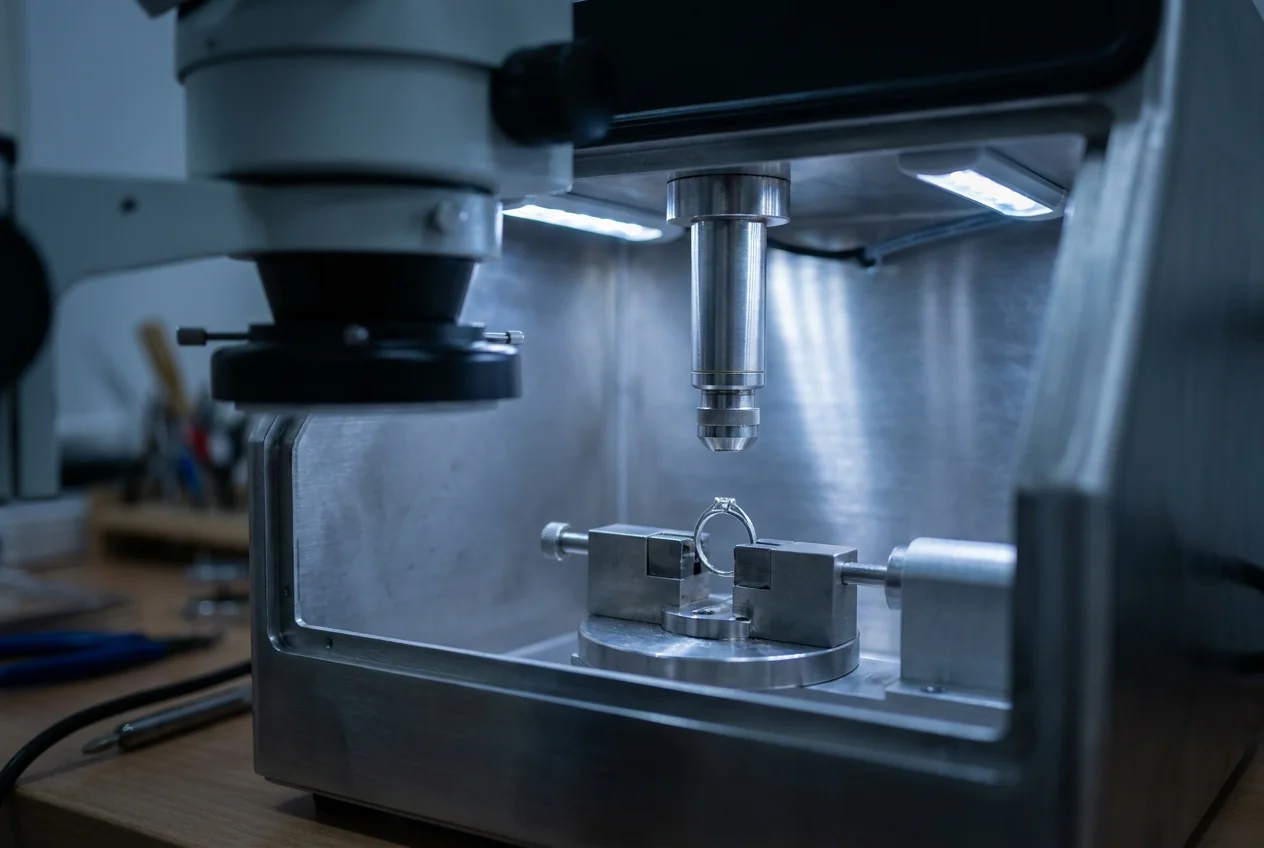
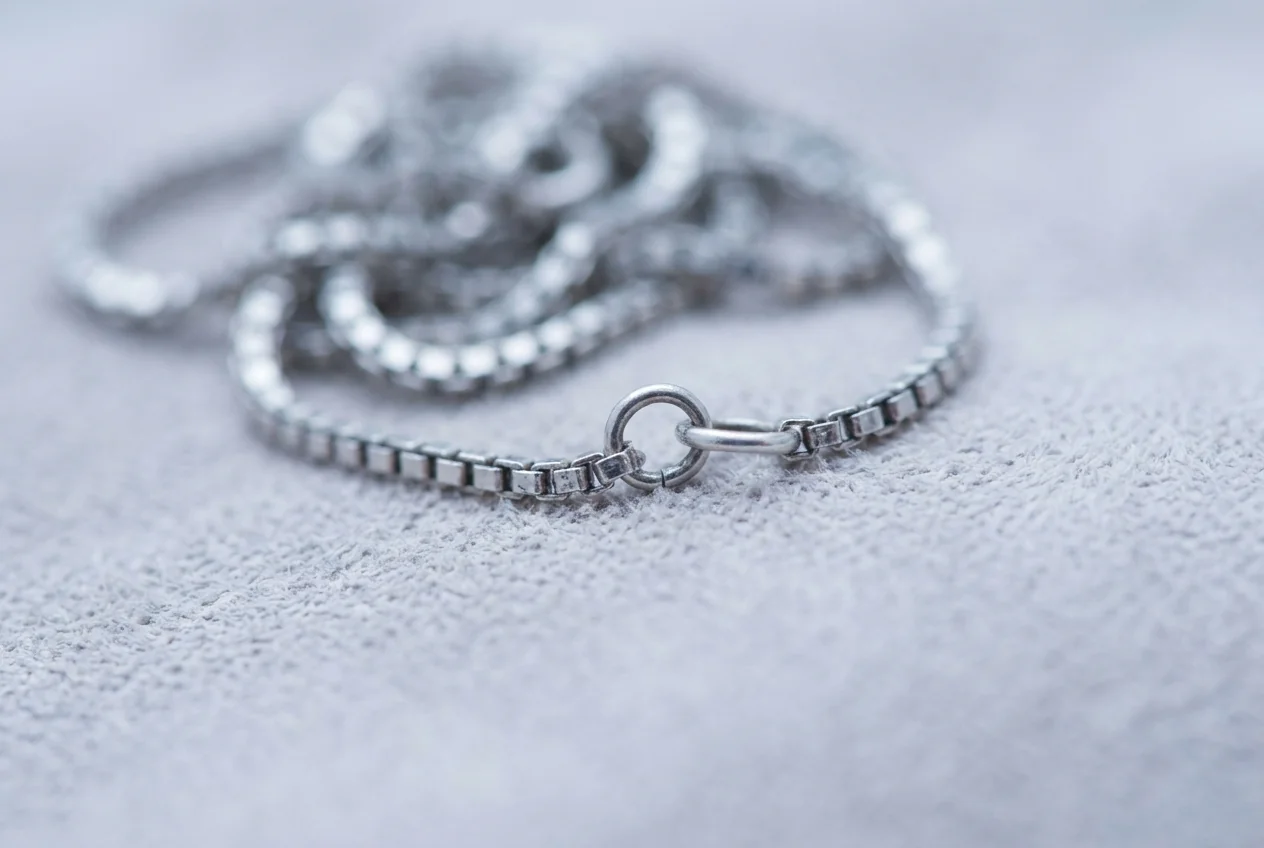
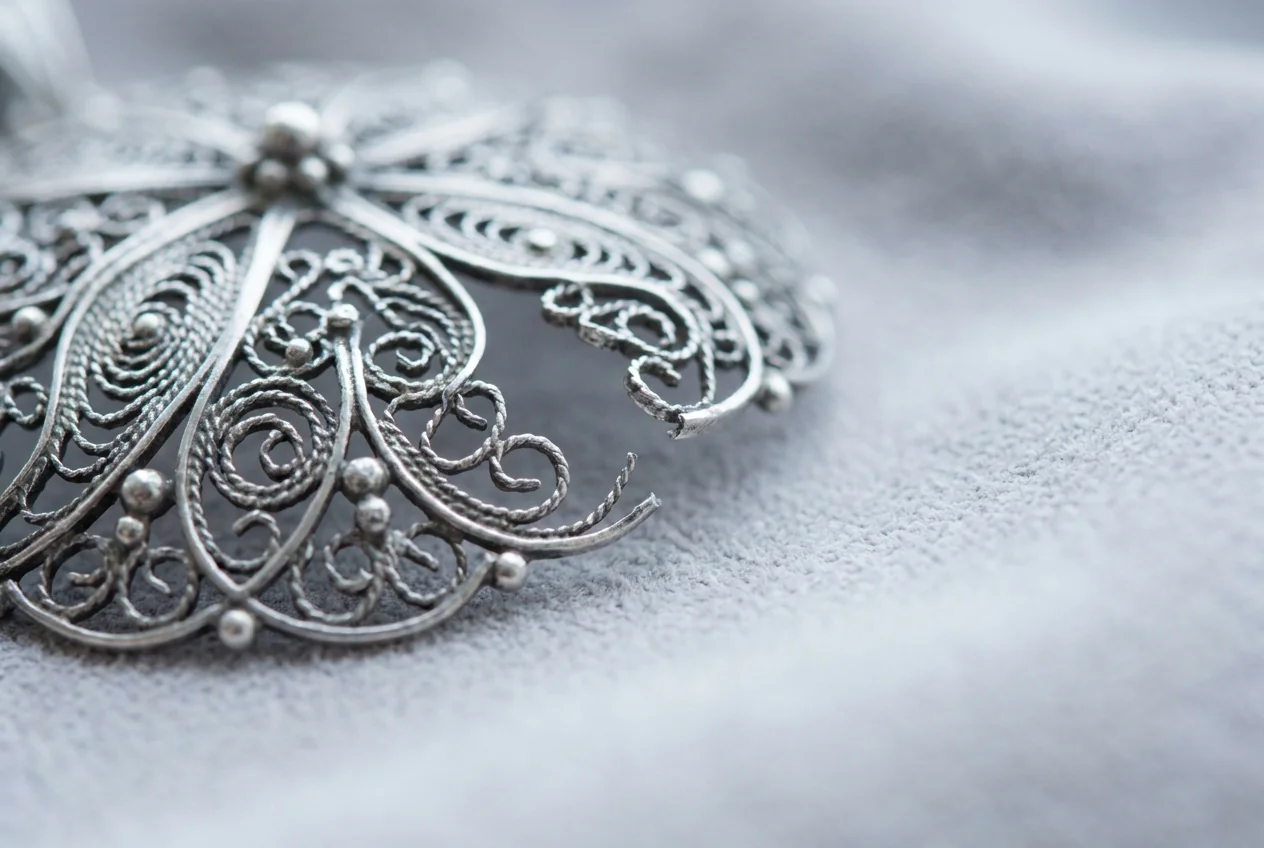
Silver conducts heat faster than any other metal on the bench and reflects most of the beam back at you. That is what makes fine chain, filigree and thin sheet the hardest work a jeweler brings to a laser — and it is what should decide which welder you buy.
Smallest spot
Thermal conductivity
Four properties explain almost every silver welding problem. Settings carried over from a gold job will not behave the same way here.
Silver has the highest thermal conductivity of any metal. Energy leaves the joint before it fuses, so a setting that worked on 14K under-fuses on sterling.
A bright polished silver surface sends most of a 1064 nm pulse straight back. Coupling is unreliable until the surface is keyed or lightly oxidised at the spot.
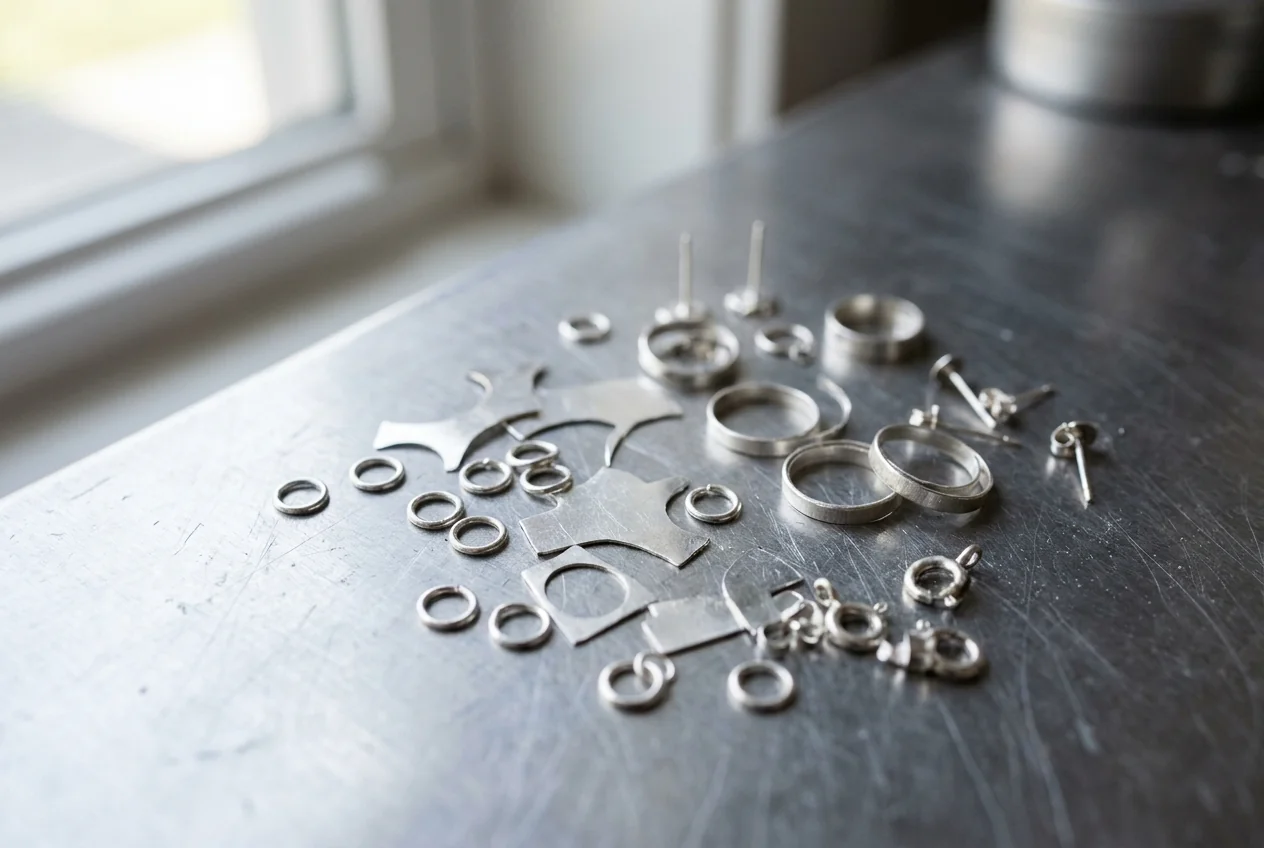
Silver is where fine chain, filigree wire and thin sheet live. The section reaches melting long before the joint does, so the limit is the piece, not the laser.
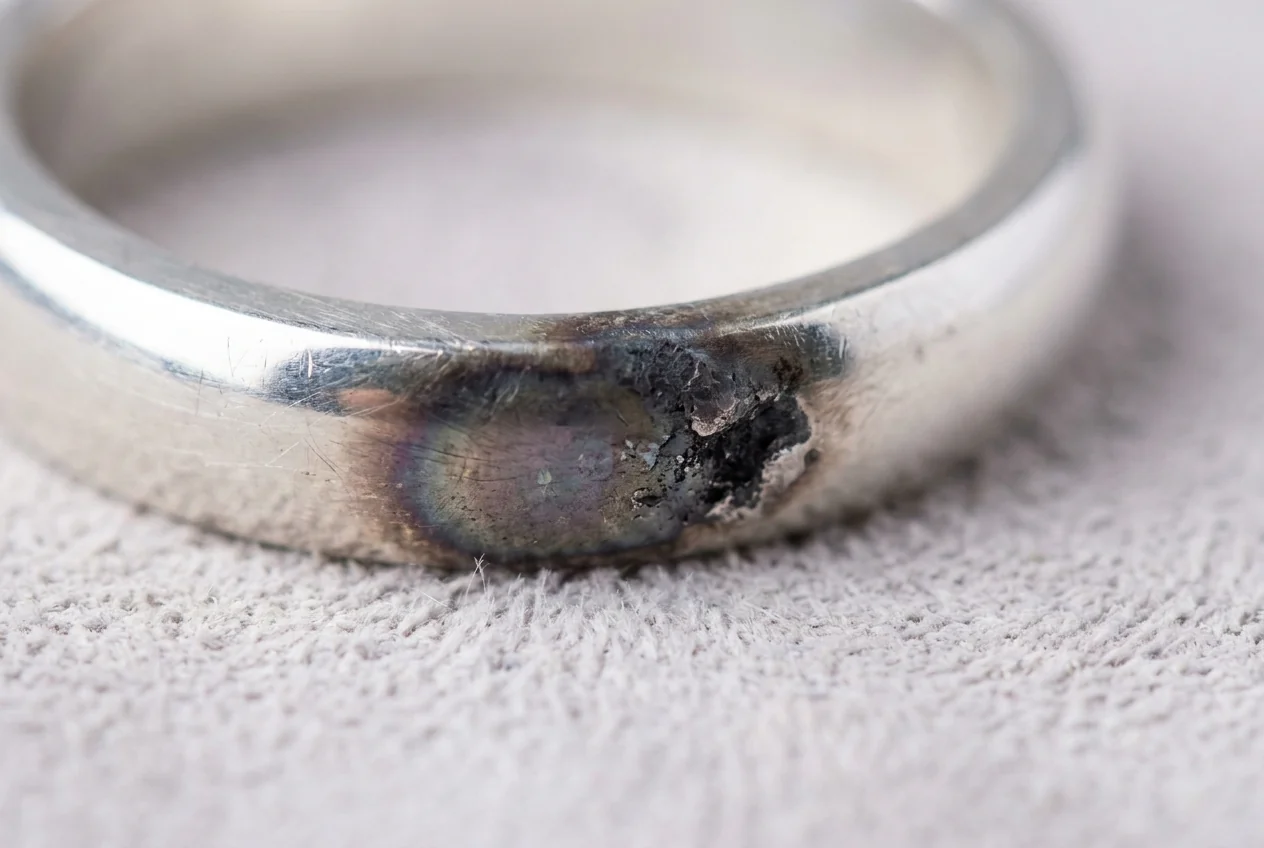
Sterling is 7.5% copper, and copper is what leaves firescale and darkened patches around a heated area. Shielding and short pulses keep that local.
On silver the useful question is not how much power the machine has, but how small and how steadily it can put energy down.
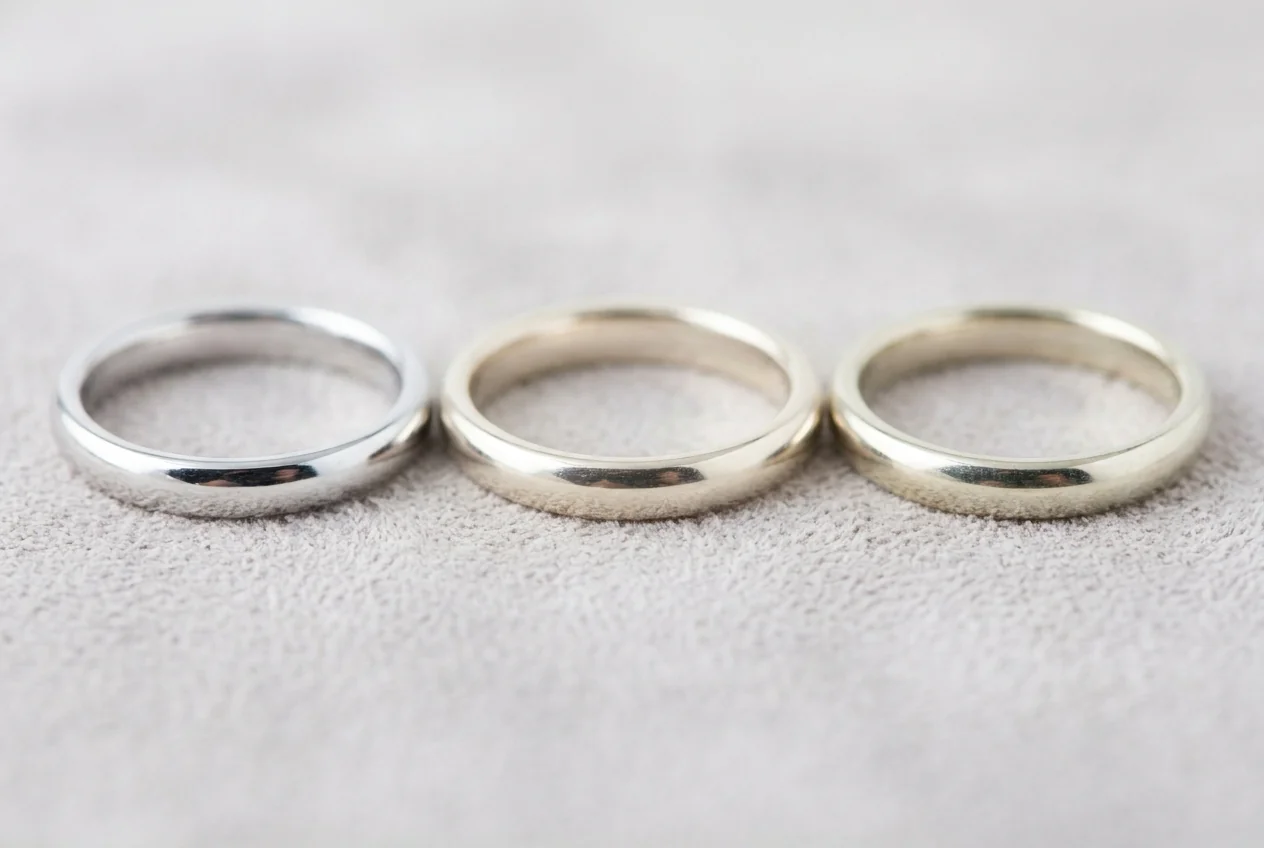
Three alloys, three different behaviours under the beam. Knowing which is in your hand changes the setting before anything else does.
The alloy most repair work arrives in. The copper is what gives it strength and also what oxidises, so expect firescale around the joint and plan a light clean-up after.
Watch for: firescale, hot cracking on stressed joints
Almost pure, so there is nothing in it to oxidise and it fuses readily. That same purity makes it very soft and very quick to slump at an edge or a fine wire.
Watch for: melted edges, sagging thin sections
The germanium forms a protective surface oxide, which is why it stays bright. It is also more fluid when hot, so a piece needs supporting while the joint cools.
Watch for: movement while hot, softer joint until cooled
Plenty of pieces arrive with no mark, or with a mark that does not match what the metal does. Treat an unknown as sterling, start lower than you think, and take a short test pass somewhere out of sight before the visible joint.
The six silver jobs that most often decide whether a bench buys a welder. Each links to the page that covers it in full.

This is the work that separates machines. Four things go wrong here, and none of them are fixed by more power.
On wire a few tenths of a millimetre across, the edge reaches melting first. Drop the energy and shorten the pulse rather than aiming more carefully.
A spot wider than the gap will take the next link with it. Spot size, not power, is what keeps a chain a chain.
A heavy end pulls energy out of a light one. Two joints on the same piece often want two different settings.
Filigree detail sits well under a millimetre. Optical magnification decides how small a feature the operator can place energy on.
Not every silver joint takes wire. Work down this order and you add metal only where the joint actually needs it.
If the two sides close cleanly, fuse them. No wire, nothing to blend, nothing to match.
A visible gap needs wire. Matched sterling for sterling, fine silver for fine silver.
A worn claw, a pit or a rebuilt edge is metal rebuilding. Build it in passes, low each time.
A short pass out of sight tells you the colour and the flow before the visible joint does.
Argentium takes Argentium wire. Using ordinary sterling filler on it gives back the tarnish resistance the customer paid for.
Six results that come back from a silver bench, and the cause worth checking first.
A bright polished surface reflected most of the beam. Key or lightly oxidise the spot and the same setting couples.
Spot too wide or energy too high for the section. Common on fine silver, where there is no copper to stiffen it.
The spot was wider than the gap between links. Tighten the spot before touching the energy.
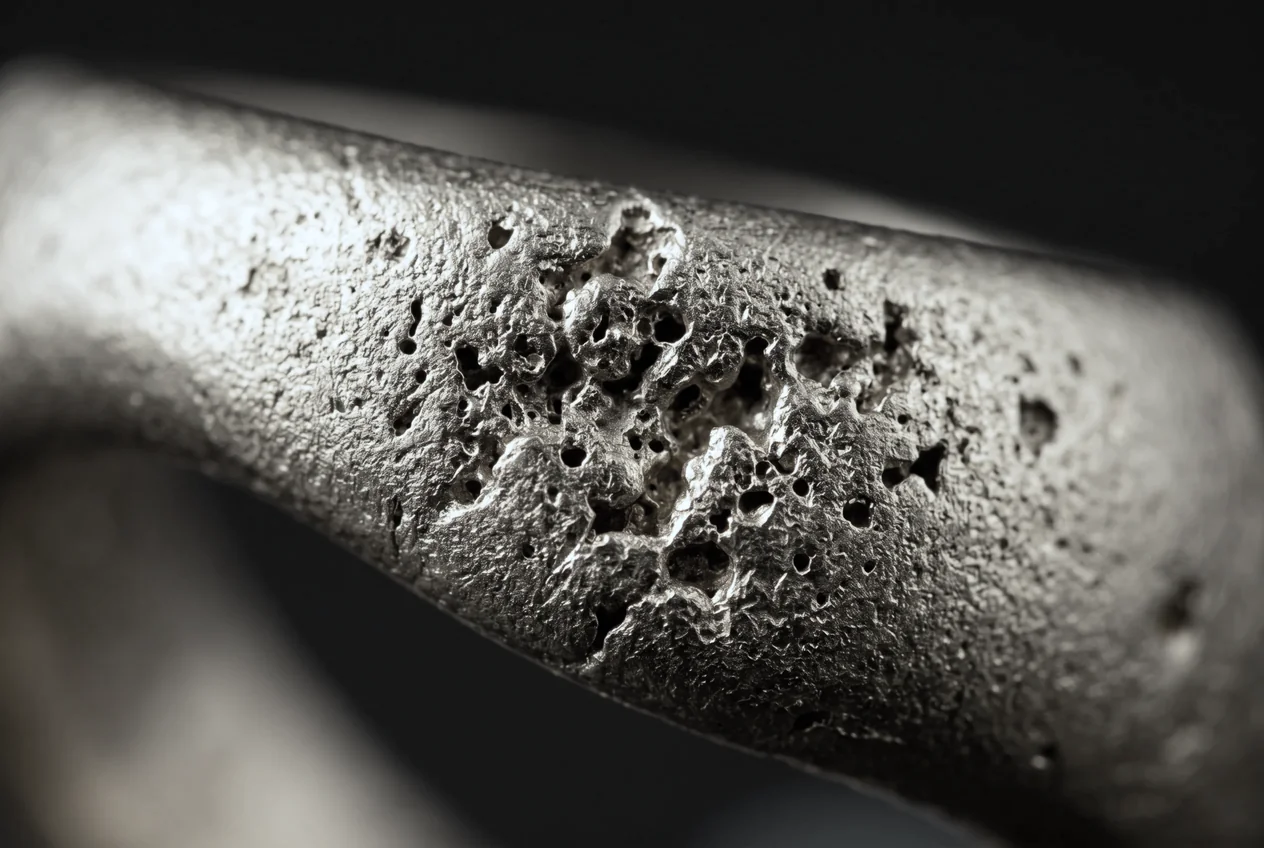
Gas porosity already in the casting came to the surface. It fills in passes with wire, not with one heavier pulse.
Sterling cracking while hot, old solder left in the joint, or a piece held under tension while it cooled.
Copper oxide from the sterling. Shielding gas and shorter pulses keep it small; what is left cleans off in finishing.
Both belong on a silver bench. What changes is how far the heat travels and what it leaves behind.
| On silver | Laser welding | Torch soldering |
|---|---|---|
| Where the heat goes | A spot you aim at, for milliseconds at a time. | The area, and then the whole piece as silver carries it. |
| Firescale | Local to the joint, cleaned in normal finishing. | Across everything the flame reached, so more polishing every time. |
| Metal in the joint | Matched silver wire, or no filler at all on a clean fuse. | Solder, which melts lower than the piece by design. |
| Fine chain | Workable link by link when the spot is small enough. | Hard to keep neighbouring links out of the heat. |
| Set stones | Often workable in place, judged piece by piece beforehand. | Usually means unsetting first and setting again after. |
| Where it still wins | Fine, local, thin-section and close-to-stone work. | Long seams and large joins where a flowing joint is what you want. |
Which control each silver job leans on. Read across your most common work, then take that row to the model comparison.
| Silver job | Small spot | Fine pulse | Low-energy steadiness | Optics | Filler handling |
|---|---|---|---|---|---|
| Fine chain | Critical | Critical | Critical | Critical | Lower |
| Filigree & wirework | Critical | Critical | Critical | Critical | Medium |
| Ring sizing | Medium | Medium | Lower | Medium | Critical |
| Findings & thin sheet | Critical | Critical | Medium | Medium | Medium |
| Porosity & cracks | Medium | Critical | Medium | Medium | Critical |
| Stone-set silver | Critical | Critical | Critical | Critical | Medium |
| Batch & production | Medium | Medium | Critical | Medium | Medium |
Critical means the job usually fails on this control before it fails on anything else. It ranks what to compare — it is not a specification.
Each specification written as what it changes on a silver bench, not as what it says on a datasheet.
Four benches, four amounts of silver work. Every model covers the 0.1 – 2.0 mm spot and 0.1 – 5.0 ms pulse width silver needs — what changes above that is optics, cooling and how long it runs.
A few silver pieces a week alongside other bench work
Silver welded every working day across mixed repairs
Studios doing filigree, fine chain and close-to-stone silver
Batch silver work and multi-operator benches
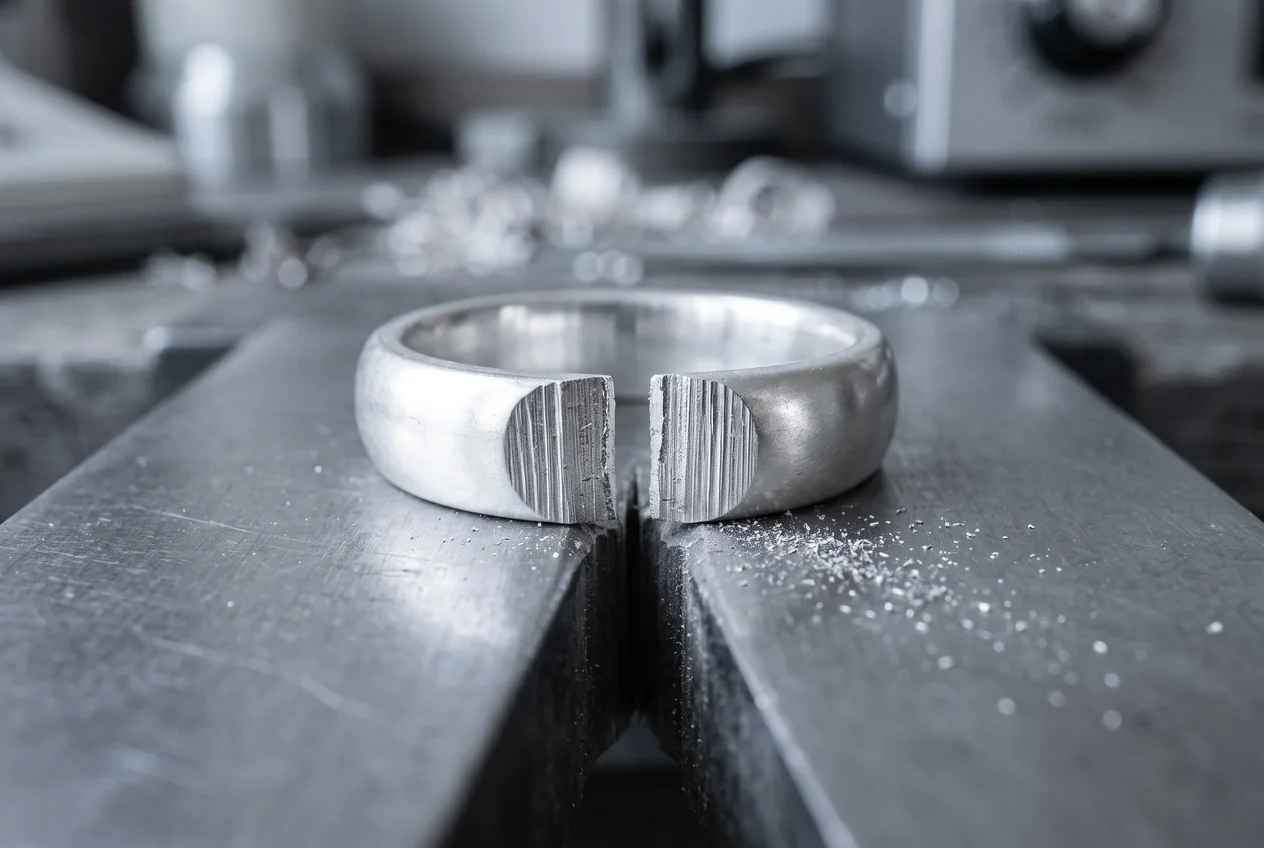
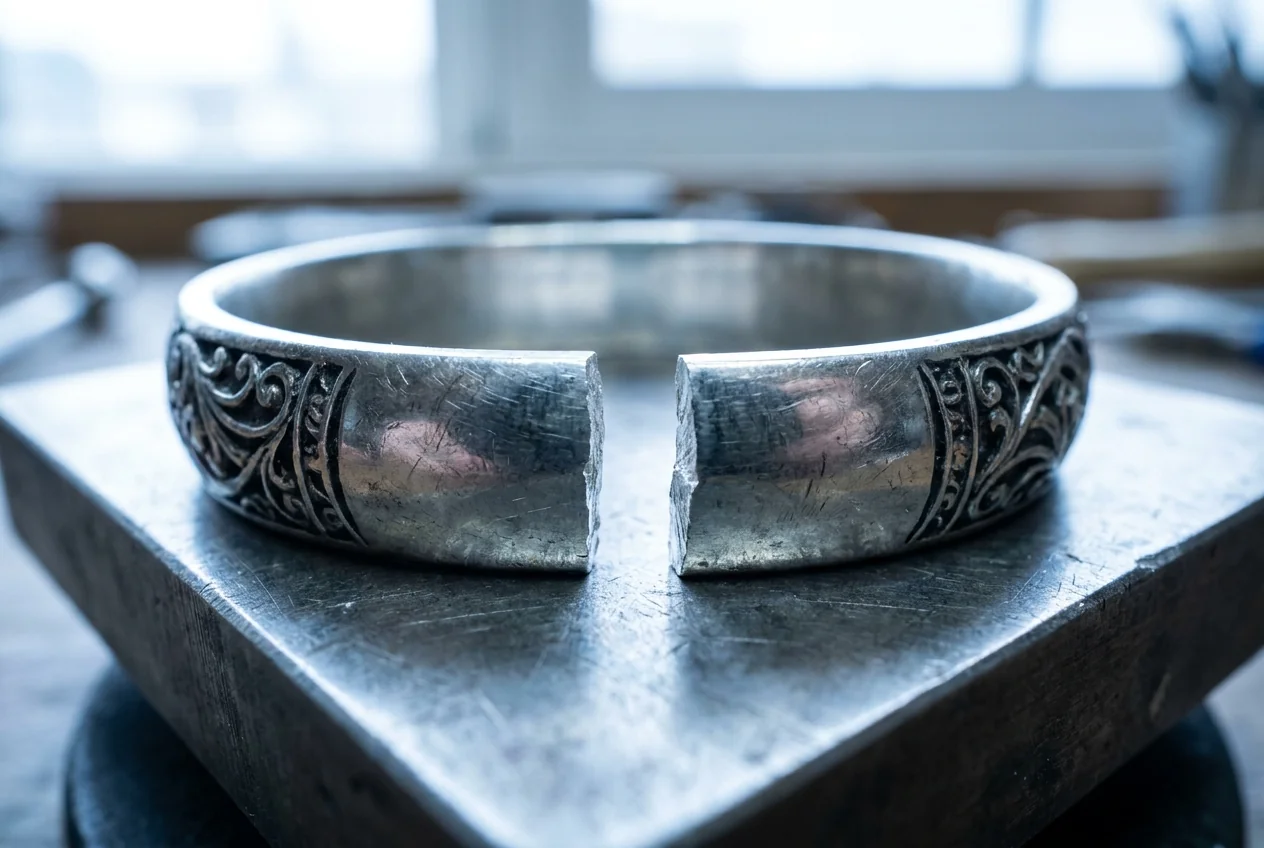
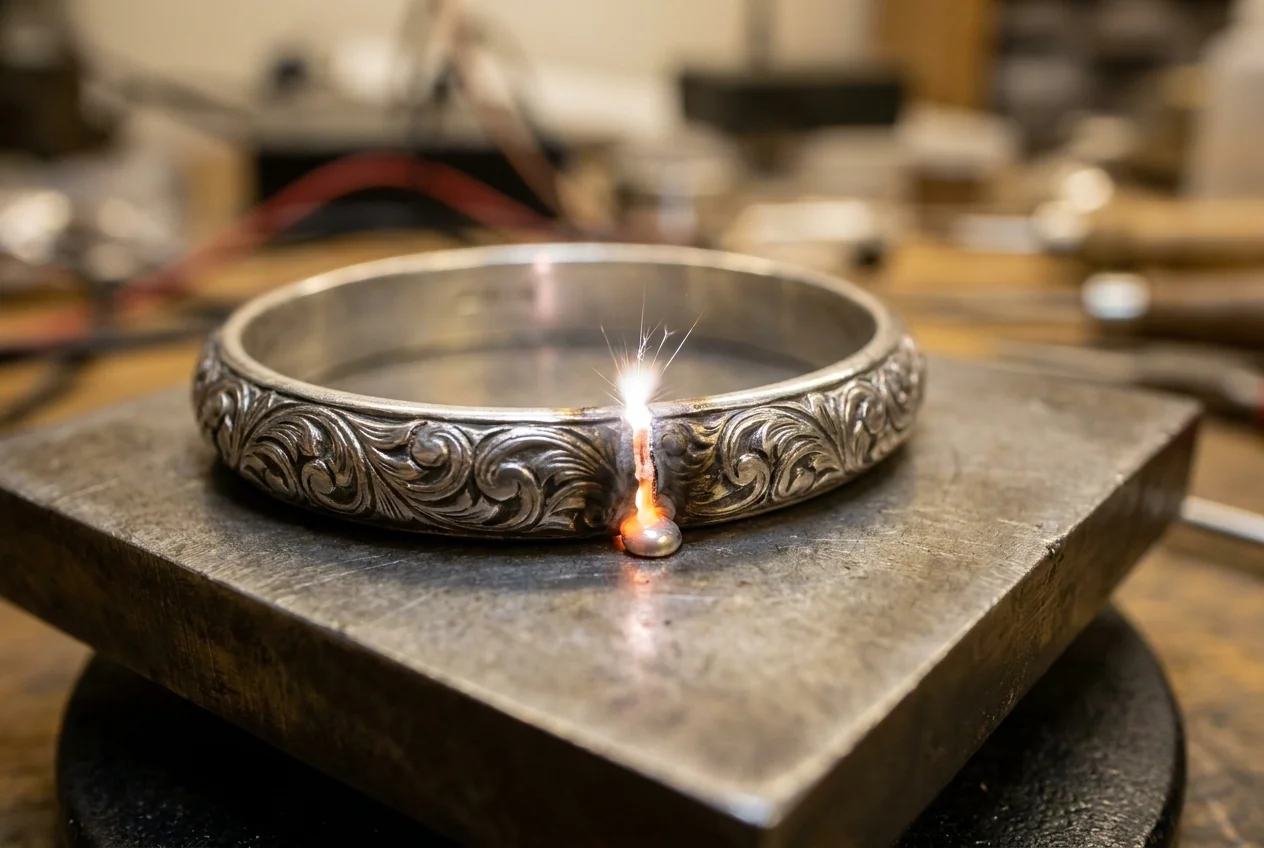
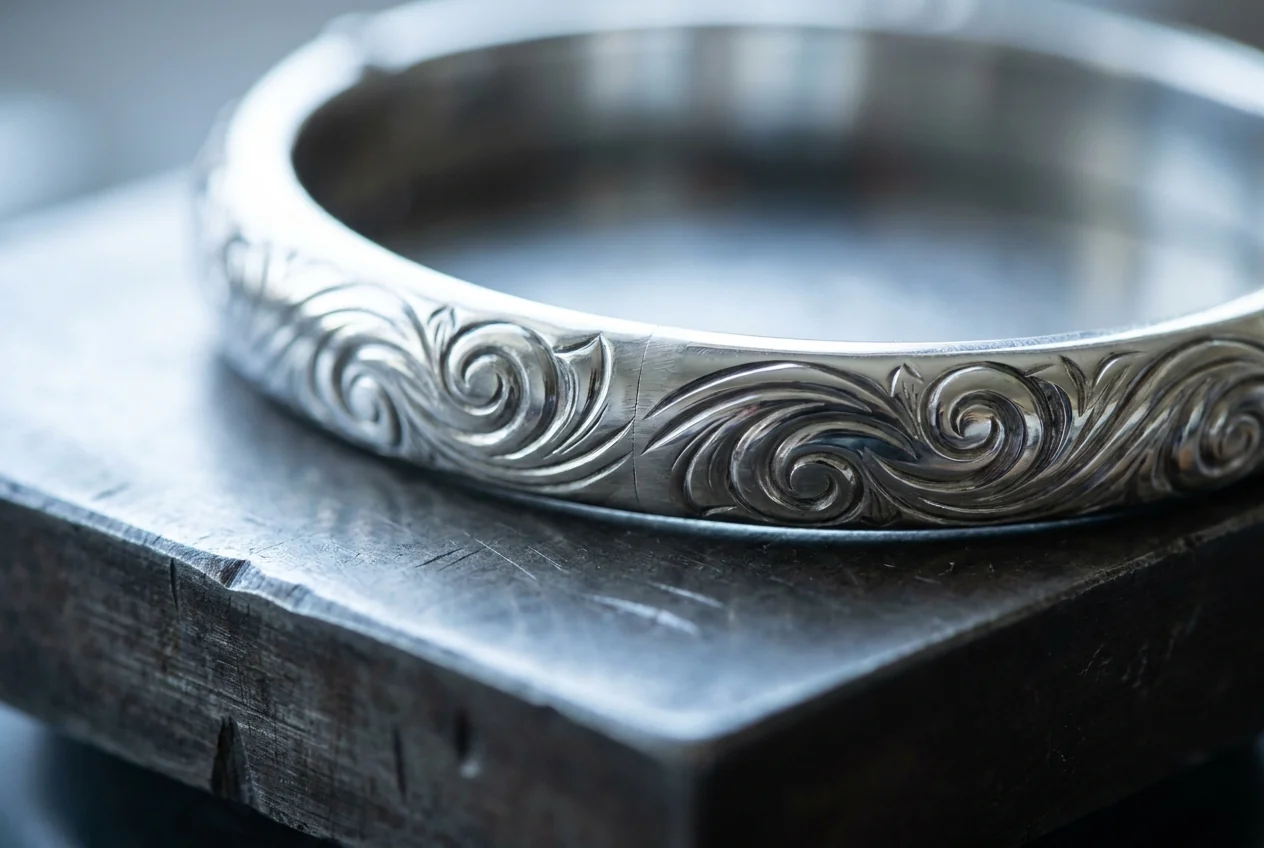
The three views worth photographing on any silver job, shown here on a broken sterling bangle. Send your own piece and we will weld it and send the same three views back.
Break faces cleaned and closed on a bench block. Worth recording the alloy and any earlier repair before anything is switched on.
Low energy, short pulses, letting the section cool between passes rather than driving it through in one.
The same filing and polishing any joint needs. How well it finishes down depends on the alloy, the joint and the operator.

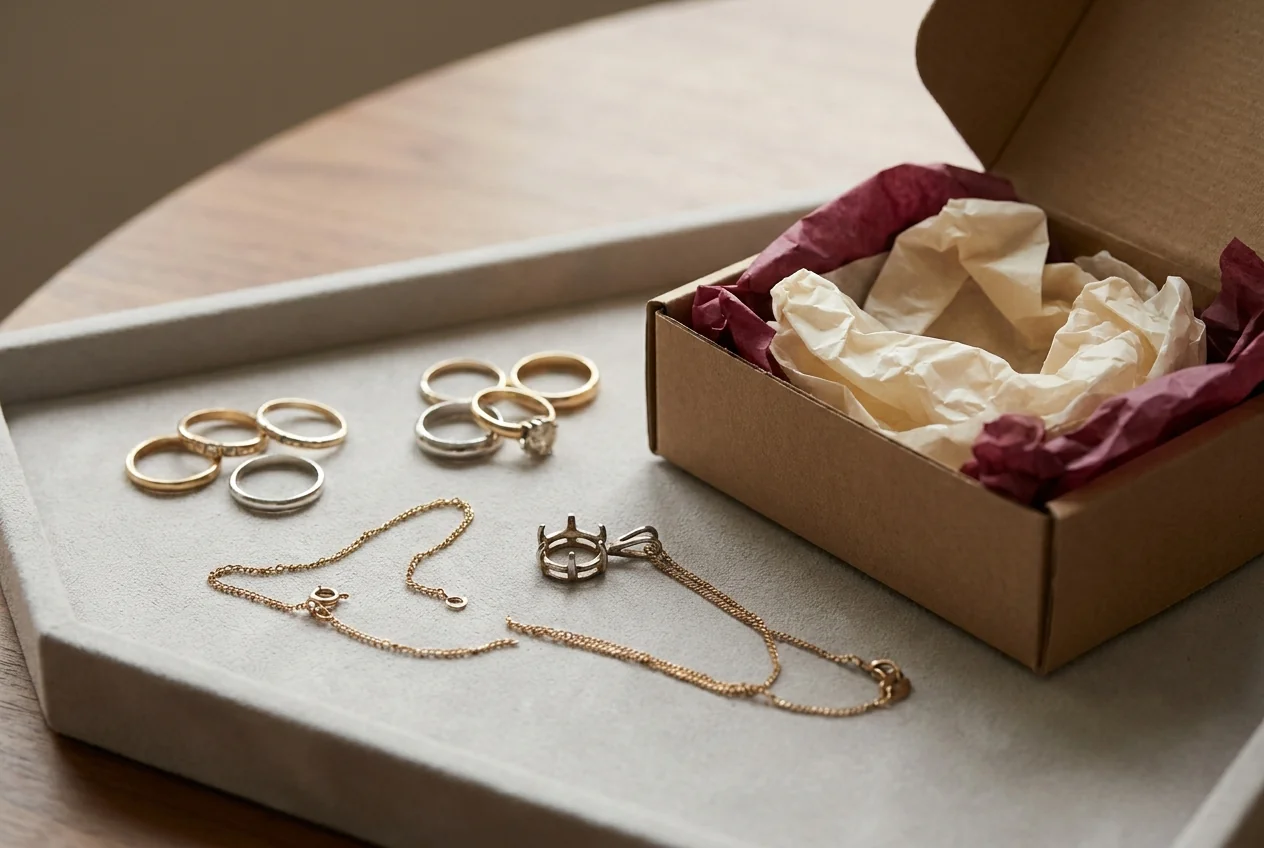
Specifications only take the decision so far. Send a piece in the silver you repair most — sterling, fine silver or Argentium — and we will weld it on the model we would recommend for your bench.
What silver benches ask before putting a laser welder on the bench.
Send the alloys and the jobs you see most, and we will point you at the model that fits — and weld a piece of yours first if you want to see it.