Choosing a jewelry laser welder is not about buying the machine with the highest wattage.
The right machine should match the repairs you do, the metals you work with, the size of your joints, your daily workload and how your bench actually operates.
A small shop mainly repairing chains and prongs does not need the same machine as a busy repair center resizing rings and rebuilding heavy gold or platinum pieces throughout the day.
The easiest buying rule is:
Start with your repair work first. Then choose the laser specifications that support it.
For most repair shops, these are the differences that actually matter:
Shop Need | What to Prioritize |
|---|---|
Fine chains and prongs | Small controllable spot |
Rings and general repairs | Wider energy and spot range |
Gold, silver and platinum mix | Flexible pulse control |
Frequent daily repairs | Cooling and sustained workload |
High-value customer jewelry | Clear viewing and positioning |
A good jewelry laser welder should make your normal repairs easier and more repeatable—not simply give you a bigger number on the specification sheet.
1. What Repairs Does Your Shop Actually Need?
Before comparing machines, look at the repairs already crossing your bench.
This immediately tells you more than comparing wattage.
Fine Jewelry Repairs
If most of your work involves:
Chain links
Prong retipping
Small cracks
Fine settings
Delicate filler work
your priority should be fine spot control and stable low-energy welding.
The machine needs to let you place energy exactly where the repair is rather than forcing you to use more power than the joint requires.
For this type of work, the smallest usable spot and the quality of the microscope or viewing system can matter more than maximum output.
Ring and General Repair Work
A full-service repair shop usually sees a wider mix:
Ring sizing.
Shank repair.
Clasp rebuilding.
Gap filling.
Setting repair.
Now you need a laser welder for jewelry with enough adjustment range to move from fine localized work to wider and deeper welds.
A machine that performs beautifully on a chain link but struggles to fill a ring-sizing groove will quickly become limiting.
Heavy Gold and Platinum Work
Thicker rings and substantial platinum pieces generally require more energy and penetration than fine chain work.
That does not mean you should simply buy the highest-powered machine available.
It means the machine needs enough pulse-energy headroom so your normal heavy repair does not require running at its maximum setting every time.
This is also where sample welding becomes particularly important.
Ask the supplier to demonstrate the heaviest type of repair you realistically expect to perform.
Workload Matters Too
Two shops may repair exactly the same jewelry but need different machines.
A jeweler performing a few repairs each day has different cooling and ergonomics requirements from a production repair center welding for most of an eight-hour shift.
Current professional buying guides also separate laser welders according to expected daily usage rather than power alone. Stuller, for example, currently lists machines intended for under four hours, 3–5 hours, around eight hours and more than eight hours of daily use.
So define both:
What do you weld?
and
How long do you weld each day?
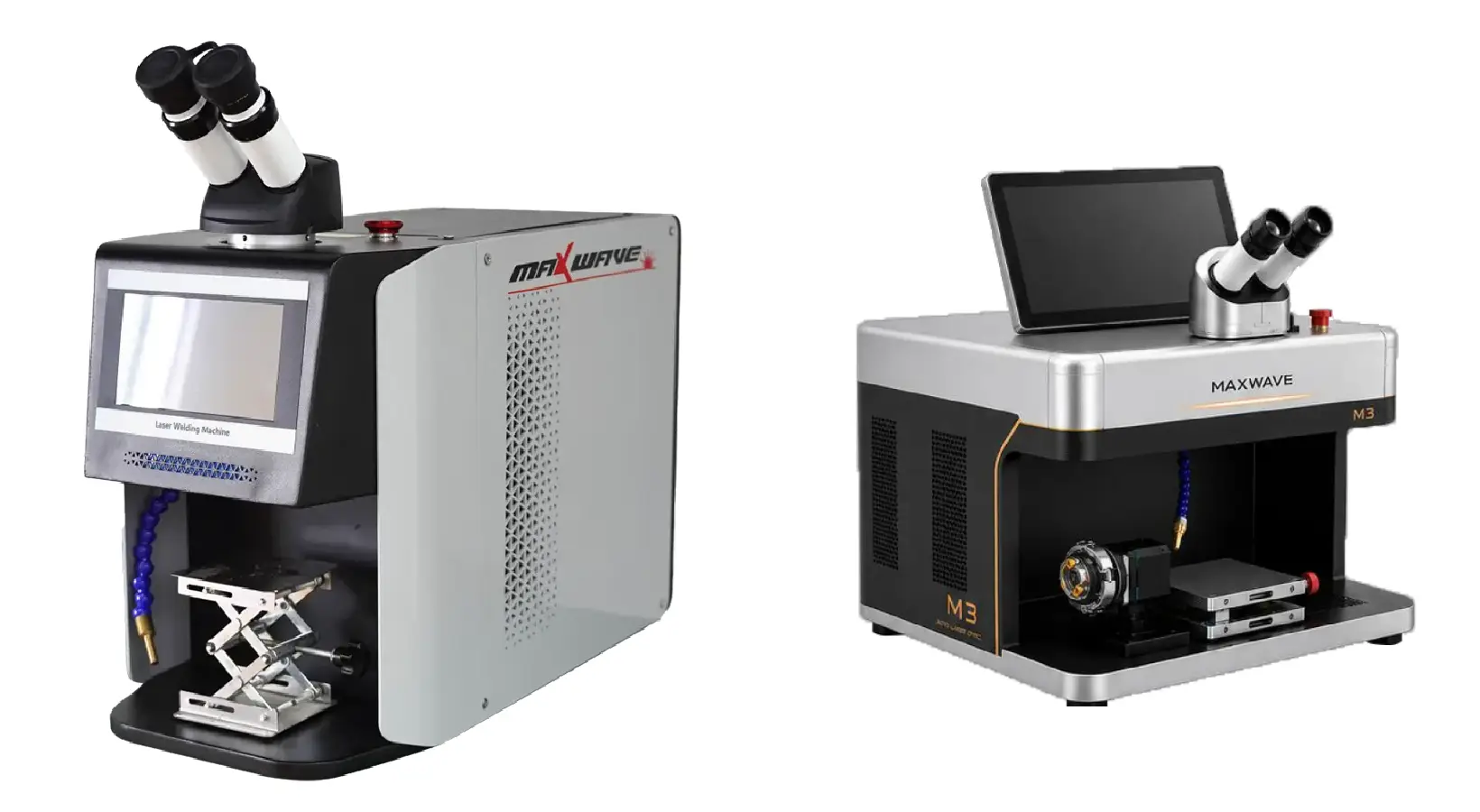
2. Which Jewelry Laser Welder Specs Matter Most?
Once you know the repair mix, the specification sheet becomes much easier to understand.
Five specifications deserve most of your attention.
Pulse Energy
Pulse energy tells you more about an individual welding pulse than average wattage alone.
Higher available energy gives the machine more headroom for thicker joints and deeper fusion.
But maximum energy is not the objective.
The objective is having enough adjustable range to handle both your smallest and largest normal repairs.
This is why professional jewelry welders are often compared in joules as well as watts.
Stuller's current machines, for example, span roughly 45J through 280J across different usage classes.
Spot Size
Spot size determines how concentrated the energy is.
A smaller spot is valuable for:
Prongs.
Fine chains.
Small cracks.
Detailed filler placement.
A larger adjustable spot becomes useful for broader filling, smoothing and larger joint areas.
For a general repair shop, adjustable range matters more than one impressive minimum number.
Current commercial jewelry welders commonly offer beam diameters extending from around 0.1–0.2 mm at the fine end to approximately 1.5–2.0 mm at the wider end.
Pulse Width and Frequency
Pulse width controls how long energy is delivered in each pulse.
Frequency controls how rapidly pulses repeat.
Together, these settings help the operator balance penetration, weld width and accumulated heat.
A professional jewelry laser welding machine should therefore allow enough adjustment to deal with different alloys and joint sizes.
Be cautious with machines that offer only a few locked presets and almost no manual control.
Presets are convenient.
They should not prevent an experienced operator from fine-tuning the weld.
Viewing and Positioning
For jewelry repair, seeing the weld clearly is not an optional extra.
Compare:
Microscope clarity
CCD or camera view
Lighting
Aiming accuracy
Working-space access
Current professional machines frequently combine stereo microscopes with onboard cameras or monitors because jewelry work is highly dependent on accurate visual positioning.
A machine with slightly higher output but poor visibility can be less useful at the bench than a lower-powered machine with excellent positioning.
Cooling and Duty Cycle
Cooling should match the laser architecture and how long the machine will operate.
Do not use a rule such as:
“High wattage always needs water cooling.”
or:
“Air cooling is only for light-duty machines.”
Different QCW, fiber and traditional YAG systems generate and manage heat differently.
The original draft's very large fixed annual cooling-maintenance numbers are therefore not useful as a universal buying rule. Pasted text
Instead, ask:
How long can this exact machine weld under my normal workload before thermal limits become relevant?
That is the specification your shop actually needs.
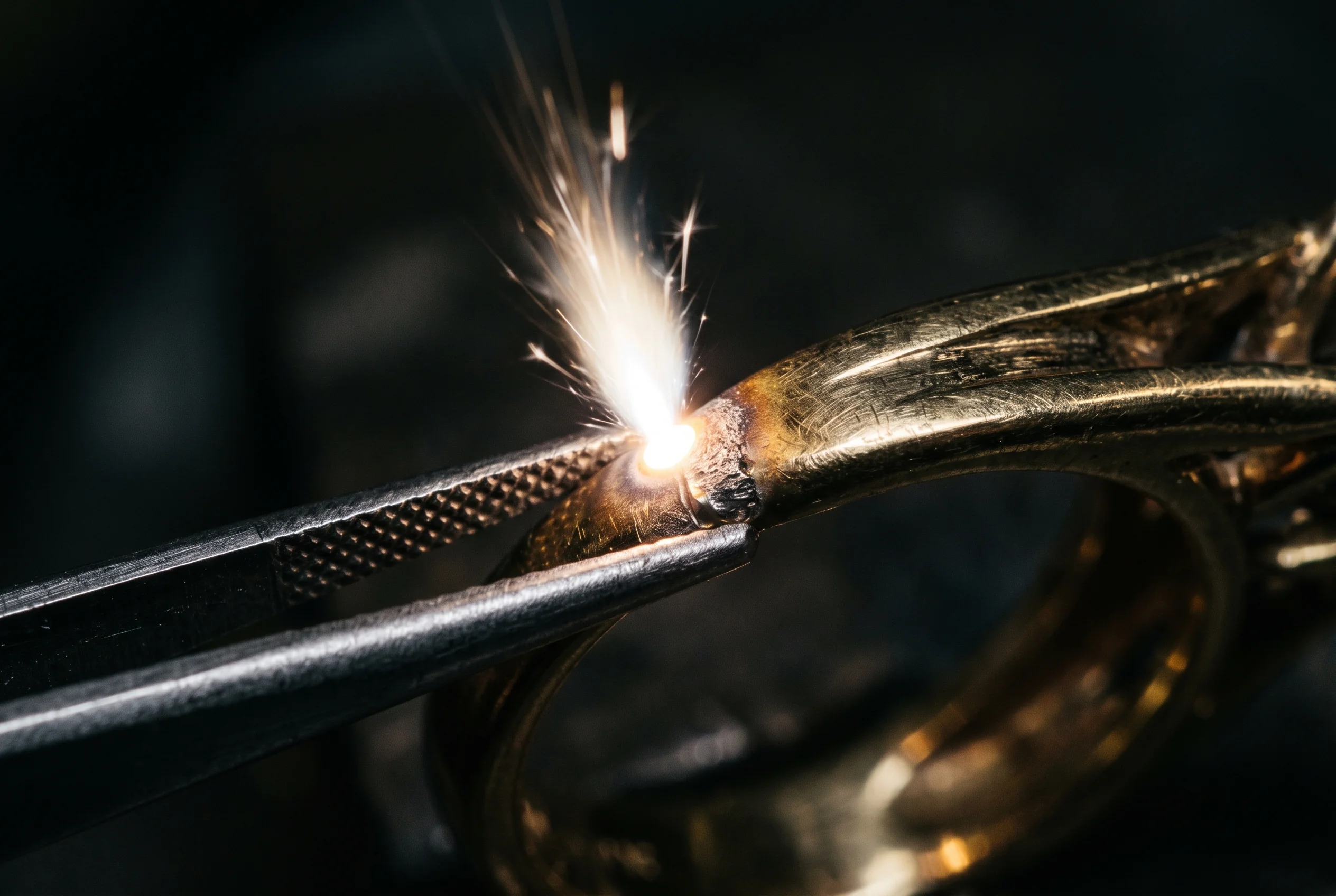
3. Which Machine Setup Fits Your Repair Bench?
Specifications are only half of the buying decision.
The machine must also fit the way the jeweler works.
Compact Desktop Systems
A desktop system is often the logical choice for a small or medium repair shop.
It works well when the machine sits beside the jeweler's normal bench and most work involves rings, chains, earrings, settings and other small pieces.
The main advantages are:
Compact footprint.
Easy operator access.
Simple bench integration.
Lower space requirement.
Desktop does not automatically mean low performance.
Some current professional desktop jewelry welders are rated for substantial daily usage and provide wide pulse-energy and spot-size adjustment ranges.
Larger Workstations
A freestanding or larger workstation becomes more attractive when the machine is used for long periods or by several operators.
Here, ergonomics start to matter more.
Look at working height, arm position, chamber access and microscope comfort.
A repair technician may spend hours looking through the microscope.
A technically excellent machine that creates neck, shoulder or wrist discomfort is not a good production tool.
Microscope or Camera?
For precision welding, direct microscope observation remains extremely valuable because it provides depth perception and detailed control.
A CCD or monitor can complement that system.
It can make training, documentation and demonstration easier.
For a repair shop, having both can be more useful than treating them as competing features.
Current commercial systems commonly combine microscope viewing with onboard video displays or HDMI camera output.
Program Memory Can Save Time
If your shop repeatedly handles similar repairs, saved welding programs can be useful.
For example, you may eventually create working recipes for:
14K ring sizing.
18K prong repair.
925 silver chain repair.
Platinum filling.
The operator can recall a known starting point and fine-tune it instead of rebuilding the parameter set every time.
That becomes increasingly valuable as more than one jeweler uses the same machine.
4. How Should You Compare Machines Before Buying?
Once you have narrowed your choices, stop comparing brochures.
Test the machines.
Send Real Repair Samples
Ask each supplier to weld the types of jewelry that represent your normal work.
A useful test set could include:
A fine chain link
A normal ring shank
A prong or setting repair
A silver repair
Your thickest common gold or platinum piece
This tests both ends of the machine's operating range.
Do not let every supplier choose their own easiest demonstration sample.
Compare Results, Not Just Speed
Inspect the repaired pieces under magnification.
Look at fusion, porosity, spatter, heat effect and how much finishing is required afterward.
A machine that finishes the weld five seconds faster is not necessarily better if it leaves significantly more cleanup.
For jewelry repair, repeatability and finish quality usually matter more than maximum cycle speed.
Confirm Everything Included
Before comparing prices, make sure the quotations include the same scope.
At minimum, confirm the machine configuration, viewing system, cooling system, foot pedal and required accessories.
Otherwise, a cheaper quotation may simply be missing items that another supplier includes.
Check Training and Service
Support becomes especially important for a shop buying its first laser.
Professional jewelry-industry guidance treats installation, parameter training, preventative maintenance and technical service as part of the buying decision—not an optional afterthought.
Ask whether the supplier provides remote troubleshooting, operating training and spare-parts support.
The machine will eventually need assistance.
The important question is how quickly your shop can get back to work.
Use This Final Buying Table
Your Shop | Priority |
|---|---|
New or low-volume repair shop | Easy controls and fine spot range |
General full-service jeweler | Broad adjustment range |
White gold and platinum work | Energy headroom and pulse control |
High daily repair volume | Cooling, ergonomics and reliability |
Multiple technicians | Program memory and strong support |
If two machines still look similar after this comparison, choose the one that performs better on your actual samples, not the one with the longer specification sheet.
Conclusion
How should you choose a jewelry laser welder for your repair shop?
Do not start with maximum wattage.
Start with:
Your repair types.
Your metals and joint sizes.
Your daily workload.
The level of control your technicians need.
Then evaluate pulse energy, spot range, pulse control, viewing system, cooling and supplier support.
For a small repair shop, a compact system with excellent fine-weld control may be the better investment.
For a full-service shop handling rings, heavy gold, platinum and regular production, wider energy and spot ranges plus stronger sustained-use capability may justify moving to a higher configuration.
The most important final step is a real test.
Before buying a laser welder for jewelry repair, send the supplier the same kinds of repairs that actually come across your bench.
Do not ask only:
“Can it weld gold?”
Ask:
“Can it repair this chain, this ring shank and this platinum piece cleanly and repeatedly?”
The team can help narrow the machine configuration and arrange application-specific sample welding before you choose.