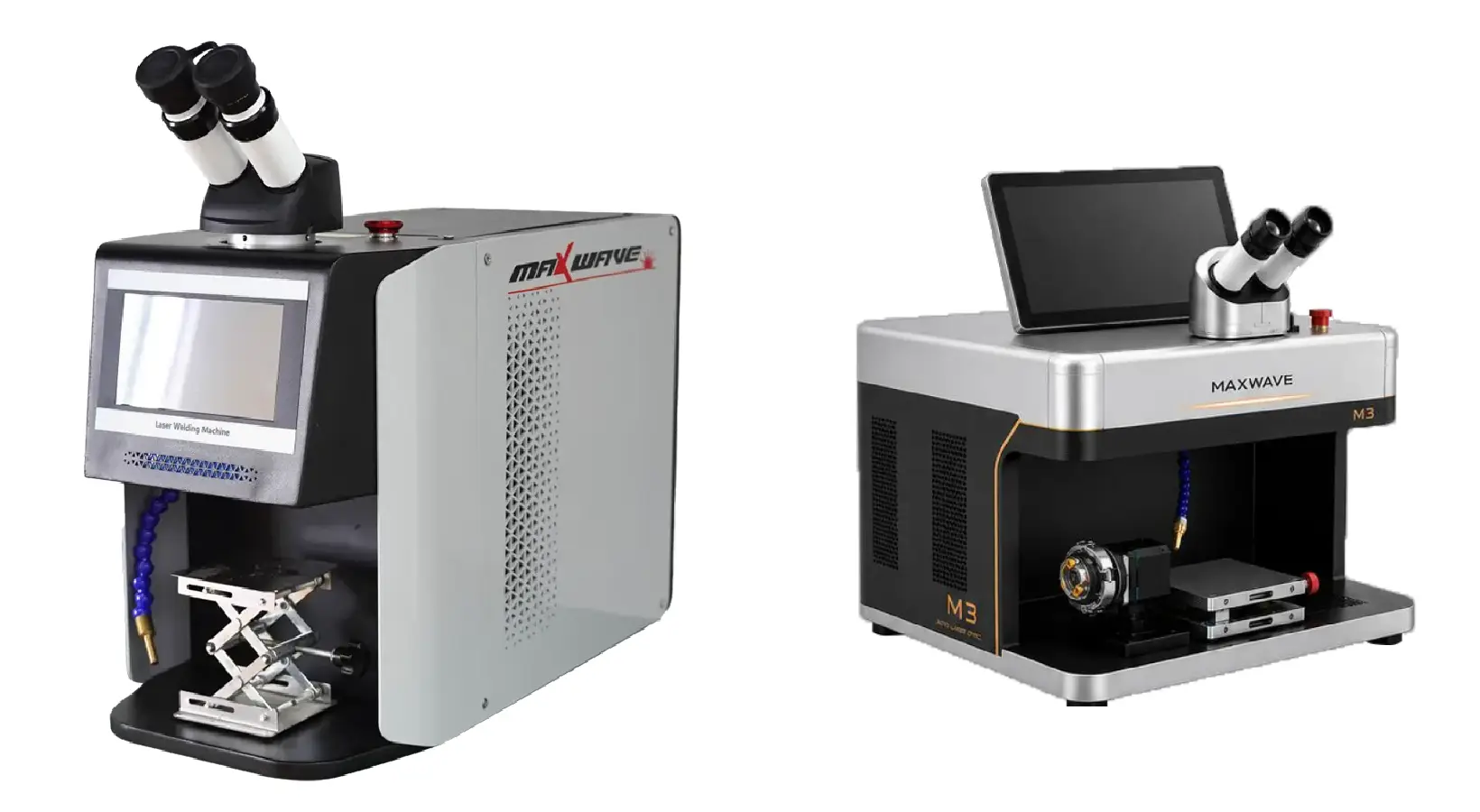
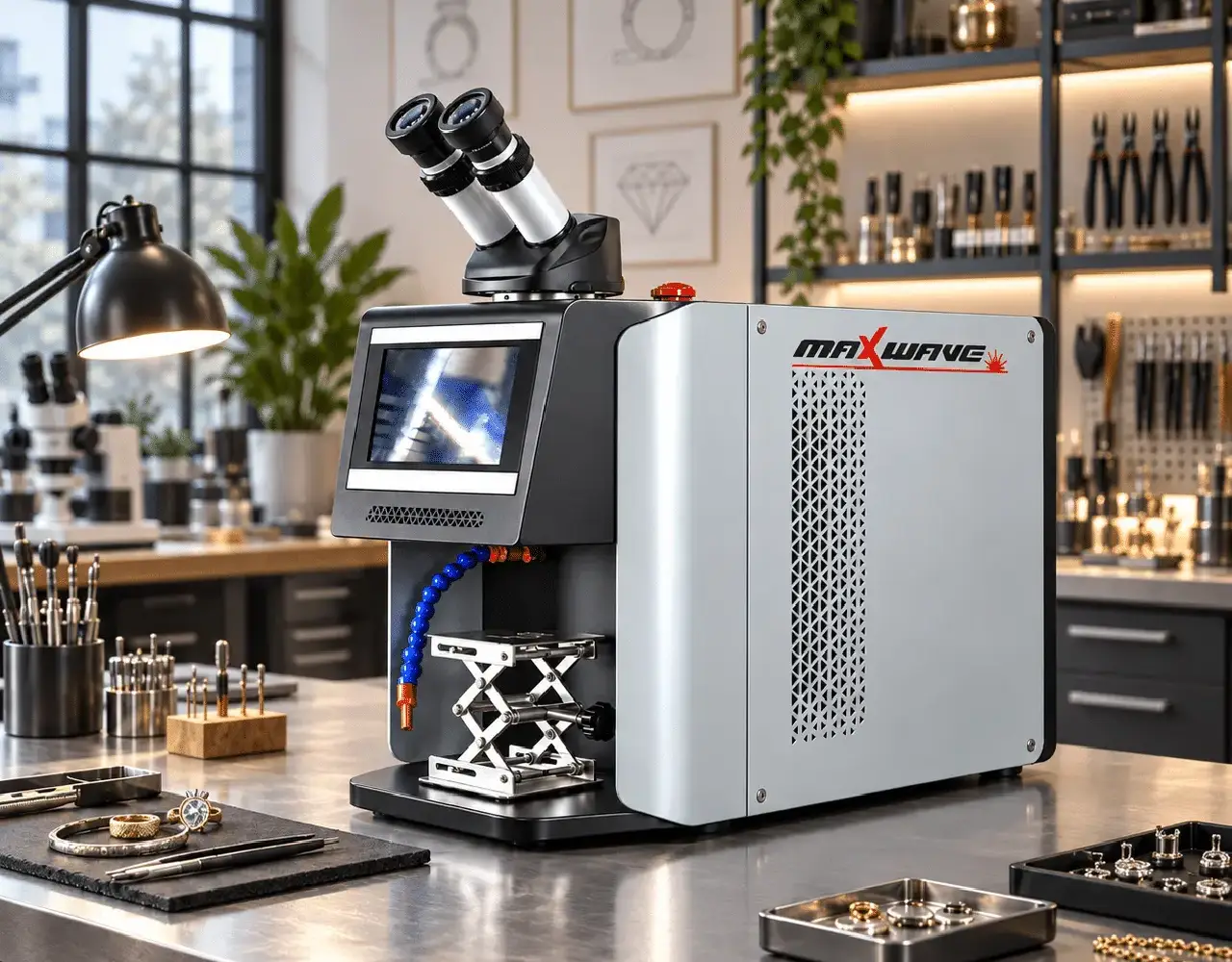
A jewelry laser welder is generally the better choice for professional repair shops handling frequent prong rebuilding, intricate stone-set jewelry, ring repairs, and precision metal buildup. A pulse arc welder is often more cost-effective for basic jewelry repairs, chain closures, and workshops with a limited equipment budget.
Both technologies can produce localized welds without conventional soldering. However, they differ in how the welding energy reaches the metal, how precisely the operator can control the weld, and which repairs are easiest to perform.
For a jeweler choosing between a pulse arc system and a jewelry laser welder, the best decision depends on the actual repair work coming across the bench.
Jewelry Repair | Jewelry Laser Welder | Pulse Arc Welder |
|---|---|---|
Prong retipping | Excellent precision and access | Capable with suitable equipment |
Precise, especially for complex repairs | Very practical for simple closures | |
Versatile control for different joints | Suitable for many straightforward repairs | |
Strong advantage in beam positioning | More dependent on electrode access | |
Sterling silver repairs | Effective with suitable preparation | Often easier on reflective silver |
Controlled filling and smoothing | Capable of localized buildup |
Neither machine is automatically better for every jewelry repair.
The important differences become clearer when you compare their welding methods, actual repair applications, and long-term operating costs.
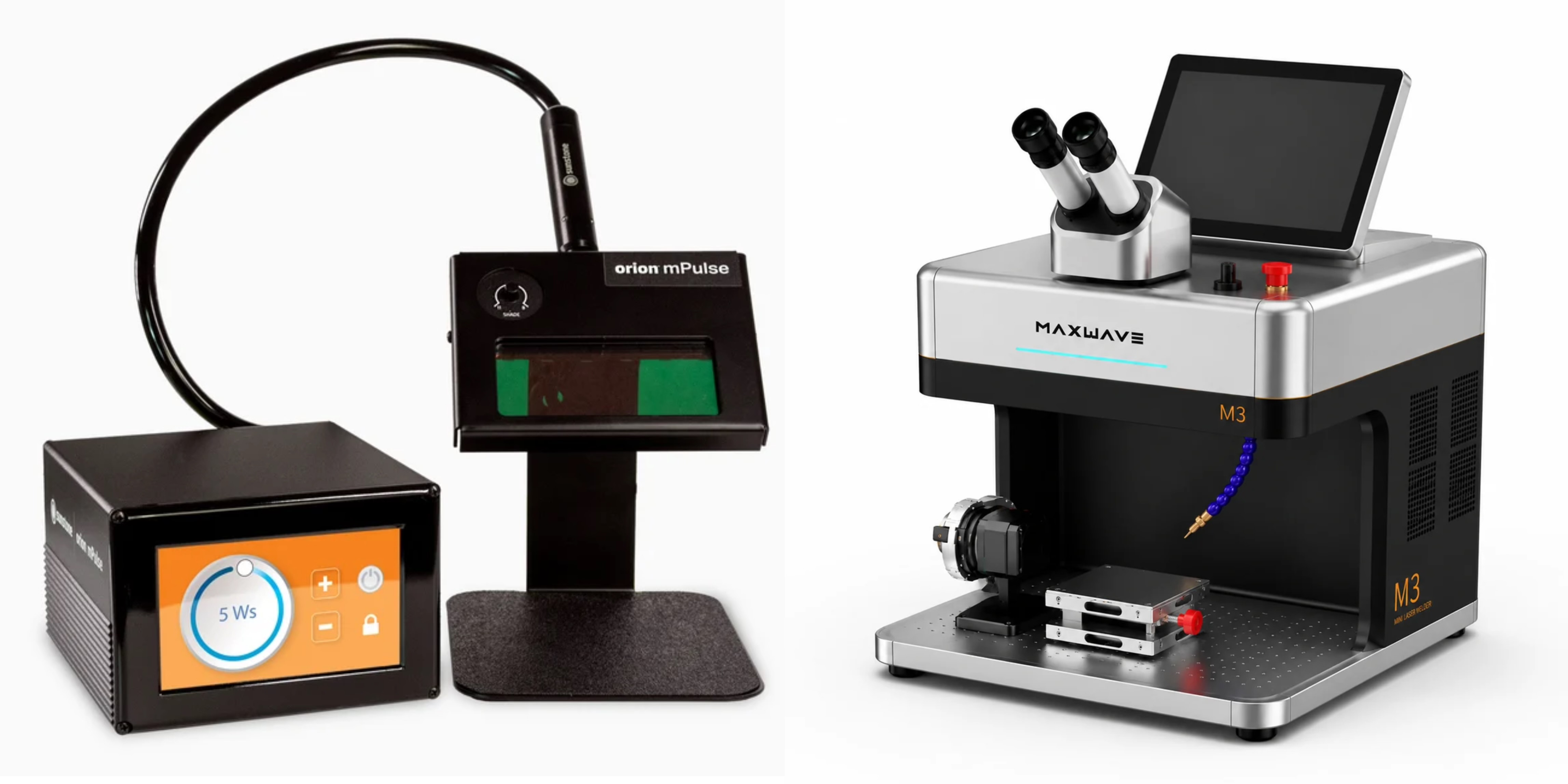
1. How Do Jewelry Laser and Pulse Arc Welders Differ?
Both machines join metal through localized melting, but the energy delivery systems are fundamentally different.
Jewelry Laser Welder: Non-Contact Precision
A jewelry laser welder uses a focused laser beam to deliver energy directly to the repair area.
The operator positions the jewelry under a microscope and adjusts the laser parameters to suit the metal and joint.
A key advantage is the ability to control spot diameter and pulse energy independently on suitable equipment.
A small spot can concentrate energy on a narrow crack or prong attachment, while a broader spot can be used for smoothing and blending filler metal.
Because the laser beam does not require physical contact with the workpiece, operators can reach certain small or recessed areas without positioning a welding electrode against the metal.
This can be particularly useful for detailed jewelry with surrounding stones, decorative features, or limited access.
However, successful welding still depends on correct focus, pulse settings, material preparation, and operator technique.
Pulse Arc Welder: Controlled Electrical Discharge
A pulse arc welder, often described as a micro-TIG welder, creates a small electrical arc between a tungsten electrode and the workpiece.
The process generally requires an electrical connection to the jewelry, and many systems initiate welding through electrode contact followed by retraction.
The discharge produces localized melting over a short period.
Professional pulse arc welders can create small, precise welds and may support filler-wire buildup, porosity repair, and work near jewelry settings.
However, electrode condition, placement, and electrical contact can influence the resulting weld.
Spot diameter and energy may also be more closely linked than on a laser welder, depending on the specific machine.
Both systems offer substantially more localized heat delivery than conventional torch soldering, but neither guarantees that a nearby gemstone will remain unaffected.
What Is the Most Important Difference?
For many jewelers, the practical difference is access and control.
A laser allows non-contact targeting and flexible adjustment of the beam spot.
A pulse arc welder provides precise electrical welding with a comparatively simple, often more compact equipment arrangement.
The laser's additional control becomes especially valuable when repairs involve very small features, complex jewelry geometry, or repeated finishing work.
A professional jewelry laser welding machine is therefore most attractive to workshops that need flexibility across many different repair applications.
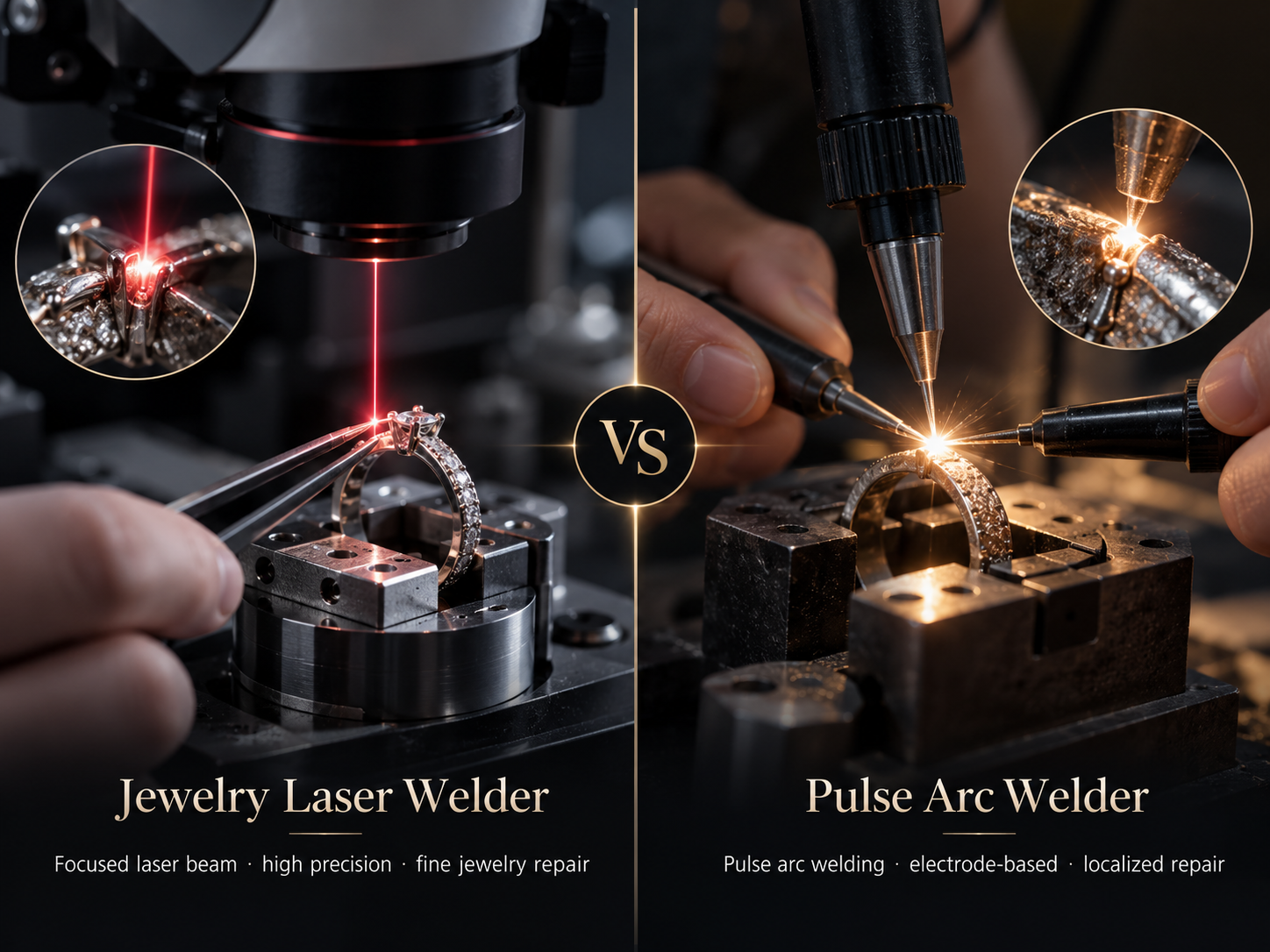
2. Which Welder Is Better for Common Jewelry Repairs?
The most useful comparison is based on the actual jewelry being repaired.
A machine suited to closing chain links is not necessarily the best choice for rebuilding a damaged setting or repairing a platinum ring.
Prong Retipping and Stone-Set Repairs
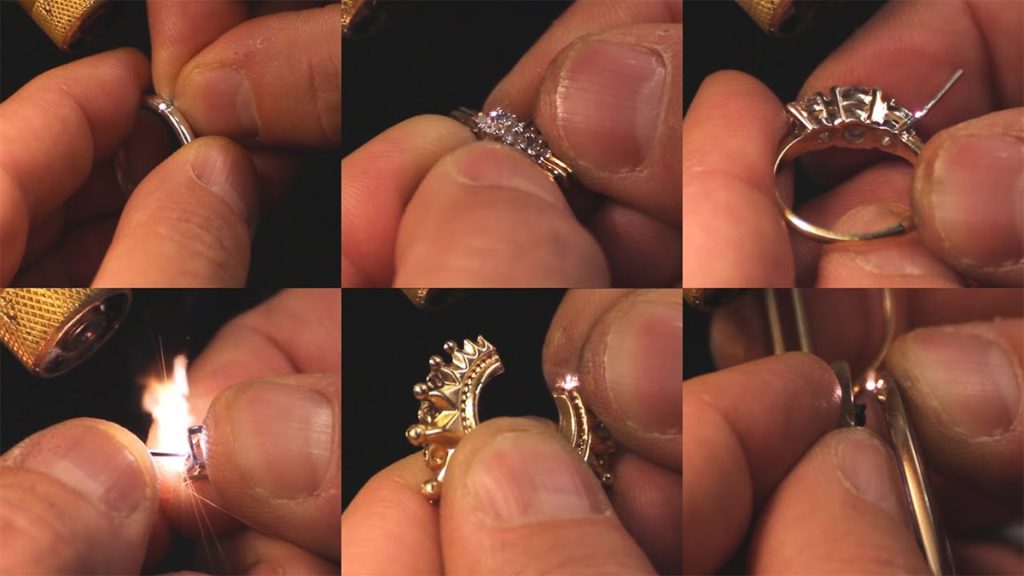
Prong retipping is one of the strongest applications for jewelry laser welding.
When a prong tip becomes worn, the jeweler may need to add a small amount of compatible metal without disturbing the surrounding setting.
A laser welder allows the operator to focus on the attachment area, control the size of the weld, and build the required shape through carefully positioned pulses.
The non-contact beam is particularly useful when an electrode would be difficult to position around the prong.
Pulse arc welding can also be used for prong repair, including certain repairs near mounted stones. High-quality micro-TIG systems are capable of remarkably precise work.
However, a laser is often more convenient when the repair requires repeated small welds, detailed buildup, or access to a confined area.
Neither process makes welding next to a gemstone automatically safe.
Heat-sensitive, treated, fractured, or filled gemstones may require removal before welding. Direct laser exposure and changes in setting tension are additional risks that must be assessed.
For shops frequently handling diamond settings, pavé, bezels, and prong rebuilding, a laser welder for jewelry repair provides valuable control over complex repair work.
Chain Links and Permanent Jewelry
For simple chain closures and permanent jewelry, a pulse arc welder is often the more economical choice.
Compact pulse arc machines are widely used to close small jump rings on bracelets, necklaces, and anklets.
Their relatively simple setup and portable designs make them attractive for permanent jewelry businesses, mobile services, and small workshops.
A jewelry laser welder can also repair fine chains.
It may be preferable when the work involves very small links, unusual joint geometry, or a chain repair that requires more precise targeting and filler control.
However, a laser machine is not necessary for every straightforward jump-ring closure.
If most of a business's welding work consists of attaching permanent bracelets or making simple chain connections, a suitable pulse arc welder may offer better value.
Gold-filled and plated chains need special consideration with either method because welding may expose or mix the underlying base metal.
Ring Resizing and Shank Repairs
Both technologies can be used for selected ring repairs.
For a plain ring with an accessible joint, pulse arc welding may provide sufficient control, particularly when the shop already has suitable equipment and an established process.
A jewelry laser welder becomes more attractive when the repair is complex.
For example, resizing a stone-set ring may require joining metal while limiting unnecessary heating around the setting.
A laser also allows the operator to use different spot sizes for establishing joint fusion and blending added metal afterward.
For heavier shanks or significant material buildup, the required penetration and filler deposition must be verified regardless of the technology.
A smooth-looking seam does not guarantee that the ring has been adequately fused.
When working on platinum or valuable stone-set rings, sample welding and proper joint preparation are more important than assuming one welding method always produces a stronger result.
Platinum, Silver, and Fine Details
Material selection can also influence the decision.
Platinum and many gold alloys can be welded using either technology when the equipment and parameters are appropriate.
For delicate filigree, narrow bezels, and detailed finishing, laser welding often offers a practical advantage because of its adjustable beam size and non-contact delivery.
Sterling silver deserves a separate consideration.
Its high reflectivity at common jewelry laser wavelengths can make it challenging for some laser systems to achieve stable initial energy absorption.
Pulse arc welding does not rely on optical absorption in the same way and can be particularly effective for silver repairs.
That does not mean laser welding cannot handle silver. It means the machine, surface preparation, and welding parameters must be suitable for the alloy.
If silver repairs represent a large proportion of your workload, test both systems on your actual jewelry before purchasing.
3. How Much Does Each Welder Cost to Own?
Purchase price matters, but it should not be the only factor in choosing between a jewelry laser welder and a pulse arc welder.
The more useful comparison is the total cost of equipment ownership against the repairs each machine can complete reliably.
Initial Equipment Cost
Pulse arc welders generally offer a lower entry cost than professional benchtop jewelry laser welding systems.
However, equipment prices vary by brand, performance, optical accessories, and configuration. Premium pulse arc systems can overlap with the price of entry-level laser machines.
A complete quotation should specify what is included.
For pulse arc equipment, check the welding unit, electrode handpiece, grounding accessories, microscope or viewing system, and shielding gas setup.
For laser equipment, check the laser source, microscope, working chamber, cooling arrangement, shielding gas system, and necessary safety features.
Do not compare a basic pulse arc unit with a fully equipped laser welder without accounting for the differences in included components.
Maintenance and Operating Costs
Both technologies have ongoing costs.
Pulse arc machines may require replacement tungsten electrodes, servicing of the handpiece, and shielding gas.
Laser welders may require maintenance of protective optics, the cooling system where applicable, and other laser-related components.
Both need trained operators, suitable protection, and regular equipment inspection.
The total cost also depends on production efficiency.
A laser may provide an economic advantage when it reduces the time required for precise buildup or allows a shop to complete repairs that were previously outsourced.
However, a pulse arc welder may remain cheaper for simple jobs that it already performs efficiently.
How Should You Calculate Payback?
Do not assume a laser welder pays for itself after a fixed number of monthly repairs.
The relevant calculation is the additional value the laser creates compared with the pulse arc alternative.
Additional Monthly Contribution = Extra Profit From New or Improved Repairs − Additional Monthly Operating Costs
Simple Payback = Additional Equipment Investment ÷ Additional Monthly Contribution
For example, suppose a laser welder requires an additional $5,000 investment over a suitable pulse arc setup.
If it generates $500 in additional net contribution each month through new repairs, time savings, or reduced outsourcing, the simple payback period is approximately ten months.
This is an illustration, not a guaranteed result.
If the laser performs exactly the same work at the same cost and speed as the existing pulse arc system, the additional investment may be difficult to justify.
For a repair shop, the strongest business case is usually additional repair capability, improved workflow, or consistently lower total repair cost.
4. Which Welder Should Your Jewelry Shop Choose?
The best purchase depends on the work your shop performs most frequently and the repair capabilities it wants to develop.
Choose Pulse Arc for Simple, Repetitive Repairs
A pulse arc welder is a practical starting choice for workshops concentrating on simple chain repairs, jump rings, general assembly, or permanent jewelry.
It can also serve goldsmiths who need localized welding but cannot justify the additional cost of a professional laser system.
Its compact equipment design is attractive for smaller workspaces and mobile businesses.
If your typical jobs are already completed efficiently with pulse arc welding, purchasing a laser should be based on specific additional requirements rather than the assumption that more expensive equipment always produces better repairs.
Choose Laser for Precision and Repair Variety
A jewelry laser welder is the stronger long-term option for many full-service repair shops.
This is particularly true when daily work includes prong retipping, ring-shank repairs, porosity filling, delicate settings, and detailed precious-metal restoration.
Independent control of spot size and energy provides flexibility when moving between small attachment points and wider metal buildup.
Non-contact welding also makes certain complex geometries more accessible.
If your shop regularly handles valuable, unusual, or difficult jewelry, that flexibility may justify the higher investment.
When comparing a laser welder for jewelry, focus on the machine's useful spot-size range, pulse control, microscope quality, working-area access, and support—not simply the highest advertised wattage.
Confirm Performance Before Buying
Before selecting either technology, review your recent repair orders.
Identify the most common applications and the jobs that are difficult, time-consuming, or currently outsourced.
Then ask suppliers to demonstrate welding results on representative jewelry.
For example, compare a fine chain repair, a ring-sizing joint, a prong retipping task, and a sterling silver repair.
Pay attention to weld quality, repair accessibility, finishing time, and the operator's ability to repeat the result.
Also confirm the availability of training, spare parts, warranty coverage, and technical support.
The best machine is the one that reliably handles the repair work your shop actually needs—not simply the one with the longest specification sheet.
Conclusion
Jewelry laser welder vs pulse arc welder—which is better for jewelry repair?
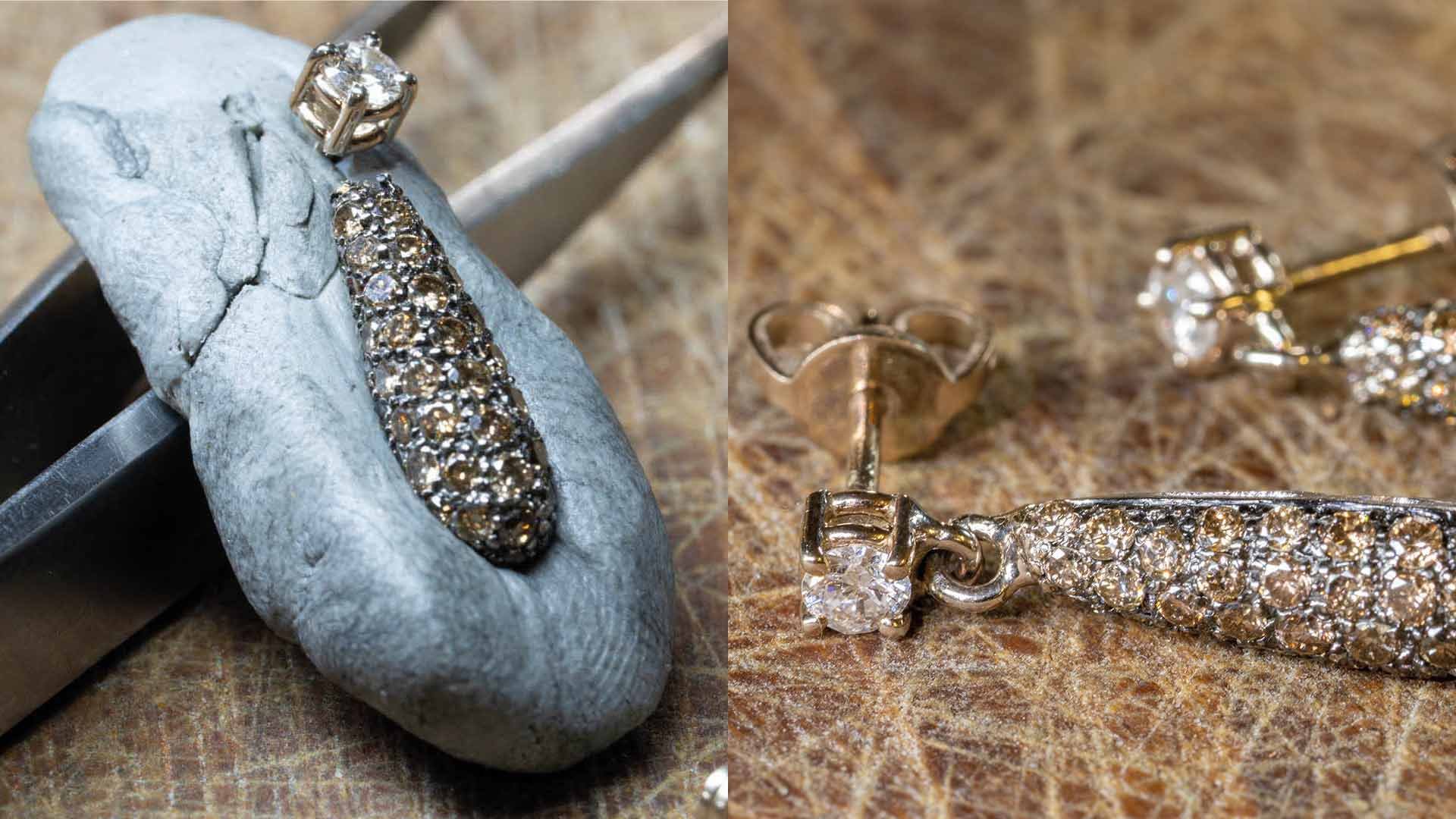
A jewelry laser welder is generally the better investment for full-service repair shops that frequently perform intricate, stone-set, and high-precision repairs.
Its non-contact beam, adjustable spot size, and flexible pulse control make it particularly useful for prong rebuilding, detailed ring repairs, and precision metal buildup.
A pulse arc welder is often the more economical choice for straightforward repairs, chain closures, and small workshops.
It can also perform many precision repairs successfully and may be particularly attractive for certain silver applications.
Neither machine is universally superior.
The right decision depends on your repair mix, material requirements, budget, and expected workload.
For professional jewelers looking to expand beyond basic repairs, a versatile jewelry welder can help increase the range of jobs handled in-house.
Our team can help recommend a suitable machine configuration and arrange sample welding demonstrations so you can evaluate performance before making a purchase.